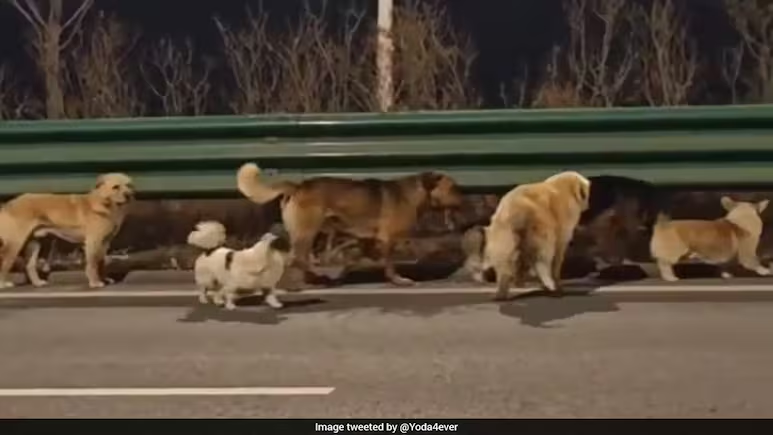

A heartwarming and dramatic story from China has taken the internet by storm, as seven missing pet dogs walked nearly 17 kilometres together to return home — a journey that has now crossed an astonishing 230 million views online. The viral video, captured on a highway in Changchun, Jilin province, shows the dogs moving as a coordinated group, sparking emotional reactions, debates, and admiration worldwide.
The group included a golden retriever, Labrador, German shepherd, Pekinese, and a small corgi who appeared to lead the pack. What made the story even more powerful was not just the distance they covered, but how they behaved throughout the journey — sticking together, protecting each other, and refusing to separate even in harsh conditions.
How the 7 dogs were spotted on the highway
The incident first came to light on March 16, when a passerby surnamed Lu recorded a video of the seven dogs walking along a busy highway. The footage quickly spread on Chinese social media platforms like Douyin, where viewers were stunned by the dogs’ unusual formation and discipline.
In the video, the dogs were seen moving together like a tight-knit unit. A corgi — later identified as “Dapang” — walked at the front, often turning back as if checking on the others. A golden retriever stayed near the outer edge, seemingly acting as a shield against traffic, while an injured German shepherd limped in the middle, surrounded and protected by the group.
Lu reportedly tried multiple times to guide the dogs to safety, but they ignored his calls and continued their journey. “They looked like a group of brothers in distress, moving in unison — nothing like stray dogs,” he told local media.
The emotional 17KM journey that stunned millions
The dogs were later found to have travelled approximately 17 kilometres over nearly two days. The journey took place in extremely cold conditions, with temperatures dropping below zero at night in Changchun. Many viewers expressed concern that the dogs had no access to food or water during this time.
Despite the challenges, the dogs refused to split up. Their coordinated movement and apparent roles within the group created a powerful narrative of teamwork and survival. Social media users compared their journey to a real-life movie, with some calling it a “real Paw Patrol moment.”
The story quickly exploded online, gathering more than 230 million views and becoming one of the most talked-about viral animal stories of the year.
Were the dogs stolen or did they wander off?
One of the most debated aspects of the story is how the dogs went missing in the first place. Some reports claimed the dogs had been stolen, possibly by individuals linked to the dog meat trade, and later escaped from a transport vehicle. This version of the story triggered outrage and concern about pet safety and illegal animal trade practices.
However, local authorities later suggested a different explanation. According to official statements, the dogs may have simply wandered off on their own, possibly attracted by a German shepherd that was in heat and known to roam. Authorities also warned about the dangers of misinformation spreading online, noting that viral stories often mix facts with speculation.
This conflicting narrative only added to the story’s virality, as netizens debated which version was true while continuing to share the emotional footage.
Drone search and rescue efforts
As the video gained traction, local animal rescue volunteers sprang into action. A volunteer known as Tong Tong from a stray dog rescue centre became particularly concerned after seeing the footage, especially due to the freezing weather conditions.
She reportedly went door-to-door in nearby villages, distributed missing dog flyers, and even borrowed a drone to search for the animals from above. “I was worried they hadn’t eaten or drunk anything,” she said in a video shared by the rescue group.
The use of drone technology and coordinated volunteer efforts played a key role in tracking the dogs and ensuring their safe return.
All 7 dogs safely return home
By March 19, the story reached its happiest moment — all seven dogs had successfully returned to their owners. The dogs belonged to three different households in the same village, and owners had been searching for them for several days.
One owner revealed she had almost given up hope before her corgi, Dapang, suddenly walked back home. She then searched nearby areas and found the remaining dogs, who had been temporarily taken in by another villager.
Another owner expressed relief, saying, “We are so lucky they came back, not to be eaten.”
Internet reactions: “Better teamwork than humans”
The emotional impact of the story was reflected in the massive online response. Millions of users praised the dogs’ loyalty, intelligence, and teamwork. Some even joked that the dogs showed better coordination than most humans.
One user wrote, “Seven dogs, 17 km, led by a corgi — this is loyalty and leadership on another level.” Another commented, “They didn’t leave anyone behind. That’s something humans can learn from.”
Many also called for stronger animal protection laws, especially in regions where pet theft has been reported.
Why this story matters beyond virality
While the story is undeniably heartwarming, it also highlights important issues around pet safety, animal welfare, and misinformation in the digital age. In China, dog theft is considered a criminal offence, but incidents still occur in some regions. Additionally, while cities like Shenzhen have banned the consumption of dog meat, the practice still exists in certain areas, making stories like this even more sensitive.
At the same time, the viral spread of the story shows how quickly narratives can evolve online. As authorities pointed out, speculation can easily be mistaken for fact, especially when emotions run high.
Still, beyond all debates, one thing remains clear — the story of seven dogs walking 17KM together to return home has touched millions because it represents something simple yet powerful: loyalty, survival, and the unbreakable bond between animals and their home.
Read more from The Guardian and South China Morning Post.

Make Swikblog your go-to source on Google for reliable updates, smart insights, and daily trends.