
France’s decision to suspend extra border checks at the Port of Dover has exposed how quickly Britain’s busiest ferry gateway can come under pressure when new EU travel rules meet a bank holiday rush.
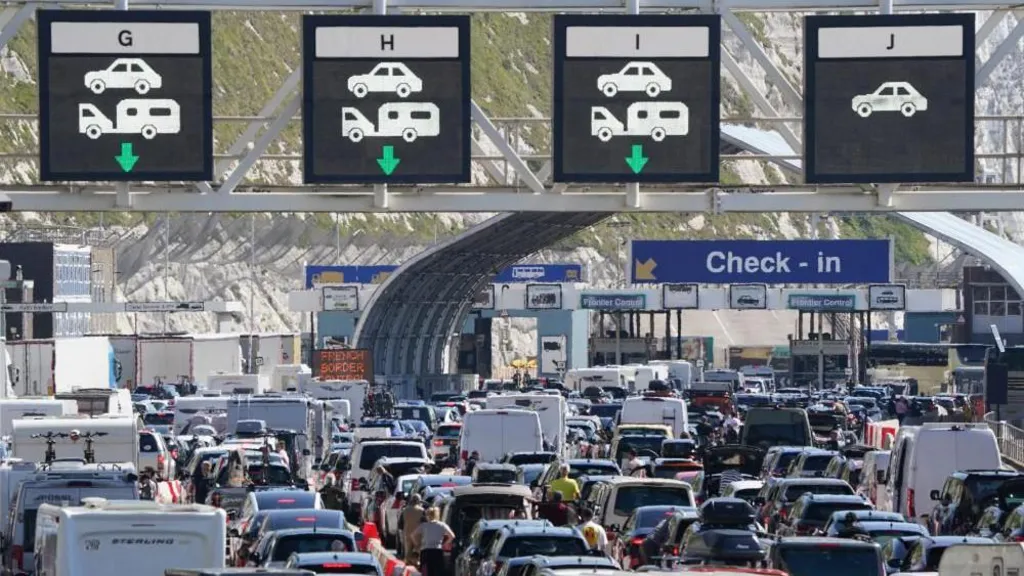
The disruption unfolded on Saturday as thousands of passengers tried to leave the UK for France during the May bank holiday weekend. Dover was expecting more than 8,000 travellers, making it the port’s busiest day of the year so far. Instead of a smooth getaway, many families found themselves caught in long queues on the roads leading to the eastern docks.
Port officials said they raised the issue with French border authorities after congestion became increasingly difficult to manage. The additional checks were then suspended to help clear traffic and reduce delays around the port.
The problem was not caused by ferries being cancelled. It came from slower processing at the border, where passengers must clear French checks before boarding. Dover is unusual because travellers complete French border formalities while still on UK soil, so any delay at the control booths can quickly push traffic back into the port and onto nearby roads.
The delays were linked to the European Union’s Entry/Exit System, known as EES. The system is designed to replace passport stamping with digital records for non-EU travellers entering 29 European countries. The European Commission says EES registers short-stay travellers each time they cross an external border and records details including passport data, facial images and fingerprints.
At Dover, the full biometric process had not yet been switched on for ferry passengers. Travellers were not going through the complete fingerprint-and-photo system on live machines. However, French border officers were still manually creating traveller profiles connected to the new process, which made each check take longer than usual.
That extra time was enough to trigger serious congestion. Some passengers reported spending more than two hours just trying to reach the port entrance. Others said they faced further waits inside the port before clearing passport control. Roads approaching Dover, including routes feeding in from the A20 and A2, were described by travellers as being at a standstill.
The timing made the situation more difficult. The UK was experiencing unusually warm May weather, with Friday becoming the hottest day of the year so far after temperatures reached 28.4C at Heathrow, Cambridge and Cranwell. Dover was forecast to reach around 25C on Saturday, while amber heat-health alerts were in place for parts of England.
For families travelling with children, the combination of static traffic, heat and limited information turned a routine ferry journey into a stressful start to the holiday. Passengers who had followed operator advice not to arrive too early still found themselves caught in the wider traffic build-up before check-in.
The Port of Dover said passengers who missed their booked ferry because of the queues would be allowed to travel on the next available crossing. Traffic leaving the port was also directed onto the A2 only as officials tried to control movement around the area.
The incident is important because it gives an early view of the pressure EES could place on major travel gateways during peak periods. Once the system is fully embedded, first-time registration is expected to take longer than a normal passport check because travellers need a digital profile. Repeat journeys should become quicker once the record already exists, but the first wave of registrations can still create bottlenecks.
For UK travellers, the change is part of a wider post-Brexit travel shift. British passport holders are now treated as non-EU travellers when entering the Schengen area, meaning digital border systems such as EES are becoming part of regular travel to Europe. Swikblog has previously explained how the EU Entry/Exit System is changing travel rules across 29 European countries.
Read More
- Visit Swikblog Homepage
- Noosa Marathon road closures as 9,000 runners take part
- Ontario couple loses $90,000 in Scotiabank fraud case
- Olive Garden sister chain closes Capital Grille location
- Rob Base dies at 59: ‘It Takes Two’ legacy remembered
- Charlotte Truck Race postponed during Kyle Busch tribute weekend
The European Commission’s official guidance says EES applies to non-EU nationals travelling for short stays and is intended to modernise border management across Europe. More details are available through the European Commission’s Entry/Exit System page.
Saturday’s suspension may ease the immediate queue problem, but it does not remove the bigger test ahead. Dover will face heavier passenger numbers during the summer holidays, when thousands more families are expected to travel by car to France and beyond.
Travellers planning to use Dover in the coming weeks should check live updates from the port and ferry operators before setting off, carry water in hot weather, and follow arrival-time instructions carefully. Arriving too early can add to the queue, while arriving late may leave passengers with little room to absorb border delays.
The suspension of extra checks shows that authorities can act when queues become unmanageable. But it also shows how fragile the system can become when new border rules, high passenger volumes and hot weather arrive at the same time.

Make Swikblog your go-to source on Google for reliable updates, smart insights, and daily trends.