
Queensland authorities have issued a clear warning to campers and holidaymakers as the state heads into its busiest outdoor season.
With summer travel set to surge over Christmas and New Year, wildlife rangers are stepping up patrols across parts of the Sunshine Coast hinterland following a sharp rise in illegal camping and antisocial behaviour.
According to the Queensland Department of Environment, Tourism, Science and Innovation (DETSI), more than $63,000 in fines have already been issued since mid-2023 in response to repeated breaches of national park and state forest rules.
More than 200 fines issued across popular camping areas
DETSI confirmed that 216 infringement notices have been handed out across Conondale National Park, Imbil State Forest and Jimna State Forest, with penalties totalling $63,363.
The affected areas surround the town of Kenilworth, a well-known base for campers, four-wheel-drive enthusiasts and visitors exploring the Sunshine Coast hinterland.
Officials say the fines reflect a growing challenge for park management as visitation increases, particularly during holiday periods when camping areas reach capacity.
Illegal camping and unsafe behaviour under scrutiny
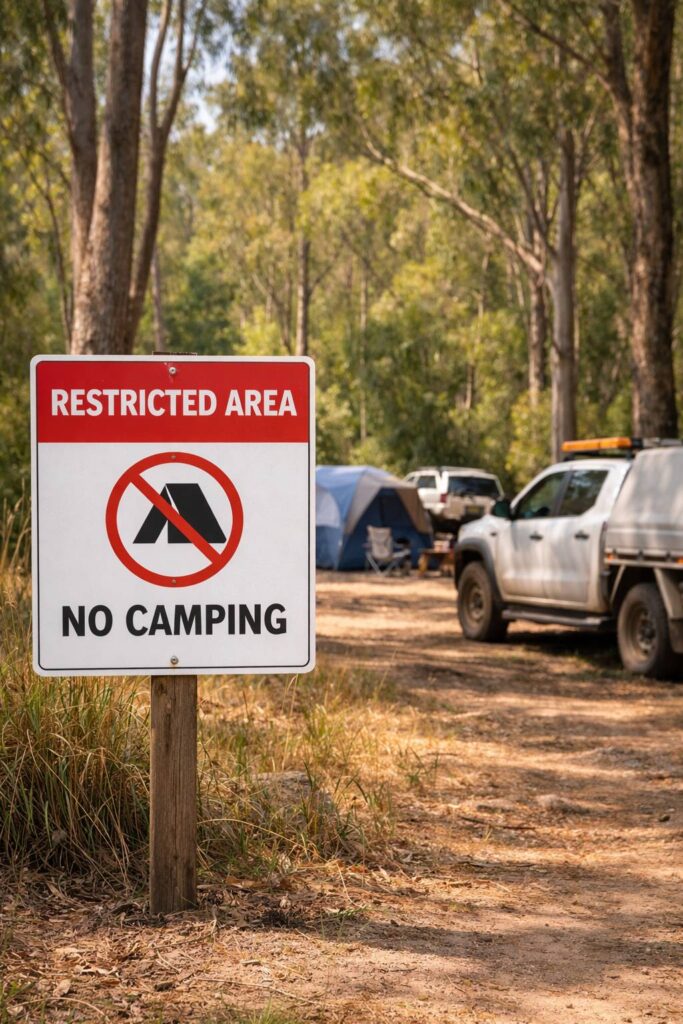
Rangers say the most common offences involve camping in restricted or closed areas, bringing domestic pets into protected zones, lighting unauthorised fires and driving vehicles off designated tracks.
Such actions can cause long-term environmental damage, disturb wildlife and put other visitors at risk.
Domestic animals are banned from many national parks to protect native species, yet surveillance has revealed people camping with unrestrained cats and dogs — animals known to have devastating impacts on local ecosystems.
Remote cameras reveal repeated rule-breaking
As part of enforcement efforts, remote surveillance cameras have been deployed throughout the Kenilworth region.
Footage captured in recent months shows vehicles being driven into restricted access areas after roadblocks were deliberately moved, as well as passengers travelling without restraints.
Other incidents recorded include loud music, binge drinking, littering and the misuse of deodorant cans to start fires — a particularly dangerous practice during Queensland’s dry summer months.
Authorities say these behaviours significantly increase the risk of bushfires and serious injury.
Rangers warn safety closures are being ignored
Senior Ranger Aaron Jensen from the Queensland Parks and Wildlife Service said most visitors respect the rules, but ongoing non-compliance remains a concern.
“Protected areas are closed or restricted for a reason — to keep people safe and to protect the environment,” Jensen said.
“We are increasingly worried that someone will get hurt if safety signage continues to be ignored.”
4WD tourism adding pressure to regional parks
Rangers say the popularity of destinations such as Teewah Beach, K’gari and Bribie Island has contributed to increased visitor numbers across nearby inland regions.
The mix of beach driving, forest tracks and scenic landscapes attracts photographers and off-road enthusiasts from across Australia, placing additional strain on camping infrastructure and enforcement resources.
While tourism brings economic benefits to towns like Kenilworth, authorities say it also highlights the need for responsible behaviour to ensure parks remain accessible for future visitors.
What campers should know this summer
Queensland officials are urging travellers to familiarise themselves with park rules before setting up camp, including:
- Only camping in designated, permitted areas
- Leaving pets at home where animals are prohibited
- Respecting road closures and access restrictions
- Using approved fire pits and observing fire bans
- Removing all rubbish and minimising environmental impact
Authorities say education remains a priority, but enforcement will continue throughout the summer holiday period.
How to report illegal activity
Anyone who witnesses unsafe or unlawful behaviour in Queensland’s national parks or state forests can report it anonymously by calling 1300 130 372.
Officials say public cooperation is essential to protecting some of the state’s most valued natural landscapes.
You May Also Like
A Brilliant ‘Christmas Star’ Will Light Up the Sky This December — Here’s When to Look

Make Swikblog your go-to source on Google for reliable updates, smart insights, and daily trends.