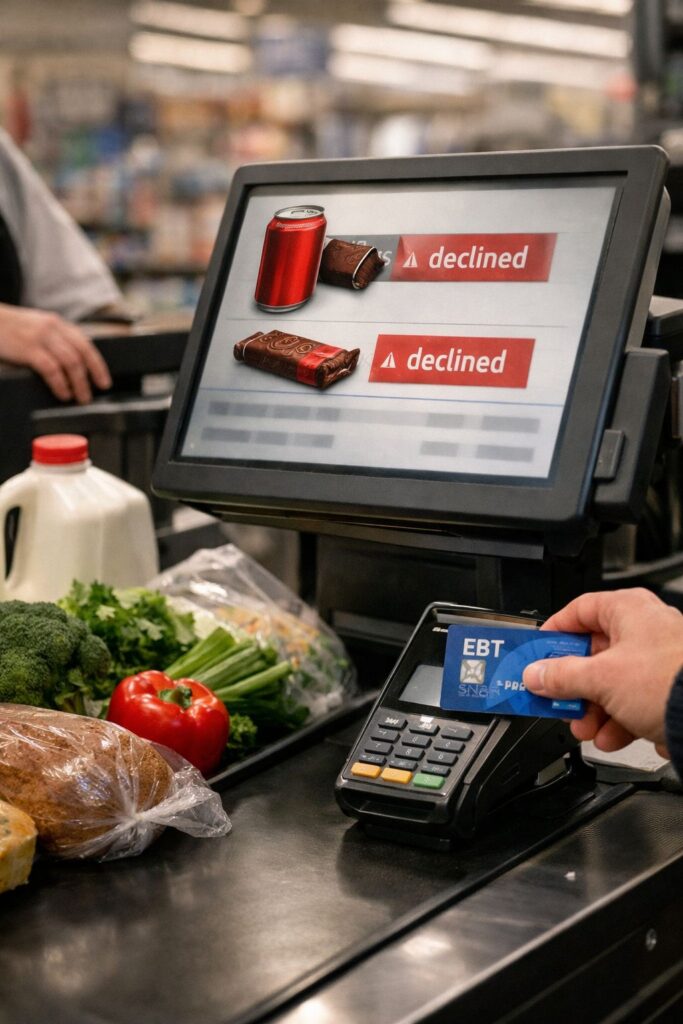

Major changes to the Supplemental Nutrition Assistance Program (SNAP will take effect on January 1, 2026, reshaping how millions of Americans buy groceries and sparking confusion, concern, and debate across the country. In five states, new restrictions will ban the use of SNAP benefits to purchase items such as soda, candy, and certain prepared foods, marking the most significant shift in the program’s rules in decades.
Indiana, Iowa, Nebraska, Utah, and West Virginia are the first states to implement waivers that limit what SNAP recipients can buy. Together, the changes will affect an estimated 1.4 million people, while setting a precedent for at least a dozen other states expected to follow with similar restrictions.
Federal officials backing the policy say the goal is to reduce diet-related diseases by preventing taxpayer-funded benefits from being spent on products considered unhealthy. Critics argue the changes are unclear, difficult to enforce, and risk making daily life harder for low-income families who rely on the program.
SNAP, once known as food stamps, serves about 42 million Americans through a federal program worth roughly $100 billion. For decades, benefits could be used to purchase nearly any food intended for human consumption, excluding alcohol, tobacco, and hot prepared meals, according to guidance from the U.S. Department of Agriculture.
Under the new rules, food eligibility will depend heavily on where shoppers live. In Utah and West Virginia, SNAP benefits can no longer be used to purchase soda or soft drinks. Nebraska will prohibit soda and energy drinks. Indiana’s restrictions target soft drinks and candy. Iowa has adopted the most complex system, tying SNAP eligibility to the state’s taxable food list.
That distinction has created confusing edge cases at grocery stores. In Iowa, a prepared salad without utensils may still be allowed under SNAP, while the same salad packaged with dressing and a plastic fork may be denied at checkout because it becomes a taxable item. Advocates warn such inconsistencies will leave shoppers uncertain and embarrassed at the register.
Retailers say they are unprepared for the rollout. Industry groups predict longer checkout lines, more rejected transactions, and higher costs as stores update payment systems and train staff. Estimates cited by the National Grocers Association suggest retailers could face billions of dollars in compliance and implementation expenses.
Anti-hunger advocates also warn the new rules may increase stigma for SNAP recipients. Many already report feeling judged while using benefits, and community organizations fear the added complexity will discourage people from shopping locally, particularly in border areas where nearby states follow different rules.
In eastern Iowa, advocates say some SNAP users are expected to shop in neighboring Illinois to avoid confusion. More than 20,000 people in Scott County alone rely on SNAP, and local leaders worry the changes could shift grocery spending across state lines.
Health policy researchers note that evidence on whether SNAP food restrictions improve diet quality remains mixed. Previous federal studies found that limiting eligible foods added administrative costs without producing consistent improvements in health outcomes.
The waivers will remain in effect for two years, with the option to extend them for up to five. Each participating state is required to study the impact of the changes. As the rules take effect, millions of families are preparing for a new grocery shopping experience shaped as much by state borders as by household budgets.
For more coverage on US policy changes and consumer impact stories, visit Swikblog.com.

Make Swikblog your go-to source on Google for reliable updates, smart insights, and daily trends.