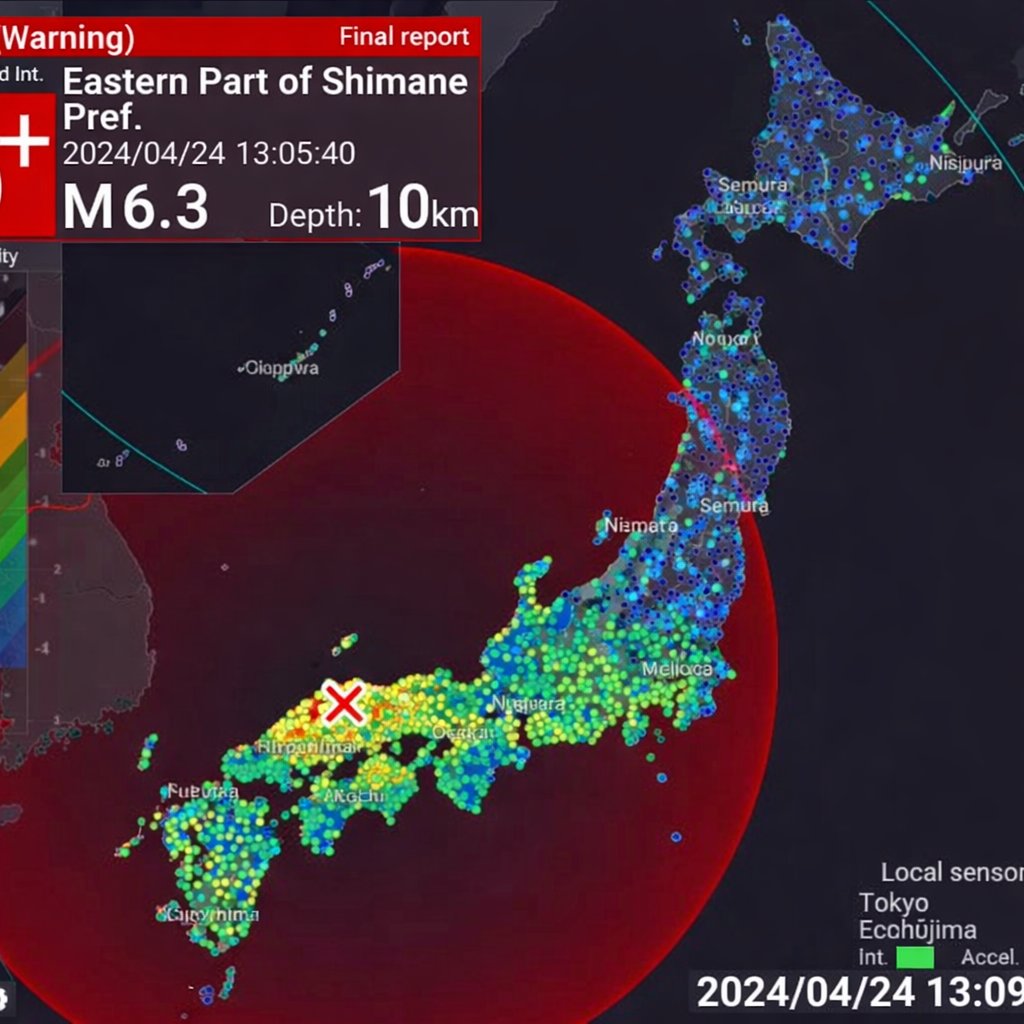

A powerful earthquake jolted parts of western Japan on Tuesday, rattling buildings, suspending high-speed train services, and reigniting public anxiety in one of the world’s most earthquake-prone nations.
The tremor, centered in eastern Shimane Prefecture, was felt across neighboring regions including Tottori, prompting emergency alerts and rapid safety inspections across transport networks and public buildings.
Buildings Damaged, Transport Disrupted
Local authorities confirmed minor structural damage across several municipalities, including reports of cracked exterior walls and ceiling panels falling inside public buildings. While no fatalities or serious injuries have been reported, officials moved quickly to assess risks and restrict access to affected structures.
Japan’s rail operators temporarily halted sections of major train lines, including high-speed services, as a precautionary measure. Engineers conducted track inspections before gradually restoring operations — a routine but critical response in Japan’s strict railway safety system.
According to Japan’s Meteorological Agency, the earthquake registered a strong seismic intensity in parts of Shimane, enough to be clearly felt indoors and to dislodge unsecured objects.
Liquefaction Reported in Tottori
In parts of Yonago City in neighboring Tottori Prefecture, officials reported signs of liquefaction — a phenomenon where saturated soil loses strength during intense shaking, causing water and sand to rise to the surface.
Liquefaction can undermine roads and foundations even when buildings remain standing, leading local governments to cordon off affected areas while inspections continue.
Watch on X
Public Anxiety and Search Surge
Search traffic surged across Japan following the quake, with people seeking live updates on seismic intensity, transport disruptions, and the possibility of further tremors.
Particular concern focused on whether the earthquake could be linked to a long-feared “megaquake” along the Nankai Trough — a massive undersea fault capable of triggering catastrophic earthquakes and tsunamis.
Experts: No Immediate Link to Megaquake
Seismologists interviewed by national media were quick to caution against speculation. Experts stressed that while Japan experiences frequent earthquakes, most are not precursors to larger events.
The Japan Meteorological Agency said there was no immediate evidence suggesting this quake would trigger a larger seismic event, though aftershocks remain possible in the coming days.
Authorities urged residents to remain alert, secure furniture, and review emergency preparedness plans — standard guidance after any significant tremor.
Why Earthquakes Still Disrupt Japan
Despite Japan’s advanced earthquake-resistant construction and early warning systems, even moderate earthquakes can cause disruption. Automatic safety protocols shut down trains, elevators, and industrial operations within seconds of detecting strong shaking.
These measures, while inconvenient, are designed to prevent far greater harm — a lesson learned from past disasters such as the 1995 Kobe earthquake and the 2011 Great East Japan Earthquake.
What Happens Next
Local governments in Shimane and Tottori continue to inspect schools, government offices, and transport infrastructure. Residents have been advised to watch for aftershocks, which are common in the hours and days following a main quake.
Japan’s disaster response teams remain on standby, and updates will continue as assessments progress.
For now, officials emphasize calm vigilance rather than alarm — a familiar message in a country that lives with seismic risk as part of daily life.
Related: Learn how Japan’s earthquake alert system works and why trains stop automatically during tremors.

Make Swikblog your go-to source on Google for reliable updates, smart insights, and daily trends.