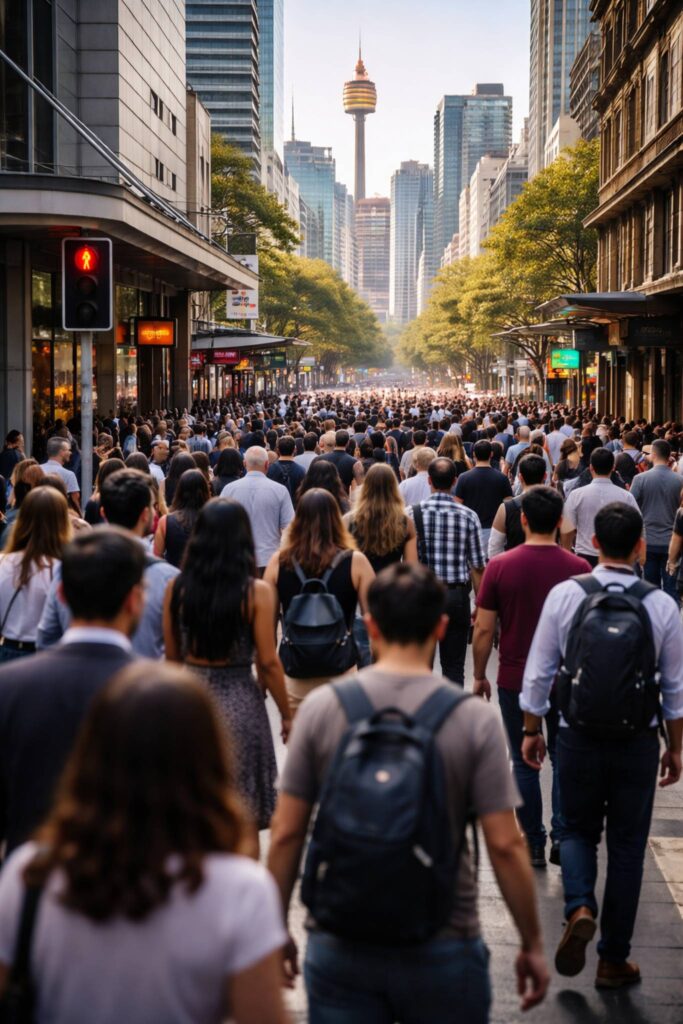

Australia is entering a defining demographic moment. With the nation’s population projected to reach 28 million people in 2026, the pace of growth is accelerating faster than many expected. While population increases have long shaped Australia’s economy and cities, the current surge — driven largely by migration rather than births — is raising urgent questions about housing, infrastructure, jobs, and long-term planning.
According to data from the Australian Bureau of Statistics, net overseas migration has become the dominant force behind population growth, while fertility rates remain near historic lows. This shift is reshaping not just population totals, but how and where Australians live.
Why Australia’s Population Is Growing So Quickly
Unlike past baby booms, Australia’s current population expansion is not being fueled by a surge in births. The national fertility rate has remained well below the replacement level of 2.1 children per woman for years. Instead, migration accounts for the majority of new population growth.
Post-pandemic border reopenings, strong labour demand, international student returns, and skilled visa programs have all contributed to rising migration numbers. Public broadcasters such as SBS News report that migration levels are now central to economic planning, workforce stability, and public service demand.
This shift means Australia’s population is not only growing faster, but also becoming more urbanised and culturally diverse, with major cities absorbing most new arrivals.
Australia key statistics (ABS snapshot)
| Indicator | Latest value | Reference period | Notes |
|---|---|---|---|
| Population | 27,614,411 | 30 June 2025 | Estimated resident population |
| Consumer Price Index (CPI) | 3.4% | Nov 2025 | Annual change |
| Gross Domestic Product (GDP) | 0.4% | Sep 2025 | Quarterly change |
| Average weekly earnings | $2,010.00 | May 2025 | Nominal |
| Unemployment rate | 4.3% | Nov 2025 | Seasonally adjusted (as published) |
Quick visual (rates)
CPI (3.4%), GDP quarterly (0.4%), Unemployment (4.3%)
Scale note: bars use a simple 0–10% scale for quick comparison.
Source: Australian Bureau of Statistics (ABS) website snapshot.
Housing Pressure Is the Biggest Immediate Impact
The most visible effect of population growth is being felt in the housing market. As more people arrive, demand for rentals and home ownership has surged, particularly in Sydney, Melbourne, Brisbane, and Perth.
Vacancy rates remain historically low in many regions, pushing rents higher and intensifying affordability concerns. Economists warn that housing supply has struggled to keep pace with population growth, creating bottlenecks that affect both renters and first-home buyers.
Government data suggests that without faster construction approvals and higher housing density, population growth could continue to outstrip supply, worsening cost-of-living pressures for years to come.
Jobs, Skills and Economic Opportunity
While housing challenges dominate headlines, population growth also brings economic benefits. A larger population expands the labour force, supports tax revenues, and helps offset Australia’s ageing demographic.
Migration has helped fill skill shortages in healthcare, construction, technology, and education. In regions facing workforce gaps, population growth has supported business expansion and regional development.
However, experts caution that growth must be matched with infrastructure investment. Without adequate transport, healthcare facilities, and schools, economic gains risk being undermined by congestion and service shortages.
Western Australia’s Rapid Rise
One of the most significant trends emerging from population forecasts is the rise of Western Australia. Long-term projections show WA is set to lead the nation in population growth through the coming decades, driven by employment opportunities, resource sector investment, and interstate migration.
Cities such as Perth are attracting both international migrants and Australians relocating from the eastern states in search of affordability and job security. This shift could gradually rebalance Australia’s population away from traditional east-coast dominance.
Infrastructure, Transport and Public Services
As Australia moves toward a population of 28 million and beyond, infrastructure will play a decisive role in quality of life. Roads, public transport, hospitals, and schools are already under strain in fast-growing corridors.
Urban planners argue that population growth is manageable — but only if governments plan proactively. Investments in public transport, renewable energy, water security, and healthcare capacity will determine whether growth feels like opportunity or overload.
What Australia Could Look Like by Mid-Century
Population forecasts extending toward 2060 and beyond suggest Australia could surpass 35 million people within a generation. This future would likely see denser cities, larger regional hubs, and a workforce increasingly reliant on skilled migration.
At the same time, balancing growth with environmental sustainability, housing affordability, and social cohesion will remain critical challenges. How Australia responds now will shape living standards for decades.
The Bottom Line
Australia’s population boom is not simply about reaching 28 million people — it’s about how the country adapts to rapid change. Migration-led growth brings opportunity, but only when paired with housing supply, infrastructure investment, and long-term planning.
As population numbers climb, the decisions made today will define Australia’s cities, economy, and quality of life well into the future.
You may also like:
More Australia news and explainers on Swikblog

Make Swikblog your go-to source on Google for reliable updates, smart insights, and daily trends.