
Greenland rarely dominates global headlines, yet in recent days the world’s largest island has re-emerged at the centre of political conversation. From sharp diplomatic language to renewed strategic interest, Greenland has become a focal point in a moment already defined by trade tension, market volatility, and fragile international relationships.
For many readers, the attention feels sudden. But the reasons behind it have been building quietly for years — and now they are converging.
A strategic location the world can no longer ignore
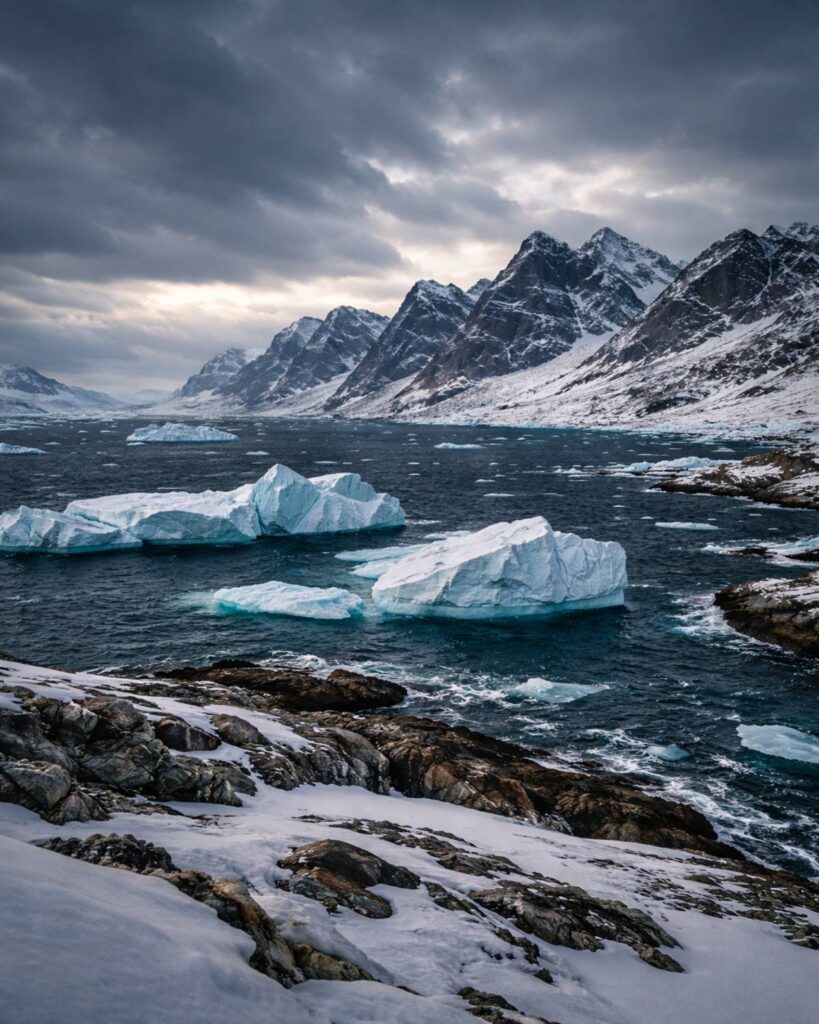
Greenland sits in a uniquely powerful position on the map. Located between North America and Europe, the Arctic territory has long been important for defence planning and transatlantic security. As climate change accelerates and Arctic ice continues to retreat, that strategic value is growing.
New shipping routes are slowly becoming more viable, shortening travel distances between continents. At the same time, military planners see the Arctic as increasingly exposed rather than remote. Geography that once felt irrelevant is now viewed as essential.
Why political rhetoric brought Greenland back into focus
Recent remarks from former US president Donald Trump, linking economic pressure and geopolitical leverage, helped pull Greenland back into the spotlight. While no formal policy changes have been announced, the language alone was enough to spark reactions across Europe.
Danish leaders responded firmly, emphasising that Greenland’s future is not a bargaining chip. Greenland operates as an autonomous territory within the Kingdom of Denmark, and decisions about its path rest with its people, not foreign governments.
When global leaders invoke territory — even indirectly — markets and diplomats pay attention. The reaction is often less about immediate action and more about what the tone signals for future cooperation.
Resources, climate, and long-term competition
Beyond politics, Greenland matters because of what lies beneath its surface. The island is believed to hold significant deposits of rare earth minerals and other resources critical to modern technology, renewable energy systems, and defence infrastructure.
Control over these materials has become a strategic priority for major economies, especially as supply chains face disruption elsewhere. As ice coverage changes, access to previously unreachable areas becomes more feasible, adding another layer of interest.
Climate change also ensures Greenland remains globally relevant. Melting ice sheets contribute directly to rising sea levels, making developments there a concern not just for Arctic nations but for coastal communities worldwide.
Why this matters beyond Greenland itself
Greenland is not a major economy, but its geopolitical importance can influence wider stability. Political uncertainty often ripples outward, particularly when it overlaps with trade disputes, tariff threats, and strained diplomatic ties.
This is why Greenland’s sudden prominence has coincided with broader market unease. Investors tend to react when alliances appear fragile or when long-standing assumptions about cooperation are questioned.
For everyday readers, the issue is not about Greenland becoming a flashpoint overnight. It is about what its renewed visibility represents: a world where strategic competition is widening and where geography once seen as peripheral is now central to global debate.
In the short term, attention is likely to remain political rather than practical. Any meaningful change involving Greenland would require complex negotiations between its government, Denmark, and international partners.
Still, Greenland’s return to the headlines reflects deeper shifts shaping global politics, markets, and climate discussions. As those forces continue to evolve, the island’s strategic role is unlikely to fade again anytime soon.
For trusted international reporting on Greenland and Arctic geopolitics, readers can follow coverage from BBC News and background analysis from Reuters. You can also explore how rising global tensions are already affecting markets in our related coverage on global market volatility and trade pressure.

Make Swikblog your go-to source on Google for reliable updates, smart insights, and daily trends.