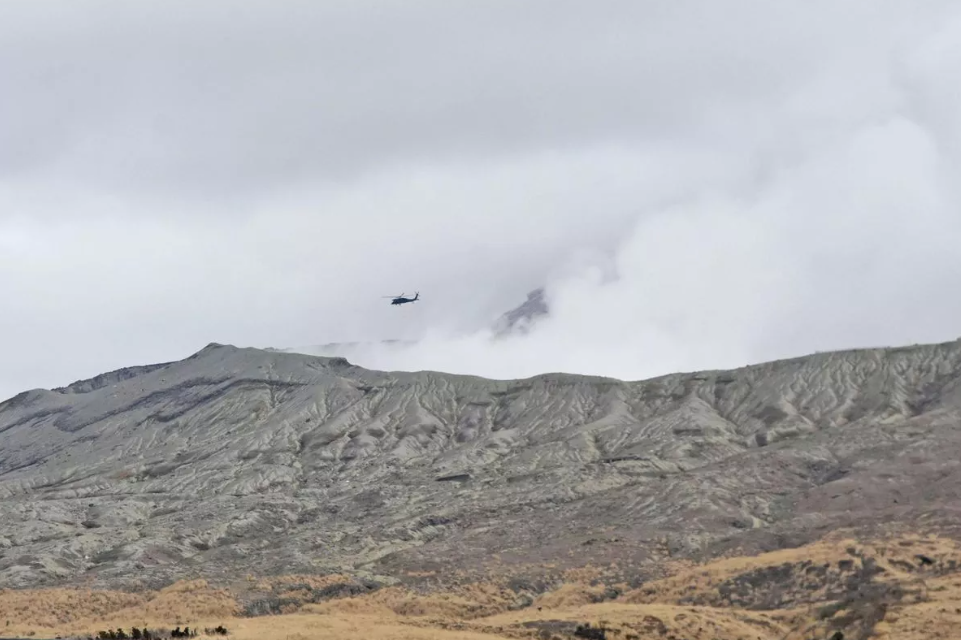
Search teams in southwestern Japan are working to locate a sightseeing helicopter after it lost contact near Mount Aso, one of the country’s most closely watched active volcanoes and a magnet for visitors seeking sweeping caldera views.
Local authorities said the aircraft was believed to have three people on board: two tourists from Taiwan and a Japanese pilot. The helicopter had been operating a short scenic route in the Aso area of Kumamoto Prefecture when communication was lost late Tuesday morning, triggering an urgent response from police and fire services.
Mount Aso’s dramatic terrain is a big part of its appeal — but also what makes incidents here so challenging. The mountain’s active crater zone can be affected by sudden weather shifts, low cloud, and volcanic gases that limit visibility and complicate search operations.
What we know about the flight
According to reporting from Japanese and regional outlets, the helicopter departed at about 10:52 a.m. from a tourist facility connected to Aso Cuddly Dominion, a popular attraction that also offers panoramic flights over the surrounding caldera. The aircraft was expected to return shortly after 11 a.m. following a roughly 10-minute sightseeing route — but it did not arrive as scheduled.
One widely reported detail: the helicopter was said to have been on its third sightseeing flight of the day. The operator reportedly indicated there had been no issues raised during the first two flights, making the sudden loss of contact particularly concerning for responders.
Japanese media reports also placed the last known contact near the Nakadake crater area, a zone known for active emissions. For context, visitors and operators in the region are advised to follow crater access restrictions and safety warnings, which can change rapidly depending on gas levels and volcanic conditions.
Search efforts and conditions on the ground
Police and fire crews moved quickly to search the area around Mount Aso, but conditions can be harsh even in daylight: ridgelines, open caldera slopes, and sparse cover can make ground searches slow, while cloud or steam can limit what aircraft can see from above.
In parallel, Taiwanese officials said they were in contact with Japanese authorities as information emerged that the missing passengers were tourists from Taiwan. As the search continued, officials warned that weather and crater conditions could affect how quickly teams could operate safely in the highest-risk areas.
Mount Aso is a living volcano, and the crater’s environment is not like standard mountain terrain. The region’s own crater guidance warns that gas emissions can rise suddenly and prompt temporary restrictions, even when there is no eruption. That’s why authorities often coordinate closely with monitoring and safety systems before pushing deeper into restricted zones.
If you’re trying to keep track of official restrictions around the crater area, the local crater guidance site is a useful public reference: current access and restriction updates for the Aso crater area.
Why Mount Aso matters to travelers
For many visitors, Mount Aso is one of the highlights of Kyushu: a vast caldera, green plateaus, and the chance — when conditions allow — to view an active crater from designated observation points. Helicopter tours are marketed as a quick way to take in the scale of the landscape, particularly for travelers with limited time or mobility.
But the same features that make the area spectacular also raise the stakes for aviation. Volcanic gases, updrafts, and rapidly changing visibility can be hazards, which is why operators typically plan short routes and why access rules can tighten without much notice.
For travelers heading to the Aso area, it’s a good moment to check updates before you go — not only for weather, but also for volcano-related access and safety notices. The Japan Meteorological Agency provides public volcanic warning information as part of its national hazard monitoring system: Japan Meteorological Agency volcanic warnings and alerts.
What happens next
Officials have not publicly confirmed the helicopter’s location or the condition of the people on board at the time of writing. In incidents like this, early information can change quickly as search teams cover ground and as visibility improves.
For readers following developments, it can help to rely on primary reporting and official statements as they arrive. Two sources tracking the situation closely include: Nippon.com’s report citing local authorities and the Taipei Times coverage citing Kyodo and Taiwan’s office in Fukuoka.
We’ll update this story as more confirmed details are released. For more travel and global breaking updates, visit Swikblog.
Note: This is a developing situation. Early reports may shift as authorities confirm timelines and conditions.

Make Swikblog your go-to source on Google for reliable updates, smart insights, and daily trends.