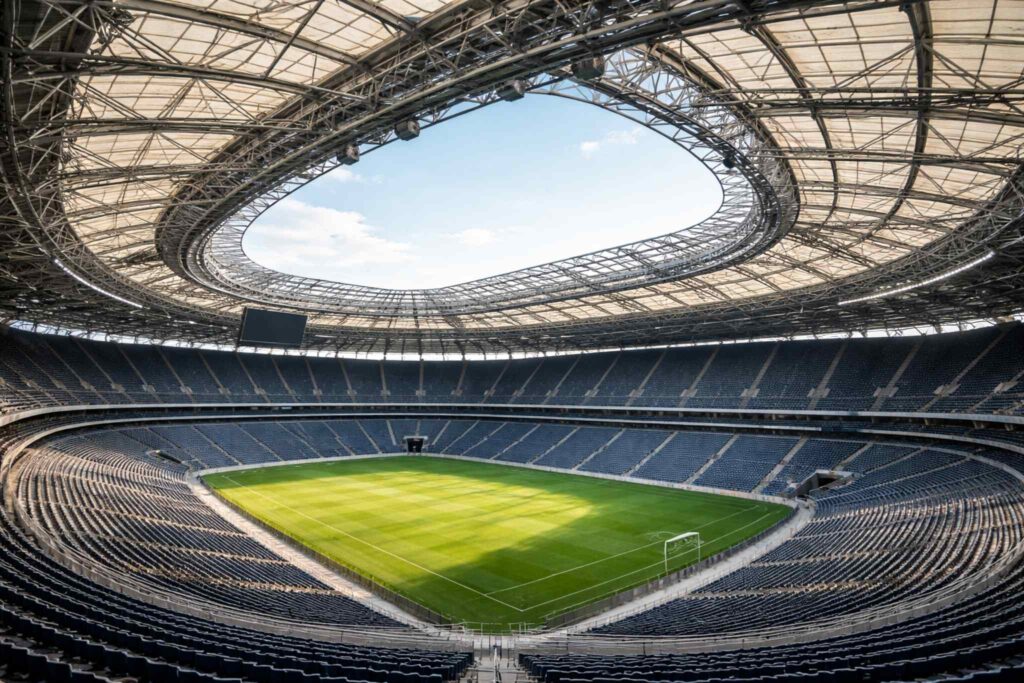

Most of us go to a match for the noise, the rivalry, or just the smell of overpriced burgers and cut grass. We stare at the pitch, maybe glance at the scoreboard, but we rarely look straight up. It’s a shame, really, because the roof of a massive sports arena is usually the most impressive bit of engineering in the whole postcode. It isn’t just a giant umbrella; it’s the thing that actually controls how the game feels and sounds.
The Noise Factor
Have you ever been to a stadium that felt “dead” even when it was full? That’s usually bad acoustics. The best grounds are designed like massive speakers. Architects have to be clever about this. If they use the right materials, they can bounce the chanting and cheering right back down onto the field, making the home crowd sound twice as loud.
But it’s tricky. If you bounce too much sound, the PA announcer sounds like they are speaking underwater. The modern trick is using specific linings that soak up the messy echoes but keep the sharp, loud roar of the crowd. It turns a building into an instrument.
Handling the British Weather
The biggest headache for any stadium designer, especially in the UK, is rain. When you have a roof the size of four football pitches, a sudden downpour isn’t just a puddle; it’s tons of water weight hitting the structure all at once. Getting that water off quickly is a matter of safety, not just convenience.
This is where heavy-duty construction techniques really matter. The way these massive canopies are sealed and drained isn’t all that different from how we protect factories or large warehouses. It’s all about trust in the materials. For instance, when local companies look for industrial roofing services in Bath, they are essentially chasing that same reliability. You need systems that won’t fail when the weather turns nasty. Whether it is installing industrial flat roofing Bath systems to stop water pooling, sourcing specific industrial roofing products Bath for tough cladding, or handling complex apex industrial roofing Bath repairs, the principle is identical: keep the water out and the structure standing, no matter what the sky throws at it.
More Than Just Metal
Stadium roofs are starting to pay for themselves, too. We used to just slap corrugated metal up there and call it a day. Now, designers are embedding solar panels into the actual fabric of the roof to help power the floodlights.
They are also using weird, space-age materials like ETFE plastic bubbles. These let natural light hit the grass which keeps the groundskeeper happy, but they block the UV rays that burn you. It saves money on electricity and keeps the grass growing, just by being smart about what covers the stands.
Keeping it Standing
At the end of the day, these places are huge investments. If the roof leaks, the seats rot, the electronics fry, and the venue loses money. It’s the unglamorous side of sports, but regular maintenance is the only thing stopping a billion-pound stadium from turning into a rust bucket. It’s the silent workhorse of the stadium, sitting up there in the clouds, making sure we can enjoy the game dry and loud.

Make Swikblog your go-to source on Google for reliable updates, smart insights, and daily trends.