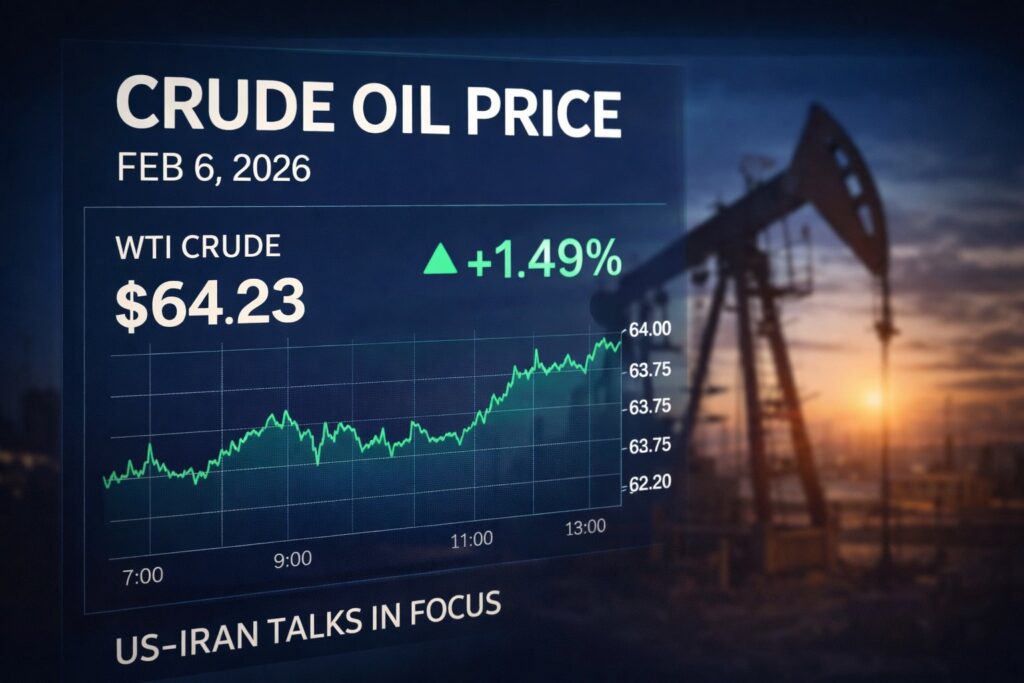

Oil traded higher in a choppy session as headline risk from US–Iran nuclear discussions kept a geopolitical premium in play, even as markets continued to argue about the outlook for oversupply.
Mobile market snapshot: WTI crude oil futures
| Metric | Value | What it tells traders |
|---|---|---|
| WTI price | 64.23 USD per barrel | Benchmark is holding above the mid-$60 area after a volatile session. |
| Daily change | +0.94 or +1.49% | Buyers regained control as risk pricing firmed on fresh geopolitical headlines. |
| Session timestamp | As of 12:14 PM EST on 02/06/26 | Marks the point-in-time quote used for this update. |
| Open | 63.10 | Shows a firmer start that quickly turned into a headline-driven swing. |
| Previous close | 63.29 | Helps frame whether the move is momentum or a reversal. |
| Day range | 62.20 to 64.58 | Wide range signals volatility and quick re-pricing around news flow. |
| 52-week range | 54.98 to 78.40 | Shows crude is off its highs, but still sensitive to disruption risk. |
| Volume | 284,264 | Participation was active enough to validate the intraday swing. |
Mobile tip: this table scrolls sideways on small screens.
Crude oil rose into the end of the week, with West Texas Intermediate trading near 64.23 a barrel as investors tried to price two competing forces at once: a renewed dose of geopolitical uncertainty and a market narrative that still leans toward abundant supply. The result was a session that looked less like a clean trend and more like a tug-of-war, with prices whipping between 62.20 and 64.58 before stabilizing closer to the upper end of the range.
The immediate catalyst was the shifting tone around nuclear discussions between Washington and Tehran. Early optimism can cool risk fears, but ambiguity tends to do the opposite, and traders responded quickly to each fresh headline. When officials signaled progress, crude briefly looked vulnerable to the idea of fewer supply disruptions. When sticking points resurfaced, the market rebuilt a premium. That back-and-forth is why crude can look calm on a daily percentage move while still being unusually volatile under the surface.
That risk pricing matters because the Middle East remains central to the world’s oil balance. Even without a direct interruption, the region’s weight in global exports means markets rarely ignore elevated tensions for long. Traders commonly express this as a premium layered onto front-month futures, particularly when positioning is light and liquidity is thin enough for news to move price quickly. In practical terms, it helps explain why WTI can climb despite persistent chatter about oversupply.
At the same time, oil’s weekly picture has been less supportive. Futures have been flirting with their first weekly decline in weeks, a reminder that broader supply expectations still cap rallies. When the market believes extra barrels are likely to emerge, it becomes harder for crude to sustain moves above key levels unless demand surprises to the upside or disruptions become unmistakable. The 52-week band on your screen, from 54.98 to 78.40, tells the same story: traders have already lived through wide ranges, and they are cautious about paying up without a clearer reason.
There were also subtle signals on the demand side that kept oil supported. A brighter read on consumer mood in the United States eased near-term recession anxiety and helped risk assets firm, which can spill into crude when markets interpret it as less pressure on fuel demand. Even so, demand optimism has to compete with the reality that oil is a global commodity: consumption trends in Asia, refinery runs, and shipping activity often matter as much as any single U.S. data point.
Meanwhile, developments beyond the Middle East added to the “risk on, risk off” tone. Diplomacy tied to the Russia–Ukraine conflict can influence energy sentiment even when it does not immediately alter physical supply. Investors tend to treat progress toward de-escalation as a volatility dampener and setbacks as a volatility amplifier. In markets like crude, where positioning can flip quickly, that background noise becomes part of the day’s price texture.
Another factor traders watch closely is how major producers price their barrels into key regions. Saudi official selling prices for Asian customers were cut by less than some expected, a move that can be read two ways: confidence that demand can absorb supply, and caution that pricing still needs to stay competitive. The nuance matters because it shapes expectations for refinery buying and inventory draws. When official prices move, it can shift margins and alter how refiners choose between Middle Eastern crude grades and alternatives.
Put together, today’s action is best understood as a market holding a narrow conclusion with a wide margin of error. WTI is trading higher near the mid-$60s not because traders have embraced a single dominant story, but because they are constantly repricing probabilities: the chance of escalation, the odds of additional barrels returning to market, and the resilience of demand. If you want a quick mental map, the session range itself is a clue. When crude can travel more than two dollars inside a single day, it is telling you uncertainty is the product.
For readers tracking the move in real time, the key takeaway is simple: crude remains headline-sensitive, and that usually means sudden spikes and sudden fades can both appear without warning. The current quote near $64 keeps the market within a familiar zone where neither side is fully in control. Until traders get more clarity on geopolitics and the supply outlook, price action is likely to stay reactive rather than directional, with volatility doing most of the talking. For more context on the drivers moving the tape today, see this crude oil update on US–Iran talks and the shifting risk premium.

Make Swikblog your go-to source on Google for reliable updates, smart insights, and daily trends.