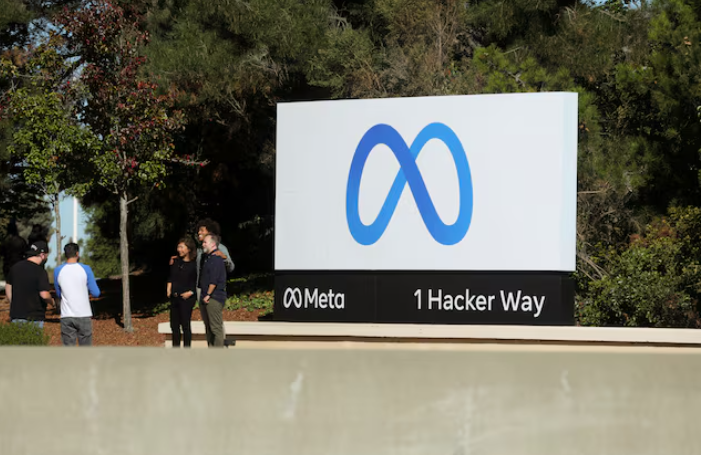

Meta Platforms (NASDAQ: META) is once again leaning into a strategy that Wall Street knows well — and so far, investors seem to be rewarding it. The stock jumped to $627.45, up 2.33%, after the company unveiled a massive $27 billion AI infrastructure deal with Nebius and reports surfaced that Meta could be preparing for its largest round of layoffs in years.
The combination of aggressive AI investment and potential cost-cutting is not new for CEO Mark Zuckerberg. In fact, it closely mirrors the company’s 2023 “year of efficiency,” when Meta slashed thousands of jobs, tightened operations, and ultimately regained investor confidence. This time, however, the stakes are higher, with artificial intelligence at the center of the company’s long-term growth strategy.
A familiar playbook returns
Meta’s approach follows a pattern that has increasingly defined its strategy: reduce headcount while ramping up spending in high-priority areas like AI. The reported layoffs — potentially around 20% of the workforce — have not been officially confirmed by the company, but even the possibility has reinforced a message investors understand well: discipline alongside ambition.
This “one-two punch” of cutting costs while investing in future technologies has become a broader trend across corporate America. Companies are no longer choosing between growth and efficiency. Instead, they are attempting to deliver both simultaneously — signaling financial responsibility while still chasing long-term innovation.
For Meta, this balancing act has worked before. And that history is a major reason why the market reacted positively to the latest developments.
The $27 billion AI bet
The centerpiece of Meta’s latest move is its cloud computing agreement with Nebius, valued at up to $27 billion over five years. The deal secures critical infrastructure needed to support Meta’s expanding AI ambitions, including training large-scale models and powering AI-driven features across its platforms.
In today’s environment, access to computing power is just as important as talent or data. By locking in long-term capacity, Meta is positioning itself to compete more aggressively in the AI race against rivals like Microsoft, Google, and Amazon.
Importantly, this investment signals that Meta is not slowing down in AI — it is accelerating. And that reassurance appears to be one of the main drivers behind the stock’s move higher.
Why investors are backing Zuckerberg again
Despite ongoing skepticism in parts of the market about whether massive AI spending will generate meaningful returns, Meta continues to benefit from a crucial advantage: its highly profitable advertising business.
Meta’s ad engine remains a consistent cash generator, giving the company flexibility to take financial risks that others might not afford. That profitability creates a cushion, allowing Meta to invest billions into AI without immediately threatening its financial stability.
It also helps explain why investors are giving Zuckerberg the benefit of the doubt. The success of the 2023 efficiency push demonstrated that Meta can pivot quickly, improve margins, and still invest in future growth. That credibility is now carrying over into the current AI cycle.
As Zuckerberg previously noted, “Profitability enables innovation.” The latest strategy appears to put that idea into action once again.
AI and productivity: the next phase
Beyond infrastructure and spending, there is another layer to Meta’s strategy that could define its next phase: using AI to improve internal productivity. While the company has not explicitly confirmed that layoffs are tied to AI adoption, the broader industry trend suggests that automation and AI-assisted workflows are becoming increasingly important.
If Meta is indeed moving toward a more AI-driven workforce, it could unlock a new level of efficiency — not just through cost cuts, but through enhanced output from remaining employees. In that scenario, AI is not only a growth driver but also a tool for operational optimization.
This dual role of AI — as both revenue enhancer and cost reducer — is one of the most compelling aspects of Meta’s current strategy.
A model other companies may follow
Meta’s latest move highlights a broader shift taking place across the corporate landscape. Companies are increasingly adopting a similar approach: invest heavily in AI while finding ways to offset those costs through efficiency gains.
In many ways, Meta may be setting the template. The idea of running a leaner organization powered by advanced AI tools is no longer theoretical. It is becoming a practical goal for large enterprises looking to remain competitive in a rapidly evolving technological environment.
If Meta succeeds again, it could reinforce a new corporate playbook — one where fewer employees, more automation, and higher productivity become the norm rather than the exception.
What comes next for META stock
For now, the market’s reaction is clear. Meta’s stock rise to $627.45 reflects confidence not just in the company’s AI ambitions, but in its ability to execute a strategy that balances growth with discipline.
Still, questions remain. Investors will be watching closely to see whether AI investments translate into tangible revenue gains and whether potential layoffs impact innovation or long-term competitiveness.
But if history is any guide, Meta’s latest move may not be a gamble — it may simply be a repeat of a strategy that has already proven successful.
For more details, visit Meta Investor Relations or explore META stock updates on Yahoo Finance.
you may like
Make Swikblog your go-to source on Google for reliable updates, smart insights, and daily trends.