
A routine regional flight turned into a dramatic emergency landing in Western Australia after a light aircraft crashed into shallow waters near Broome, an area known for its dense mangroves and frequent crocodile sightings.
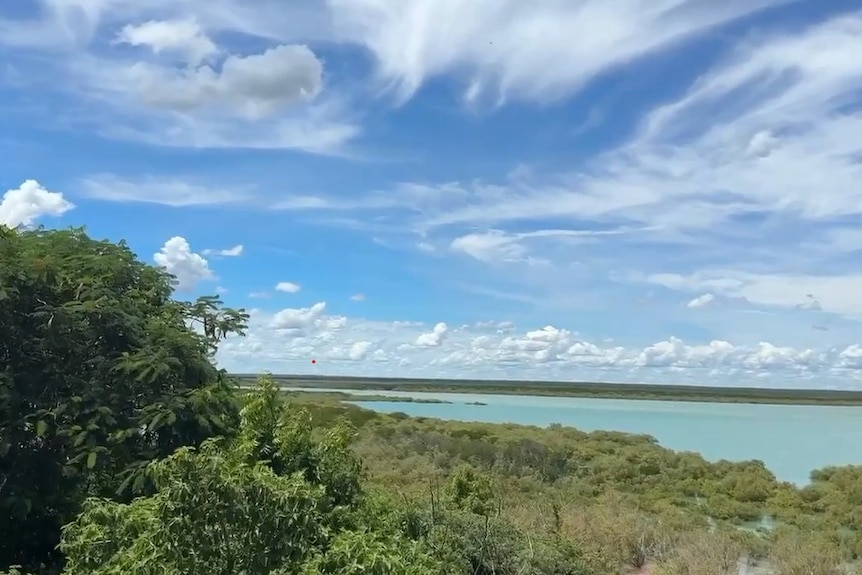
The incident unfolded late Thursday morning at Fisherman Bend in Roebuck Bay, a remote coastal stretch in the Kimberley region. Authorities confirmed that the aircraft came down shortly after takeoff, prompting an immediate multi-agency rescue operation.
Crash unfolds minutes after takeoff
The aircraft, identified as a Cessna 441, had departed from Broome Airport and was airborne for only a few minutes before losing altitude. Aviation tracking data suggests the plane reached speeds of over 230 km/h before slowing sharply just moments before contact was lost.
Witnesses described seeing the aircraft flying unusually low before dipping toward the mangroves.
“It looked like it was turning at an angle and then dropping lower and lower,” one onlooker said, recalling the moment the plane disappeared from view.
Emergency crews rush to crocodile territory
The crash site lies within a known crocodile habitat, adding urgency and complexity to the rescue effort. Roebuck Bay is part of an official crocodile control zone, with saltwater crocodiles commonly spotted along its muddy shoreline.
Emergency responders, including police, marine rescue teams, ambulance crews, and fire services, quickly secured the area and began assisting those on board.
Initial reports indicate that seven people were on the aircraft, including two pilots and five passengers.
Injuries reported but no fatalities
Authorities confirmed that all individuals survived the crash. One person sustained minor head injuries, while others were assessed on-site before being transported to Broome Hospital as a precaution.
Medical teams stated that no life-threatening injuries were reported, a remarkable outcome given both the crash conditions and the surrounding environment.
The rescue operation included aerial support, with helicopters seen winching individuals from the water while boats secured the perimeter.
Investigation underway into cause
The Australian Transport Safety Bureau (ATSB) has been notified and is now gathering information to determine what led to the sudden descent.
Early indications suggest the aircraft may have experienced difficulties shortly after takeoff, but no official cause has yet been confirmed.
Further updates are expected as investigators analyze flight data and examine the crash site.
For broader aviation safety updates and incident coverage, readers can follow developments via official ATSB reports.
Remote location adds to challenge
Roebuck Bay, located more than 2,000 kilometres north of Perth, is known for its rugged terrain, tidal flats, and thick mangrove systems. While popular for fishing and boating, its isolation makes emergency access more difficult.
The aircraft was reportedly en route to a remote airstrip serving offshore oil and gas operations, highlighting the critical role such flights play in connecting isolated parts of Australia.
Despite the dramatic circumstances, the absence of fatalities has brought relief to local authorities and the community, who witnessed the intense rescue effort from nearby shorelines.

Make Swikblog your go-to source on Google for reliable updates, smart insights, and daily trends.