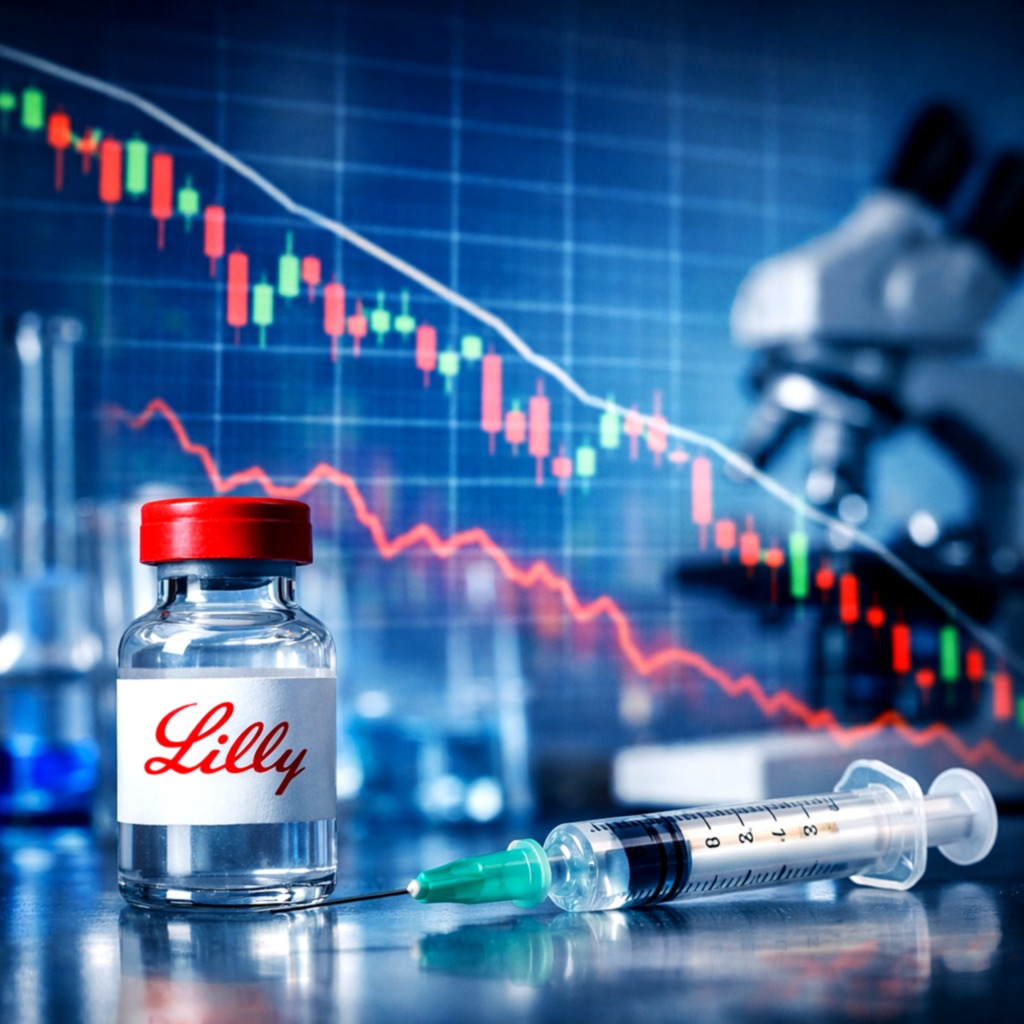

Eli Lilly (NYSE: LLY) stock fell 2.09% to $878 even as the US drugmaker moved ahead with a major $2 billion artificial intelligence (AI) drug development deal with a Hong Kong-listed biotech company, highlighting a growing gap between long-term strategy and short-term market reaction.
The agreement, reported on Sunday, will see Eli Lilly partner with a biotech firm specializing in AI-driven drug discovery, a rapidly emerging field that aims to speed up how new medicines are identified and developed. The deal underscores Lilly’s increasing focus on using advanced technology to strengthen its future pipeline, even as investors appeared unimpressed in the immediate term.
Despite the headline-grabbing size of the deal, LLY shares closed lower and slipped further in after-hours trading, suggesting that broader market sentiment or valuation concerns outweighed the strategic significance of the announcement.
Eli Lilly expands AI push with Hong Kong biotech tie-up
The partnership is centered on leveraging artificial intelligence to identify and develop new drug candidates faster and more efficiently. The Hong Kong-listed biotech company involved in the deal is known for its AI-driven platforms that analyze massive datasets to discover potential treatments, cutting down the early-stage trial-and-error process that traditionally defines pharmaceutical research.
For Eli Lilly, this is not just another collaboration. It reflects a deeper shift in how large pharmaceutical companies are approaching innovation. Instead of relying solely on internal research or traditional methods, Lilly is increasingly turning to external, tech-driven platforms to enhance its drug discovery capabilities.
Artificial intelligence has become one of the most closely watched trends in the healthcare sector. Companies believe it can reduce development timelines, lower costs, and improve success rates in early-stage research. In an industry where bringing a single drug to market can take over a decade and cost billions, even incremental improvements can have a major financial impact.
The deal also highlights the growing importance of cross-border partnerships. By teaming up with a Hong Kong-listed biotech firm, Lilly is tapping into a global network of innovation, particularly in Asia, where AI-driven biotech research has been gaining momentum.
According to the original report, the agreement could be worth up to $2 billion, depending on development milestones, signaling a long-term commitment rather than a one-time investment. You can read more about the development in this detailed Yahoo Finance report.
Stock reaction shows investor caution
While the strategic intent behind the deal is clear, the market response tells a different story. Eli Lilly stock declined 2.09% on the day, closing at $878, with additional weakness seen in after-hours trading. That kind of reaction suggests investors are currently more focused on near-term factors rather than long-term innovation bets.
One reason could be expectations. Eli Lilly has been one of the standout performers in the pharmaceutical sector, largely driven by its blockbuster diabetes and weight-loss drugs. With such strong momentum already priced into the stock, new announcements may need to deliver immediate revenue visibility to trigger a positive reaction.
Another factor is timing. AI-driven drug discovery is still an evolving field. While it holds enormous promise, it does not guarantee near-term results. Investors may view this deal as a multi-year investment rather than something that will impact earnings in the next few quarters.
There is also a broader market dynamic at play. Large-cap healthcare stocks, including Lilly, often face pressure when valuations run high. In such situations, even positive news can fail to lift shares if traders are already looking for reasons to lock in profits.
Still, the move fits into a larger pattern. Eli Lilly has been actively investing in expanding its research capabilities and pipeline depth. By integrating AI into its strategy, the company is positioning itself for the next phase of pharmaceutical innovation, where speed and data-driven insights could become key differentiators.
The real question is whether these investments will translate into breakthrough drugs. If AI helps Lilly discover and develop successful treatments faster than competitors, the long-term payoff could be substantial. But for now, the market appears to be taking a wait-and-see approach.
In the near term, LLY stock may continue to be influenced by broader sentiment, earnings expectations, and developments in its core drug portfolio. Over the longer horizon, however, this $2 billion AI deal could prove to be a defining step in how the company builds its next generation of therapies.
For investors, the takeaway is straightforward. Eli Lilly is not standing still. Even as its current drugs dominate headlines, the company is quietly investing in the technologies that could shape the future of medicine. The stock may have fallen on the day, but the strategy behind the move suggests a company preparing for what comes next.
Meanwhile, broader travel disruptions continue to weigh on sentiment, with recent reports highlighting how TSA staffing shortages and government shutdown concerns have triggered long airport delays across the US. You may like: TSA shutdown crisis sparks massive flight delays at US airports.

Make Swikblog your go-to source on Google for reliable updates, smart insights, and daily trends.