
The western United States is entering what experts are calling a deeply alarming phase of drought, and early signs suggest 2026 could become one of the most severe water crisis years in modern history. After a historically warm and dry winter, snowfall across the Rockies — the primary source of water for the Colorado River — has dropped to nearly half of normal levels, leaving reservoirs dangerously low and forcing authorities to impose strict water-use restrictions across multiple states.
The Colorado River, a lifeline for millions of people across Arizona, Nevada, California, Utah, Colorado and beyond, is now at the center of the crisis. Scientists warn that river flows this year may fall to the lowest ever recorded, raising concerns not just about water supply but also about food production, electricity generation and economic stability.
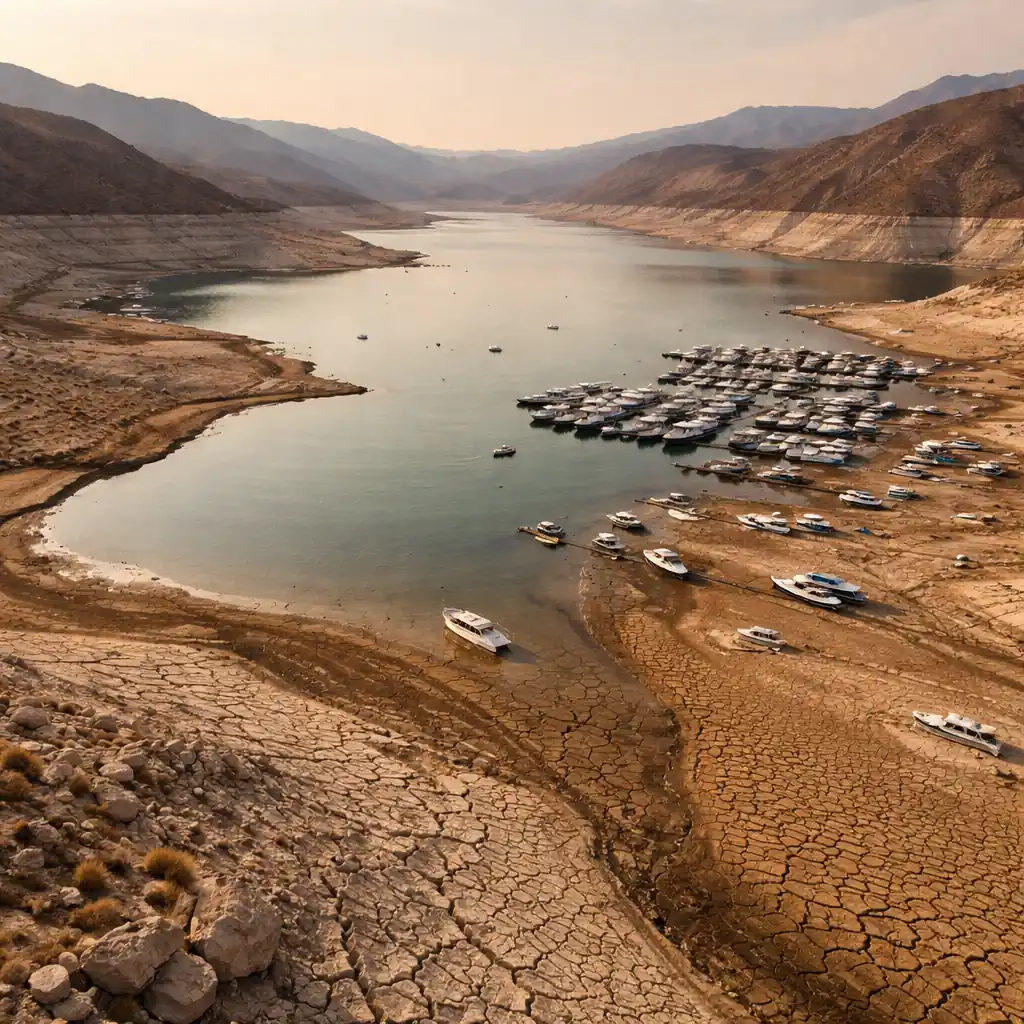
In Colorado’s Frisco region, the situation has already become visible in unexpected ways. Families who planned ski vacations are instead sitting along exposed shorelines, as lakes shrink and snow disappears far earlier than usual. Lake Dillon, a key drinking water source, is currently sitting at less than 60% capacity — with docks stranded far from the water and barely any snowmelt feeding the reservoir.
Snowfall collapse triggers chain reaction across water system
Snowpack in the Rocky Mountains acts as a natural storage system, gradually melting to refill rivers and reservoirs through spring and summer. This year, that system has largely failed. Warmer temperatures and lack of snowfall mean less water is flowing into critical reservoirs like Lake Powell and Lake Mead.
Lake Powell, one of the largest reservoirs in the United States, is now expected to fall to near-record low levels by late summer. Officials are even preparing to relocate parts of the Bullfrog Marina as water levels drop. If levels fall below what is known as “power pool,” the dam may no longer be able to generate hydroelectric power — putting electricity supply for nearly 500,000 households at risk.
The situation has already disrupted infrastructure. Boat ramps are hanging hundreds of feet above water, ferry services have stopped, and tourism — which brings millions of visitors annually — is facing uncertainty.
Water experts are sounding the alarm. Climate scientist Brad Udall described the outlook as “really grim” and warned that the impacts will be felt across both the economy and everyday life.
Strict water restrictions roll out across states
Authorities across the western U.S. are acting early, implementing some of the toughest water restrictions seen in years.
In Denver, residents are now limited to watering lawns just two days per week, compared to three days in normal years. Restaurants are only allowed to serve water upon request, and hotels cannot change sheets frequently unless necessary. Officials have also advised delaying lawn watering until late May despite rising temperatures.
Salt Lake City has taken even more aggressive steps by temporarily banning new large-scale developments that require heavy water usage. City facilities have been ordered to cut water use by at least 10%, and residents are being urged to collectively save millions of gallons.
In Erie, Colorado, officials have warned residents to completely stop irrigation temporarily, with the possibility of water shutoffs for those who fail to comply. Demand in the region is already running nearly 30% higher than normal for this time of year.
Wyoming is also preparing for shortages, with some communities warned they may not have enough drinking water in the coming months. Federal authorities are expected to release water from Flaming Gorge Reservoir to support the declining levels at Lake Powell.
Economic impact: food prices, businesses and tourism at risk
The drought is expected to ripple across the economy in the coming months. Farmers and ranchers may be forced to reduce production as crops dry up and livestock struggle to find water. This could lead to higher food prices nationwide.
Industries that rely heavily on water — from agriculture to manufacturing — may also face disruptions. Tens of thousands of businesses across the region could be impacted if shortages worsen.
Tourism is already taking a hit. Ski resorts are closing earlier than usual due to lack of snow, and lakes that normally attract visitors are shrinking dramatically. The loss of tourism revenue could further strain local economies already dealing with environmental stress.
Adding to the risk is the growing threat of wildfires. Dry vegetation, combined with rising temperatures, creates ideal conditions for large-scale fires. Experts warn that skies across the West could soon be filled with smoke, impacting air quality and daily life.
A long-term climate warning, not just a bad year
While droughts are not new to the region, scientists say the intensity and frequency of these conditions are increasing due to climate change. Rising temperatures are reducing snowpack reliability and accelerating evaporation, making it harder for water systems to recover even in normal years.
The Colorado River basin has already been under pressure for more than two decades, and 2026 may mark a turning point. If current trends continue, water shortages could become a recurring challenge rather than an occasional crisis.
According to data from the U.S. Bureau of Reclamation, reservoir levels across the basin have been steadily declining, highlighting the urgent need for long-term water management strategies.
For residents, the reality is becoming increasingly personal. Shorter showers, dry lawns and restricted water use are no longer temporary measures — they are becoming part of everyday life in the West.
As summer approaches, the region faces a critical test. Whether through conservation, policy changes or unexpected weather relief, the coming months will determine how severe this crisis becomes. For now, one thing is clear: water in the American West is no longer guaranteed, and 2026 may redefine how it is valued.

Make Swikblog your go-to source on Google for reliable updates, smart insights, and daily trends.