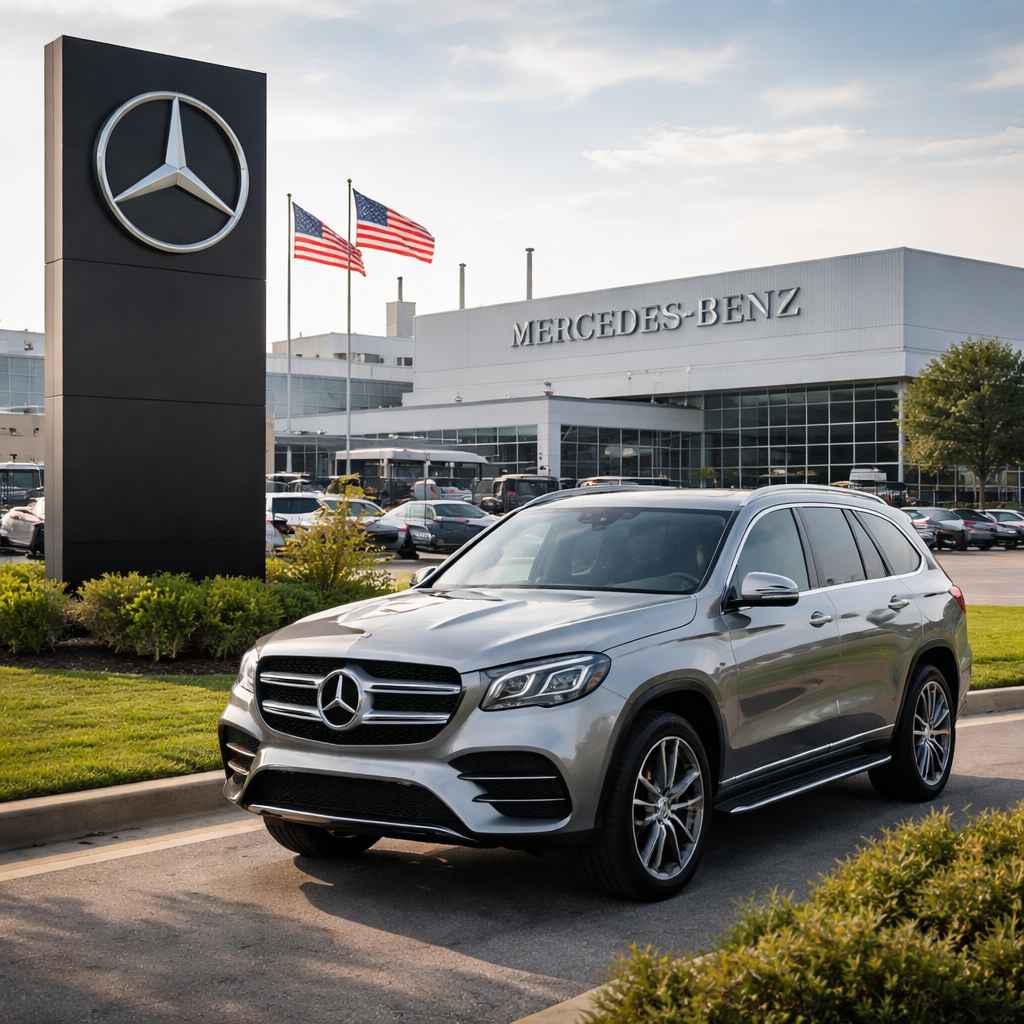

Mercedes-Benz is doubling down on the United States with a multi-billion-dollar expansion that is already catching investor attention. Shares of the German luxury automaker climbed 1.45% to €52.39 after the company announced it will invest $4 billion into its Alabama plant through 2030, aiming to significantly boost SUV production while navigating growing tariff pressures in the U.S. market.
The move is not an isolated investment. Mercedes-Benz said it plans to commit more than $7 billion to its U.S. operations in the coming years, signaling a broader strategic shift toward localization at a time when global trade tensions are forcing automakers to rethink supply chains and manufacturing footprints.
At the center of this push is the company’s Alabama facility, which has long been a key production hub for SUVs. With demand for premium SUVs remaining strong in the United States, Mercedes-Benz is expanding capacity where margins are highest and customer appetite remains resilient. Producing more vehicles locally also allows the automaker to reduce reliance on imports, which have become increasingly costly under evolving tariff structures.
Tariffs and strategy reshape global manufacturing
The $4 billion investment is closely tied to rising U.S. auto tariffs, which have added pressure on foreign manufacturers exporting vehicles into the country. By increasing domestic production, Mercedes-Benz can mitigate tariff-related costs, stabilize pricing, and protect profit margins. This approach reflects a wider trend across the auto industry, where global players are prioritizing regional production to reduce exposure to policy risks and trade disruptions.
For Mercedes-Benz, the Alabama expansion is about more than just cost control. It is a strategic move to strengthen its position in one of its most important markets. The United States remains a key battleground for luxury vehicles, particularly SUVs, which continue to drive a significant share of revenue. Expanding local production ensures the company can respond faster to demand shifts while maintaining competitive pricing against rivals that are also increasing their U.S. presence.
The broader $7 billion investment plan highlights how critical the U.S. market has become in the company’s long-term vision. Rather than relying heavily on exports from Europe, Mercedes-Benz is building a more self-sufficient ecosystem in North America, combining manufacturing, engineering, and innovation capabilities.
Atlanta R&D hub adds innovation push
Alongside manufacturing expansion, Mercedes-Benz is also investing in its technological and engineering footprint. The company plans to move up to 500 jobs from various locations across the United States into a new, state-of-the-art research and development hub in Atlanta. This facility is expected to play a central role in future vehicle development, software integration, and innovation tailored to the U.S. market.
The decision to consolidate talent into a dedicated R&D center reflects the changing nature of the automotive industry, where software, electrification, and advanced systems are becoming just as important as traditional manufacturing. By strengthening its engineering base in the U.S., Mercedes-Benz aims to accelerate development cycles and better align its products with local consumer preferences and regulatory requirements.
This dual investment approach — expanding production in Alabama while building innovation capacity in Atlanta — gives Mercedes-Benz a more balanced and resilient operational structure. It allows the company to not only build vehicles locally but also design and refine them closer to one of its largest customer bases.
Investors appear to be viewing the strategy positively. The 1.45% rise in the stock suggests confidence that the company is taking proactive steps to manage external risks while positioning itself for long-term growth. Rather than reacting to tariffs after they impact margins, Mercedes-Benz is adjusting its manufacturing footprint ahead of time, a move that often resonates well with markets.
At the same time, the expansion underscores a broader shift in the global auto industry. Carmakers are increasingly moving away from a purely global production model toward a more regionalized approach. Factors such as tariffs, supply chain disruptions, and geopolitical uncertainties have made it more important to produce vehicles closer to where they are sold.
Mercedes-Benz’s latest investment reflects that reality. By strengthening its U.S. manufacturing and innovation presence, the company is not only addressing current tariff challenges but also preparing for a future where flexibility, localization, and speed to market will define success.
While the full financial impact of the investment will unfold over the coming years, the direction is clear. Alabama is set to become an even more critical hub for SUV production, while Atlanta will serve as a growing center for innovation. Together, these moves reinforce Mercedes-Benz’s commitment to the U.S. market and highlight how global automakers are adapting to a rapidly changing economic landscape. More details about the company’s strategy and global operations can be explored on the Mercedes-Benz official website.
You may like: AbraSilver stock jumps after high-grade gold and silver discovery lifts market interest

Make Swikblog your go-to source on Google for reliable updates, smart insights, and daily trends.