
A chilling archaeological discovery at Tel Azekah, around 30 kilometers southwest of Jerusalem, is drawing global attention after researchers uncovered a 2,500-year-old burial site containing the remains of up to 89 infants and young children. At first glance, the phrase “mass grave” suggests something violent or catastrophic. But as archaeologists took a closer look, a far more complex and deeply human story began to emerge.
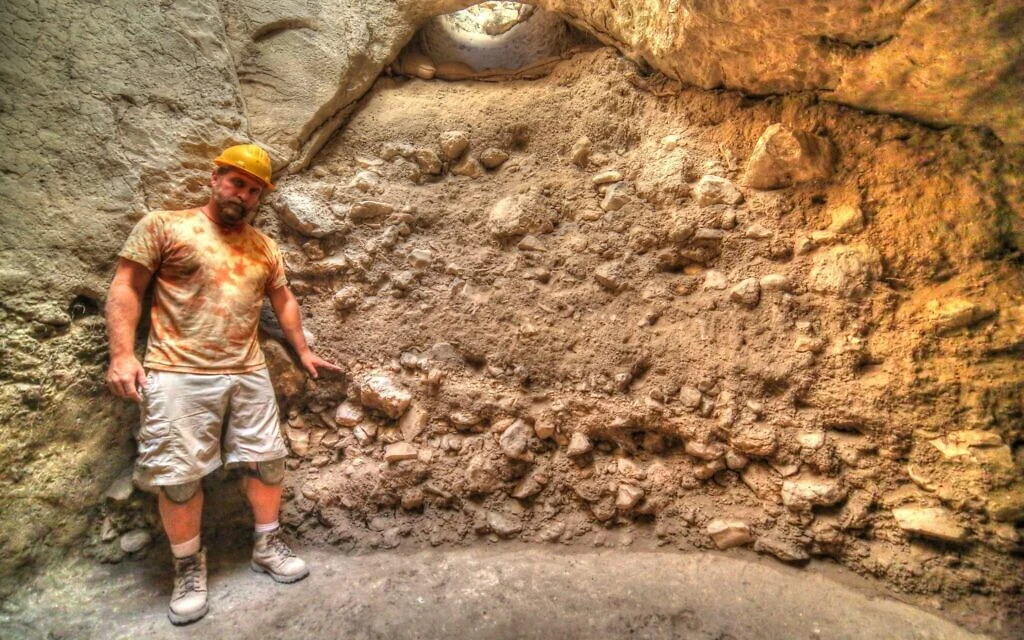
The remains were found inside an ancient cistern — a water reservoir that had once served the settlement for centuries before falling out of use. When excavation teams reached the upper layers of the structure, they encountered hundreds of small, scattered bones. What initially looked like a disturbing anomaly is now being studied as one of the most significant clues yet into how ancient societies dealt with infant death.
A discovery decades in the making
The find was not new, but its significance took years to fully understand. Excavations at Tel Azekah began more than a decade ago, and it was during work in 2013 that researchers first encountered the unusual deposit. At the time, the team carefully documented and collected every fragment, but the meaning of the site remained unclear.
Only years later, after detailed analysis and renewed investigation, did the scale of the discovery become clear. The cistern contained the remains of a minimum of 68 individuals, with estimates reaching as high as 89. What stood out most was the age distribution: roughly 90% of the individuals were under five years old, and around 70% were younger than two.
Even more striking was the timeline. These children were not buried all at once. Instead, the cistern appears to have been used as a burial site over a period of nearly a century, between the 6th and 5th centuries BCE, during the early Persian period when the settlement was part of the Judean landscape.
Not a massacre, not a plague
Despite the alarming nature of the discovery, researchers have found no evidence pointing to violence, warfare, or ritual sacrifice. The bones show no signs of trauma, and the pattern of deposition does not match that of a single catastrophic event like a disease outbreak.
Instead, the evidence points toward a quieter, more tragic explanation: natural deaths in a time when infant mortality was extremely high. In ancient societies, even minor illnesses or infections could be fatal for young children. Survival beyond early childhood was far from guaranteed.
The fact that the cistern was used repeatedly over decades further supports this theory. If a single disease or disaster had been responsible, the burials would likely have been concentrated within a much shorter timeframe. Instead, the gradual accumulation of remains suggests an ongoing, accepted practice.
Some of the children were buried with small items, including beads, jewelry, and ceramic objects. These details challenge the idea that the site was simply a dumping ground. Rather, they hint at a form of burial that carried meaning, even if it differed from the formal graves used for older individuals.
A window into ancient beliefs
The discovery is now raising deeper questions about how ancient societies viewed infancy and personhood. Historical and biblical sources suggest that very young children, particularly those who had not yet been weaned, were often not considered fully independent members of the community.
In practical terms, this may have influenced how they were buried. While adults and older children were typically laid to rest in organized cemeteries, infants may have been buried separately, sometimes in reused spaces like cisterns or storage pits.
This interpretation is reinforced by a stark reality of the time: high infant mortality. Historical estimates suggest that as many as four or five out of every seven children did not survive beyond the age of four. In that context, communities developed different ways of coping with loss, both emotionally and culturally.
Importantly, researchers emphasize that this does not reflect a lack of parental care or affection. Ancient texts and archaeological evidence alike suggest that families formed strong emotional bonds with their children. However, survival itself was seen as a critical threshold — one that marked a child’s transition into a more recognized social identity.
The Tel Azekah burial site may represent a structured, socially accepted response to that reality.
Beyond its emotional impact, the discovery could also help solve a long-standing archaeological mystery. For decades, researchers have struggled to explain why infant remains are relatively rare in formal burial sites from this period. The answer may be that archaeologists have simply been looking in the wrong places.
If infants were commonly buried in repurposed structures rather than cemeteries, similar sites may still be waiting to be discovered. The Azekah find could reshape how archaeologists approach burial practices across the ancient Near East.
Scientists are now conducting DNA analysis on several of the remains, hoping to determine whether the children were related, what their genetic origins were, and whether they belonged to extended family groups. These results could provide further insight into the social structure of the community.
For now, the site remains one of the most powerful reminders of the human side of archaeology. Beneath the statistics and historical context lies a deeply personal story — one of families facing loss in a world where survival was never certain.
As research continues, the Tel Azekah discovery is expected to play a key role in reshaping our understanding of ancient life, death, and the fragile early years that so often went unrecorded in history. Readers interested in the academic research behind the discovery can explore the published study in Palestine Exploration Quarterly.
You may like: Free Public Transport Sees 30% Ridership Jump as Fuel Prices Rise

Make Swikblog your go-to source on Google for reliable updates, smart insights, and daily trends.