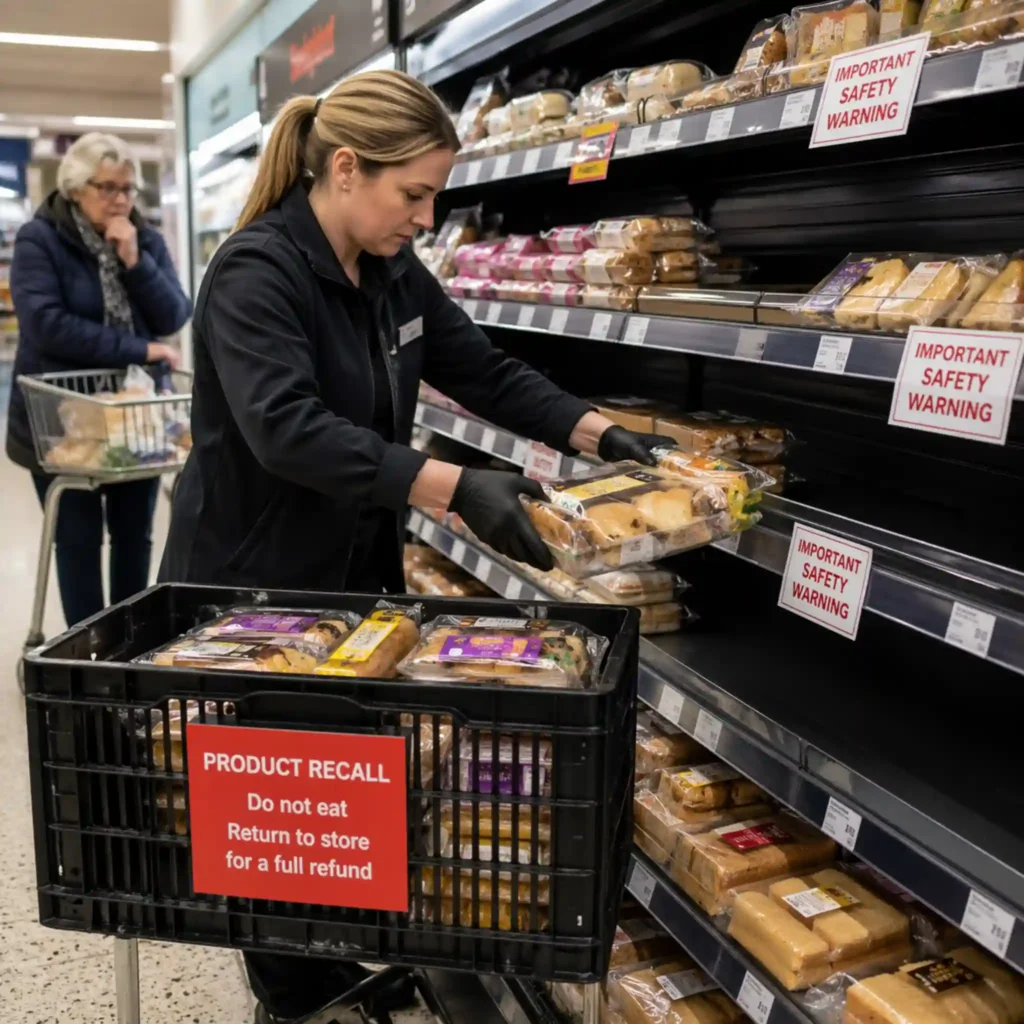

A major food safety alert is unfolding across the UK after 43 bakery products were urgently recalled due to potential rodent contamination, prompting authorities to issue a strict “do not eat” warning to consumers. The recall affects products from Saffron Pastries and First National Bakery, with items pulled from shelves nationwide over fears they may pose a health risk.
The alert, issued with guidance from food safety authorities, has quickly escalated as updated notices confirmed that more products — and revised expiry dates — are now included, widening the scope of the recall.
43 bakery products recalled across UK stores
The recall centers on Saffron Pastries, a Bradford-based bakery, which initially pulled 25 items from sale. A further 18 products linked to First National Bakery were also withdrawn, bringing the total to 43 affected items.
Officials confirmed the recall was triggered by “potential rodent contamination” at a production facility, with warnings that the products may be unsafe to eat even if they appear normal.
The affected range includes a wide selection of commonly purchased baked goods such as:
• Almond Biscuits and Coconut Biscuits
• Cake Rusks (including family packs and Soonfi variants)
• Chocolate Slice, Lemon Slice, and Vanilla Slice
• Madeira Cake slices (fruit, almond, coconut, and plain varieties)
• Cream Rolls and Fruit Slices
Many of these products carry best-before dates extending into 2026 and 2027, meaning they could still be stored in homes across the country.
Updated recall expands risk for shoppers
The situation intensified after an updated alert confirmed that best-before dates for several products had been revised, increasing the number of items that fall under the recall.
Key items flagged in the updated notice include:
• Family Cake Rusk (best before March 2027)
• Jam Biscuits (best before February 2027)
• Cake Rusk Soonfi packs (best before March 2027)
• Chocolate Slice (best before April 2026)
This update means that even products purchased weeks earlier could now be considered unsafe, prompting renewed calls for consumers to double-check packaging carefully.
According to the UK Food Standards Agency, customers who have purchased any of the affected products should not consume them and instead return them to the store where they were bought.
Retailers are offering full refunds, with or without receipts, and have been instructed to display notices explaining the recall in stores.
Why rodent contamination poses a serious risk
Food safety experts treat contamination linked to pest activity as a high-risk issue because it can introduce harmful bacteria and physical contaminants into products.
Even when contamination is not visible, the risk remains significant. Rodent activity in food production environments can lead to the presence of pathogens that may cause illness, making precautionary recalls essential.
Authorities have therefore taken a strict approach, advising consumers to avoid eating any potentially affected products entirely rather than attempting to assess safety visually.
What shoppers should do immediately
With the recall affecting dozens of widely distributed items, shoppers are being urged to take the following steps:
• Check all recently purchased bakery items, especially biscuits and cake products
• Review best-before dates and product names carefully
• Do not eat any items linked to the recall
• Return affected products to stores for a full refund
Officials have emphasized that acting quickly can help reduce any potential health risk, particularly for families who regularly consume packaged baked goods.
Growing concerns over food safety standards
This large-scale recall has added to a growing number of food safety alerts in the UK, raising concerns about production standards and supply chain monitoring.
While recalls are issued as a precaution to protect consumers, incidents involving multiple products and extended expiry dates highlight how widely distributed goods can be affected before problems are identified.
For many households, the recall serves as a reminder to stay updated on food safety alerts and to check stored items periodically — especially when products have long shelf lives.
With 43 products already confirmed and updates still being issued, the situation remains active, and shoppers are being urged to stay cautious as authorities continue to monitor the recall.

Make Swikblog your go-to source on Google for reliable updates, smart insights, and daily trends.