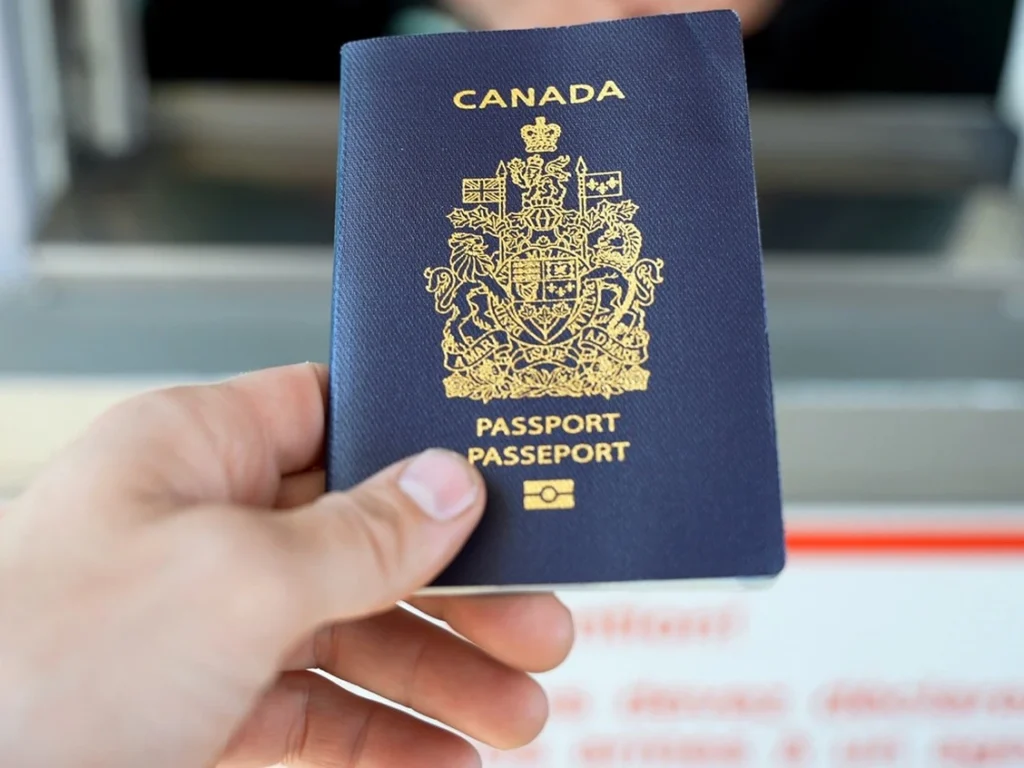

Canada’s latest citizenship rule changes are doing more than tidying up an old legal problem. They are reopening the door for thousands of people with family ties to the country, and early numbers suggest Americans are moving fastest to take advantage of it.
New data from Immigration, Refugees and Citizenship Canada shows that proof of citizenship applications climbed sharply at the start of 2026. In January alone, the department received 8,900 applications, up from 5,940 in the same month a year earlier. That is close to a 50% increase, a rise large enough to signal that this is not routine paperwork growth but a direct response to a policy shift.
The biggest share came from the United States. Out of those January applications, 2,470 were filed from the U.S., accounting for nearly 28% of the total. The gap between America and every other country was striking. The United Kingdom was next with 290 applications, followed by Mexico with 235. After that, volumes dropped off quickly, with no other country recording more than 140 applications.
The surge is closely linked to Canada’s revised citizenship-by-descent framework under Bill C-3. The updated rules broaden the circumstances in which Canadian citizenship can pass from parent to child when families have been living outside Canada for more than one generation. In plain terms, a group that had long been excluded under older legislation is now being allowed back into the system.
For years, one of the most criticized parts of Canada’s citizenship law was the so-called first-generation limit. Introduced in 2009, it blocked automatic citizenship for many children born abroad if their Canadian parent had also been born or adopted outside Canada. Families often argued that the rule ignored real and lasting ties to Canada and created arbitrary outcomes based on where one generation happened to be born.
That criticism eventually turned into a constitutional challenge. In December 2023, the Ontario Superior Court of Justice found key parts of the first-generation limit unconstitutional. Ottawa chose not to appeal the ruling, effectively accepting that the law had produced outcomes the government itself could no longer defend. The legislative response came later, and the revised framework began taking effect on December 15, 2025. Readers looking for the official legal and application details can refer to the Government of Canada’s citizenship rules update.
Under the new approach, people born outside Canada in the second generation or beyond may now qualify for citizenship if their Canadian parent can show a substantial connection to the country. The key threshold is 1,095 days, or three years, of physical presence in Canada before the child’s birth or adoption. The same principle has also been extended to certain adopted children born abroad. That change matters because it shifts the focus away from a rigid generational cutoff and toward demonstrated connection.
There is also an important date distinction built into the change. For many people born before December 15, 2025, the new rules mean they may already be Canadian automatically if they meet the criteria created by the revised law. For those born after that date, eligibility still depends on whether the Canadian parent meets the physical-presence requirement. This detail is one reason the current wave of applications is drawing so much attention: some people are not applying for a new benefit so much as trying to confirm a status they now believe they already hold.
IRCC has also made clear that proof of citizenship applications are a broader category than citizenship-by-descent cases alone. They can include replacement certificates, requests for confirmation from people born in Canada, and other administrative filings. Even so, the department’s own figures point to a meaningful effect from the new law. Between December 15, 2025 and January 31, 2026, Canada received 12,430 proof of citizenship applications in total. Of the 6,280 descent-related applications processed in that period, 1,480 were confirmed as citizens under the new Act, while the rest were approved through other channels.
The strong U.S. interest is not hard to explain. Canada and the United States have long shared overlapping family histories, especially in border regions and in communities shaped by earlier migration. Descendants of French Canadians who moved to New England generations ago are one example often cited in recent coverage, but they are far from the only group affected. Many American families have one Canadian parent, grandparent or older ancestral line that previously did not translate into an accepted citizenship claim because of the older generational restriction.
Still, this is not simply a story about Americans wanting to move north. Proof of citizenship is about legal status, not necessarily immediate relocation. Some applicants may want a Canadian passport, some may want options for their children, and others may just want formal recognition of citizenship rights that they believe should have existed all along. That distinction matters, especially at a moment when immigration conversations inside Canada have become more politically sensitive.
A second trend helps explain why this story has wider relevance. Recent reporting and survey findings suggest even many newcomers already living in Canada support stricter immigration controls, not because they reject immigration altogether, but because they see mounting pressure on housing, healthcare and employment pathways. That creates an unusual contrast. Canada is broadening citizenship access for some people with family claims while, at the same time, public debate is moving toward tighter management of overall immigration levels.
From a policy perspective, those two things are not necessarily contradictory. Citizenship by descent is not the same as bringing in new permanent residents through economic or temporary pathways. But in the public conversation, the distinction can blur. That is one reason this issue is attracting so much interest: it sits at the intersection of law, identity, politics and demographics.
Canada’s position also stands out internationally. While several countries have been tightening residency or ancestry-based citizenship rules, Canada has moved in the opposite direction for a narrowly defined but potentially large group of people with established family ties. That makes the change notable beyond North America and could keep this topic in the headlines for months.
The early application numbers do not answer every question. It is still too soon to know whether January was a one-time rush or the start of a sustained trend. Much will depend on awareness of the new rules, processing speed and how many families decide that proving citizenship is worth the effort. But one thing is already clear: once Canada changed the law, demand appeared quickly, and Americans were first in line in meaningful numbers.
For readers following citizenship policy, immigration law and cross-border trends, the bigger takeaway is that legal reforms can have immediate behavioural effects. Change the rulebook, and people who had been waiting in the margins often show up faster than governments expect.
For more reporting on border policy, citizenship law and immigration shifts, visit our Canada immigration news section.
You may also like: OAS April 2026 Payment Date, Amount and Eligibility Explained

Make Swikblog your go-to source on Google for reliable updates, smart insights, and daily trends.