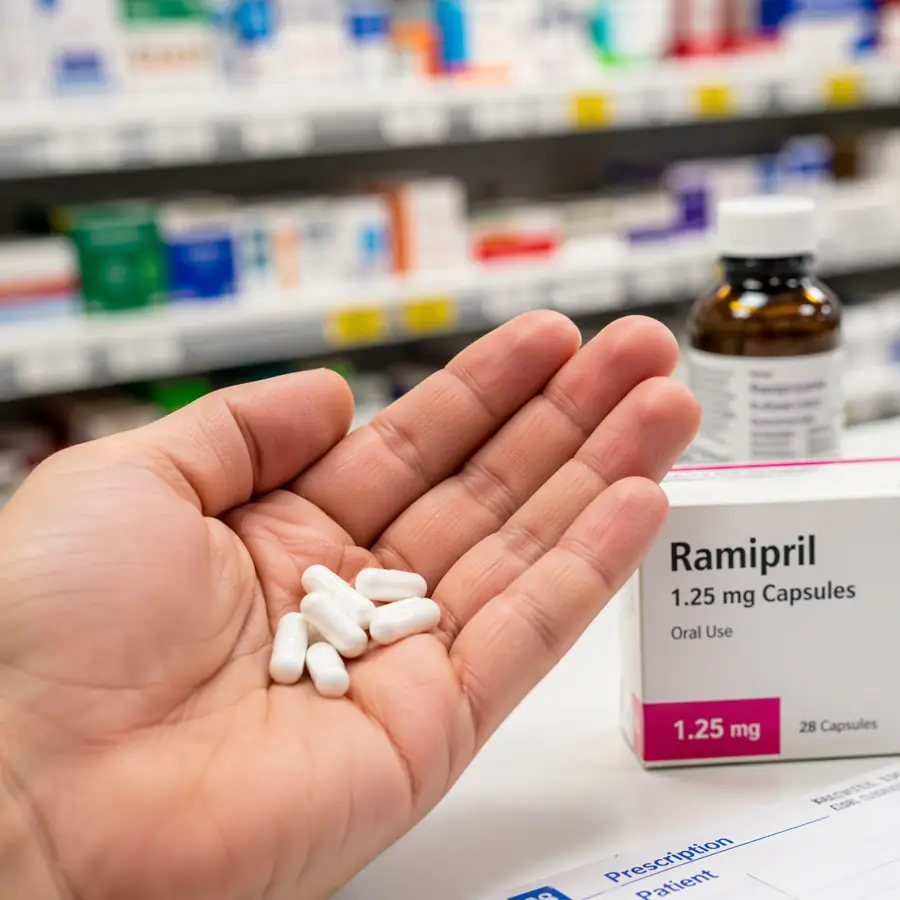

The latest disruption to the UK medicines supply chain is now affecting one of the country’s most widely used blood pressure treatments. Ramipril 1.25mg capsules, commonly prescribed for hypertension and other heart-related conditions, are under a formal supply restriction after health authorities introduced a serious shortage protocol across the UK.
For patients, the change may sound technical, but the impact is practical: pharmacies can only supply up to one month of ramipril 1.25mg capsules at a time while stocks remain tight. The restriction applies across England, Scotland, Wales and Northern Ireland, highlighting how broadly the shortage is being felt.
That matters because ramipril is not a niche medicine. It is used every day by large numbers of people to help control blood pressure, protect the heart and support long-term cardiovascular care. In England alone, around three million prescription items for ramipril are dispensed each month, making any interruption significant for both patients and frontline healthcare teams.
Why this shortage is getting attention
Medicine shortages are not new, but when the affected product is a routine treatment used by millions, concern grows quickly. Ramipril is part of the ACE inhibitor family of medicines. It works by helping blood vessels relax, which makes it easier for the heart to pump blood around the body. Doctors prescribe it not only for high blood pressure, but also for heart failure and for reducing the risk of future cardiovascular problems in some patients.
The current restriction specifically concerns the 1.25mg capsule strength. Lower doses can be especially important for patients who are starting treatment, need gradual dose adjustments or are being managed carefully because of age or other medical conditions. When a lower-strength product becomes harder to source, the pressure can spread across the wider prescribing system as doctors and pharmacists look at other strengths or alternative medicines.
According to the NHS guidance on ramipril, patients should keep taking the medicine as directed unless a healthcare professional advises otherwise. That is an important point. Changes to blood pressure medication should never be made casually, especially for people with long-term heart or circulation problems.
What pharmacies are seeing on the ground
Community pharmacies are often the first place where supply trouble becomes visible. When stock does not arrive through normal channels, pharmacists have to search across wholesalers, check prices repeatedly and manage difficult conversations with worried patients. In the case of ramipril, pharmacy leaders have warned that some strengths have been hard to order and that prices have climbed sharply in recent weeks where stock is available.
That combination of scarcity and rising cost creates a knock-on effect throughout primary care. Pharmacists may need to contact GP practices, patients may need amended prescriptions and surgery staff can end up spending more time on medicine queries that would normally be handled quickly. What looks like a simple supply problem can become a wider workload issue for the health system.
The restriction to one month’s supply is designed to reduce that risk by spreading available stock more evenly. It is not a sign that patients should rush to collect extra medication. In fact, stockpiling can make shortages worse, leaving the most vulnerable patients at greater risk of delays.
The bigger issue behind the ramipril squeeze
The shortage also points to a broader weakness in medicines supply. UK pharmacies have been dealing with repeated disruption across many common treatments, and industry voices have increasingly linked the problem to a mix of international instability, fragile global manufacturing networks, rising production costs and long-running pressure on pharmacy funding.
When supply chains depend on overseas production and tight margins, even a relatively small disruption can cause widespread practical problems. If one commonly prescribed medicine becomes difficult to source, prescribers may switch patients to alternatives. That can raise demand for those substitutes and create a second wave of pressure elsewhere.
In the case of ramipril, there are other ACE inhibitors available, but that does not mean substitution is automatic or risk-free. Different patients respond differently, and any switch should be guided by a pharmacist, GP or other appropriate clinician who understands the patient’s wider medical history.
That is why many pharmacy professionals have argued for more flexibility during shortages, including allowing pharmacists to make certain substitutions more efficiently where clinically appropriate. The aim is not to bypass doctors, but to reduce delays for patients when the original medicine is temporarily unavailable.
What patients should do now
Anyone taking ramipril 1.25mg capsules should first check how much medication they already have at home, then request repeat prescriptions in reasonable time rather than leaving it until the last few doses. If the medicine is unavailable at the pharmacy, the best next step is to speak directly with the pharmacy team. They can explain whether stock is expected, whether the shortage protocol applies and whether the prescriber may need to review the prescription.
Patients should not stop taking ramipril suddenly and should not swap to another medicine on their own. Even where alternatives exist, the correct option depends on the individual patient’s condition, current dose and other medicines they may be taking.
It is also worth remembering that shortages can be stressful even when they are temporary. For older patients, carers and people managing several prescriptions, uncertainty over a regular medicine can cause real anxiety. Clear advice from pharmacists and GPs will be just as important as the stock itself in the coming weeks.
For now, the restriction on ramipril 1.25mg capsules is another reminder that medicines policy is not just an issue for officials and wholesalers. It reaches directly into homes, surgeries and pharmacy counters. A drug used quietly by millions has suddenly become a test of how well the system can protect access to essential treatment when pressure builds. Patients do not need panic, but they do need clear communication, sensible planning and a supply chain that can hold up under strain.
You may like: Memphis children remains found in woods investigation

Make Swikblog your go-to source on Google for reliable updates, smart insights, and daily trends.