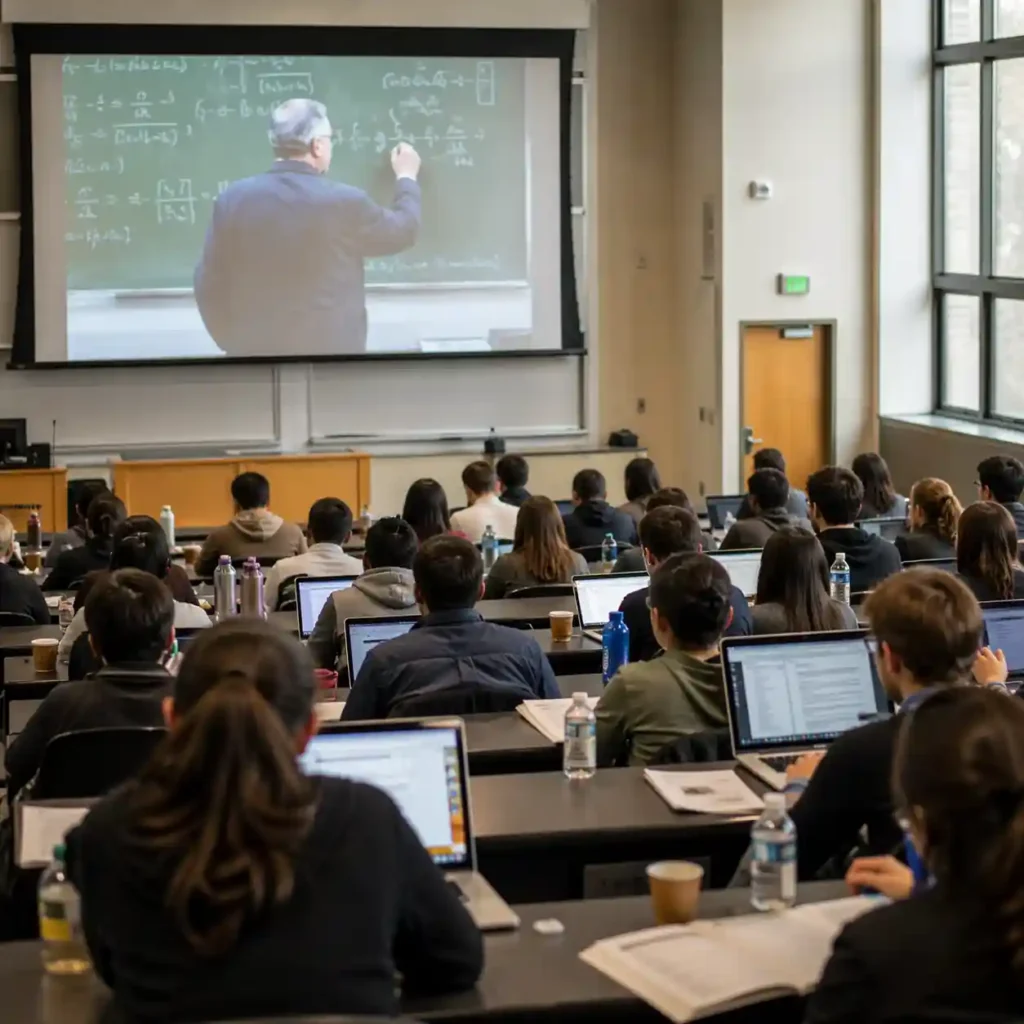

For years, Australian universities have sold an ambitious promise to international students: pay premium fees, study on world-class campuses, learn from leading academics and graduate with a respected global degree. But a growing dispute over recorded lectures at one of the country’s most prestigious universities has raised a sharper question for students and parents — what exactly are they paying for?
Students at the University of Melbourne, often ranked among Australia’s top institutions, have reportedly complained that some courses rely on pre-recorded lectures, including material said to be several years old. The controversy gained attention after The Age reported concerns from students paying as much as A$56,000 a year, around ₹30 lakh, while being directed to watch taped lectures rather than consistently receiving live teaching.
The complaint is not that lecture recordings exist. Most modern universities use them, and many students find them useful for revision, flexible study and catching up after illness or work commitments. The concern is different: when recorded lectures become a central part of expensive degree delivery, students begin to compare the cost of a campus-based education with the experience of an online course.
That comparison is uncomfortable for universities because international students are not only paying tuition. They are also paying rent, health cover, transport costs, visa fees and the emotional cost of moving abroad. For Indian families, the total annual burden can easily move beyond the headline tuition figure. A degree that costs ₹30 lakh in fees can become far more expensive once living costs in Melbourne are added.
The issue becomes even more sensitive when students believe the academic content has not been refreshed. In fast-moving fields, old examples can weaken the learning experience. Business conditions change, technology shifts, laws evolve and social debates move quickly. A lecture recorded years earlier may still explain a core theory, but students paying premium fees expect teaching that feels current, active and connected to the world they will graduate into.
The University of Melbourne’s official international fee information shows that tuition varies by course and subject load, and students are expected to review fee policies before enrolling through the university’s published guidance on fees and payments. That transparency helps students understand costs, but the latest backlash shows that price clarity alone is not enough. Students also want clarity about how teaching will actually be delivered.
This is where the debate moves beyond one campus. Since the pandemic, higher education has become more digital, more flexible and more scalable. Universities learned that large lectures could be recorded, distributed and reused. Students learned that they could study on demand. But the pandemic-era emergency model has now collided with pre-pandemic expectations of university life: packed lecture halls, live academic debate, direct access to lecturers and a sense of being taught in real time.
Universities can make a reasonable case for recorded content. It supports students who work part-time, helps those who need to replay complex ideas and can improve accessibility for learners with different needs. For international students still adjusting to academic English, the ability to pause and rewatch a lecture can be valuable. Used well, recordings are not a downgrade. They are a useful layer on top of teaching.
But students are drawing a line between support and substitution. A recorded lecture that backs up a live class is one thing. A course that appears to lean heavily on old video content is another. The difference matters because university fees are not priced like streaming subscriptions. They are priced around academic expertise, campus access, supervision, feedback, discussion and the credibility of a living institution.
There is also a trust issue. When a university markets itself as a premium global institution, students assume their subjects are being actively maintained. If they later discover that key lectures are old, or that the academic in the video is not closely involved in the current delivery of the course, the relationship between student and institution can quickly weaken.
Australia’s university sector faces a difficult balance. International students bring major revenue, but that revenue depends on confidence. If students begin to feel that high fees are being paired with lower-contact teaching models, the reputational damage can spread quickly through student forums, social media, education agents and family networks overseas.
The backlash also reflects a wider global problem: higher education is becoming more expensive at the same time that digital tools make teaching easier to scale. That creates a tension universities can no longer avoid. Students are not rejecting technology. They are asking whether technology is being used to improve learning or to reduce the cost of delivering it while fees remain high.
For parents and students comparing study-abroad options, the lesson is clear. Rankings and brand names still matter, but they should not be the only factor. Applicants should ask how many lectures are live, how often material is updated, what contact hours are included, whether tutorials are led by academics or tutors, and how feedback is provided. These details can reveal more about the real student experience than a brochure headline.
The controversy over old lectures in Australia may not end the appeal of elite universities, but it does challenge their pricing power. A prestigious name can attract students, but it cannot fully protect an institution if students feel the classroom experience has been diluted.
For universities, the message is simple: recorded lectures can be part of modern education, but they cannot become a quiet substitute for active teaching. When students are paying ₹30 lakh a year, they expect more than access to archived videos. They expect a degree that feels alive, current and worth the sacrifice.

Make Swikblog your go-to source on Google for reliable updates, smart insights, and daily trends.