
By Swikriti Dandotia
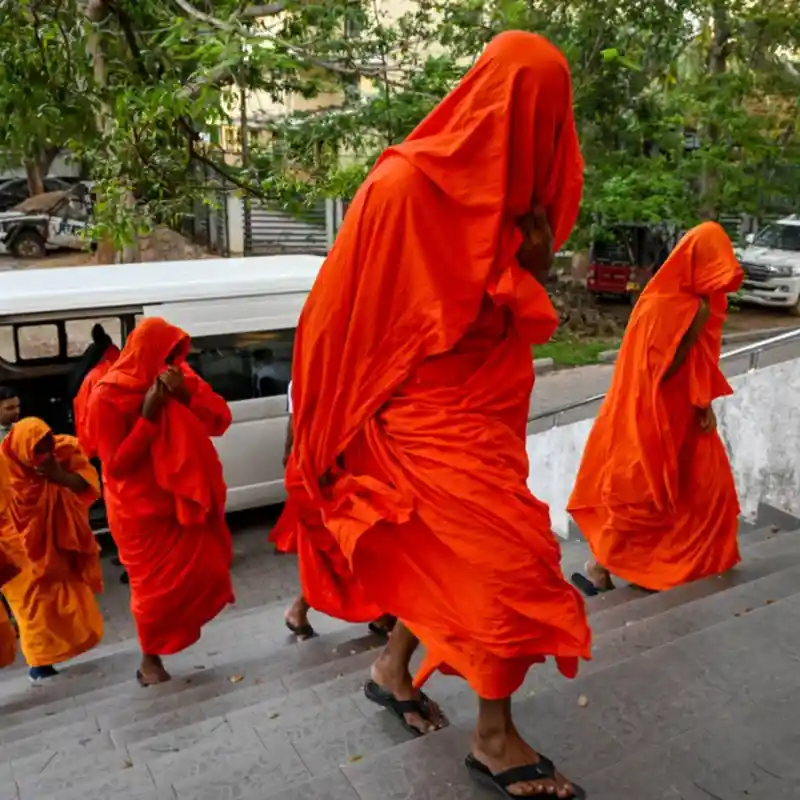
Sri Lanka is facing one of its most unusual airport narcotics cases after 22 Buddhist monks were detained in connection with a major cannabis seizure at Colombo’s Bandaranaike International Airport. The group had returned from Thailand when customs officers discovered approximately 110 kilograms, or 242 pounds, of cannabis hidden inside their luggage.
The case has drawn attention because of the scale of the seizure, the religious status of the suspects, and emerging questions over whether all those detained fully understood what they were carrying. Authorities are now looking beyond the airport arrests to identify who arranged the trip, who packed the luggage, and whether a wider smuggling network was behind the operation.
Airport checks uncover hidden cannabis in luggage
Customs officials said the monks arrived in Sri Lanka after a short visit to Bangkok. During checks at the airport, officers found that their suitcases had been altered with concealed sections. Inside those hidden spaces, officials recovered cannabis identified as Kush, a stronger variety often associated with higher potency.
According to the initial findings, each monk was allegedly carrying close to five kilograms of the drug. The total seizure reached about 110 kilograms, making it one of the largest Kush detections reported at Sri Lanka’s main international airport.
The monks were taken into custody and handed over to police for further investigation. Many of them are believed to be young student monks attached to temples in different parts of Sri Lanka. After being presented before court, they were remanded for questioning while investigators examined how the drugs entered their luggage and who may have coordinated the movement.
Officials are also investigating the role of an outside sponsor who reportedly funded the four-day trip to Thailand. That detail has become central to the inquiry because the monks were not described as ordinary tourists arranging their own travel. Instead, investigators are looking at whether the trip was planned as part of a larger operation to move narcotics into Sri Lanka under the cover of a religious group returning from abroad.
For wider context on international narcotics routes and courier-based trafficking methods, the United Nations Office on Drugs and Crime tracks how criminal networks use airports, maritime routes, and vulnerable travellers to move illegal drugs across borders.
Police probe possible organiser and “donation” claim
The investigation has since widened with the arrest of another monk believed to have played a role in organising the journey. Police are examining whether this individual helped arrange the trip and instructed the travellers to bring back packages from Thailand.
One important claim under review is that the monks were allegedly told the parcels were donations and that someone would collect them after arrival in Sri Lanka. If this version is supported by evidence, it could change how investigators assess the level of knowledge and intent among the detained monks.
Police are not ruling out the possibility that some members of the group may have been used as couriers without knowing the true contents of the packages. The drugs were reportedly placed among items such as school supplies and sweets, which may have made the luggage appear less suspicious to those carrying it.
Investigators are also reviewing mobile phones, travel records, communications, and images from the trip. Some phone material reportedly showed the monks spending time in Thailand during the short visit. Those details may help police reconstruct the timeline, including who met the group, who handled the bags, and when the hidden compartments may have been prepared.
The case has sparked a strong public reaction in Sri Lanka because Buddhist monks hold an important social and religious position in the country. At the same time, legal experts and observers have urged caution until the investigation establishes whether the detained individuals were active participants, negligent carriers, or victims of manipulation by organisers operating behind the scenes.
The seizure also comes at a time when Sri Lankan authorities have been dealing with repeated attempts to bring drugs into the country through both air and sea routes. Previous cases at the same airport have involved large quantities of cannabis and cocaine, while maritime seizures have pointed to the use of fishing boats and regional networks to transport narcotics.
Thailand’s changing cannabis landscape has also added another layer to cross-border enforcement. While cannabis rules in Thailand have shifted in recent years, taking the substance out of the country and bringing it into Sri Lanka remains a serious offence. Sri Lanka continues to enforce strict drug laws, and those convicted in major trafficking cases can face heavy penalties.
For readers following major international crime and public safety developments, more updates are available through our world news coverage.
The next stage of the case will depend on forensic checks, phone evidence, witness statements, and any links police can establish between the detained monks, the alleged organiser, the sponsor, and possible handlers in Thailand or Sri Lanka. Authorities are expected to focus on whether the same route has been used before and whether other individuals were waiting to collect the luggage after arrival.
Beyond the immediate arrests, the incident has raised broader concerns about how traffickers may exploit trust, religious identity, and sponsored travel to avoid suspicion at airports. It has also placed pressure on enforcement agencies to strengthen passenger profiling without unfairly targeting innocent travellers.
For now, the central question remains whether the 22 monks knowingly carried 110 kilograms of cannabis into Sri Lanka or whether they were used by a network that saw them as unlikely suspects. The answer will shape both the legal outcome and the wider public response to one of the country’s most closely watched airport drug cases.
You may like: Lamar Odom Health Update 2026: Rehab, Strokes and Heart Attacks

Make Swikblog your go-to source on Google for reliable updates, smart insights, and daily trends.