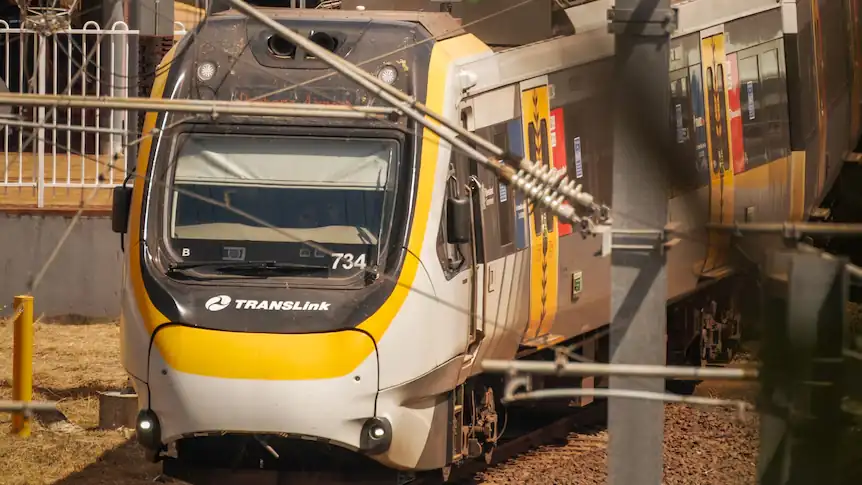

Queensland’s rail network is heading into another period of disruption, with Queensland Rail preparing to operate a sharply reduced weekday timetable from Tuesday, May 5, as a pay dispute with rail workers continues.
The change will remove 273 weekday train services from the normal schedule, cutting overall services by around 20%. For passengers across Brisbane, the Gold Coast, Ipswich, Redcliffe, Cleveland and other major corridors, the shift means fewer trains, longer waits and a greater need to check timetables before travelling.
The temporary arrangement will resemble a Saturday-style timetable, although some high-demand routes will still receive additional trains. Transport Minister Brent Mickelberg said the revised plan is intended to keep the network moving while industrial action continues, but he warned that passengers should expect delays and changed travel patterns.
The dispute has placed thousands of commuters in the middle of a difficult standoff between Queensland Rail and the Rail, Tram and Bus Union. Queensland Rail has put forward a wage offer that includes an 8% pay increase over three years, plus a cost-of-living adjustment if inflation rises above that figure. The union, however, has argued the proposal does not represent a meaningful improvement on earlier offers.
Read More
What the reduced Queensland Rail timetable means for passengers
Under the revised weekday schedule, some of south-east Queensland’s busiest lines will continue to run every 15 minutes. These include the Gold Coast, Cleveland, Redcliffe, Springfield, Ferny Grove and Ipswich lines.
That level of service will help keep major commuter corridors operating, but it still reflects a reduced network compared with normal weekday operations. Passengers who usually depend on frequent services may find platforms busier, trains more crowded and connections less forgiving.
Other routes will move to a lower frequency. The Shorncliffe and Beenleigh lines are expected to run about every 30 minutes, while services on the Sunshine Coast line between Caboolture and Nambour will also operate roughly every half hour.
Shuttle routes will also be affected. Trains between Rosewood and Ipswich, as well as Doomben and Eagle Junction, are expected to run every 30 minutes. For passengers using these shorter connections, the impact could be especially noticeable if a missed train means a much longer wait than usual.
The biggest concern for commuters is not only the number of cancelled services, but the loss of flexibility. A normal weekday rail timetable allows many passengers to recover quickly from a missed train. A Saturday-style schedule during the working week makes that far harder, particularly for workers, students and people travelling to appointments.
Passengers should check live updates before leaving home through official transport channels such as Translink service updates, especially during peak travel times.
Regional Queensland services also face disruption
The impact will not be limited to the Brisbane commuter network. Regional passengers will also see changes, with several long-distance routes altered or partly replaced by coaches.
The Spirit of Queensland will continue to operate between Brisbane and Townsville, but passengers travelling between Townsville and Cairns will be transferred to coach services. That change may add inconvenience for travellers heading further north, especially those carrying luggage or relying on direct rail access.
The Westlander remains cancelled and will be replaced by Greyhound services. Meanwhile, the eastbound Spirit of the Outback will continue from Longreach to Mount Larcom, but will not stop at Rockhampton. Passengers bound for Rockhampton will instead be transferred from Mount Larcom.
These regional changes show how the dispute is affecting more than daily city commuters. For many communities outside south-east Queensland, rail services are an important transport link, and replacement coach arrangements can mean longer journeys and less convenience.
Queensland Rail has said the reduced schedule is a way to provide a more stable timetable during the dispute, rather than leaving passengers dealing with unpredictable cancellations. Still, the result is a smaller rail network at a time when many Queenslanders rely on public transport for work, school and regional travel.
The timing also adds pressure, with major events and regular weekday travel placing demand on the network. If the dispute continues, commuters may have to adjust routines for longer than expected.
At the centre of the dispute is the proposed enterprise agreement. Queensland Rail’s latest offer includes an 8% wage rise over three years and a cost-of-living mechanism tied to inflation. The company has described the offer as improved, while the RTBU has rejected that view and says the proposal does not adequately address worker concerns.
The disagreement highlights a broader challenge facing public transport systems: balancing government budgets, worker pay expectations and passenger reliability. When talks stall, the disruption is felt most immediately by commuters who have little control over the outcome.
For now, the practical advice for passengers is to plan earlier than usual, allow extra travel time and avoid assuming that regular weekday services will operate as normal. Those travelling on affected regional routes should also confirm replacement coach arrangements before departure.
Queensland Rail’s 20% service cut is more than a routine timetable change. It is a clear sign that the pay dispute has moved from negotiation rooms into the daily lives of passengers. Until Queensland Rail and the union reach an agreement, commuters across the state will continue dealing with fewer trains, altered routes and uncertainty over when normal services will return.
For more transport updates and rail-related coverage, visit Swikblog.

Make Swikblog your go-to source on Google for reliable updates, smart insights, and daily trends.