
Aldi customers across the United States are being urged to take a second look inside their freezers after federal food safety officials flagged select frozen breakfast pizzas over a potential Salmonella risk. The alert, issued by the U.S. Department of Agriculture’s Food Safety and Inspection Service (FSIS), points to a possible contamination linked not to the final product itself, but to an ingredient used during production.
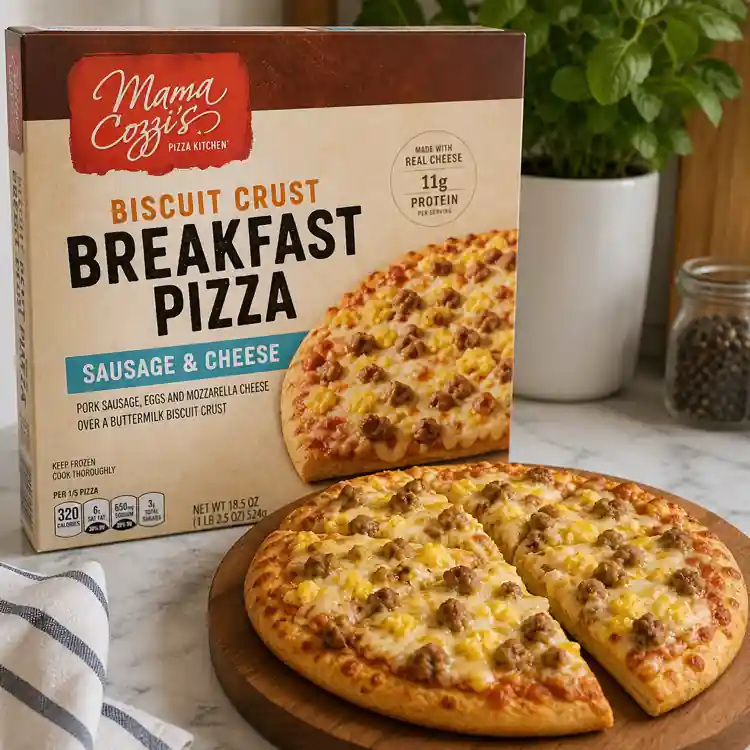
The warning involves Mama Cozzi’s Pizza Kitchen frozen breakfast pizzas, a popular private-label item sold at Aldi stores. According to the official USDA FSIS alert, the products may contain dairy ingredients made with dry milk powder that had already been recalled due to Salmonella concerns.
Two specific varieties are included in the alert: Mama Cozzi’s Biscuit Crust Sausage & Cheese Breakfast Pizza and Mama Cozzi’s Biscuit Crust Pork Belly Crumbles, Bacon, and Pepper and Onion Breakfast Pizza. These frozen items, often stored for weeks or months, could still be sitting in household freezers, making consumer awareness especially important.
Shoppers should check packaging carefully. The affected products carry establishment number 5699 and have best-by dates of October 15, 21, 22, 23, and 24, 2026. Production dates fall between February 17 and February 26, 2026. Even if the product appears normal, officials say that does not guarantee safety.
The issue first came to light after the Food and Drug Administration notified FSIS that several federally inspected facilities had received dairy ingredients made with recalled dry milk powder. Because that ingredient is used across multiple food products, authorities have warned that additional items could be identified as the investigation continues.
So far, there have been no confirmed cases of illness linked to these Aldi pizzas. However, Salmonella remains one of the most common causes of foodborne illness in the United States. Symptoms can include diarrhea, fever, stomach cramps, nausea, and vomiting, typically appearing within six hours to six days after consumption.
Read More
Health experts stress that even without reported illnesses, precautionary action is necessary. Frozen foods, unlike fresh items, can remain stored for long periods, increasing the likelihood that affected products may still be present in homes well after production.
One detail that often confuses consumers is the difference between a recall and a public health alert. In this case, FSIS issued a public health alert, not a formal recall. This usually means the product may no longer be available for sale, but authorities still want to warn consumers who may have already purchased it.
If you have one of the affected pizzas, the safest approach is to avoid eating it entirely. Officials recommend either discarding the product or returning it to Aldi for a full refund. Handling should be minimized, and any surfaces or utensils that came into contact with the product should be cleaned thoroughly to prevent cross-contamination.
Consumers with questions can contact Aldi directly at 630-761-2380 or via email at Product.Recall@aldi.com. The USDA Meat and Poultry Hotline is also available at 888-674-6854, with additional support provided through MPHotline@usda.gov.
This incident highlights a broader reality in today’s food supply chain. A single contaminated ingredient, especially one as widely used as dry milk powder, can impact multiple brands and product categories. That ripple effect is why federal agencies often issue alerts even before confirmed illnesses are reported.
For readers tracking similar consumer safety updates, ongoing coverage can be found on Swikblog, where food alerts, recalls, and retail news are regularly monitored and explained in plain terms.
The takeaway for shoppers is simple but important: check product labels, verify dates and establishment numbers, and when in doubt, do not take the risk. A quick check today can help avoid a much bigger health concern later.

Make Swikblog your go-to source on Google for reliable updates, smart insights, and daily trends.