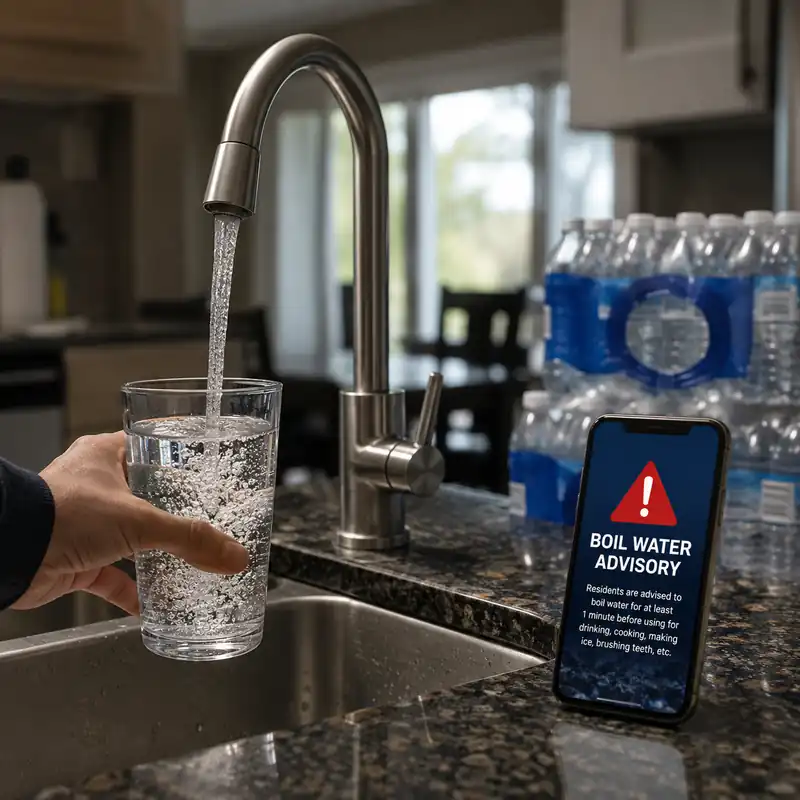

Thousands of people in Sudbury, New Sudbury and Falconbridge have been told to boil their tap water after public health officials reported adverse water samples from the municipal drinking water system.
The boil water advisory was issued by Public Health Sudbury & Districts on Wednesday, May 6, and remains in effect while officials carry out additional testing. The advisory is being treated as a precaution, but residents in the affected areas are being urged to follow the instructions carefully until the water supply is cleared.
The warning applies to residents and businesses that receive water from the municipal system in Sudbury, New Sudbury and Falconbridge. Public health officials said the cause of the adverse samples is still under investigation.
Officials have not reported any confirmed illness linked to the water. However, they said the advisory was issued to protect the public while more bacteriological testing is completed.
“We don’t believe that anyone who has consumed the water will experience any ill health effects,” Public Health Sudbury & Districts said in its public notice.
Which Areas Are Affected by the Sudbury Boil Water Advisory?
The advisory covers all residents of Sudbury and New Sudbury, along with Falconbridge. These areas should not use tap water for drinking or food preparation unless it has first been boiled.
Several nearby communities are not affected by the advisory. Public health officials said Copper Cliff, Coniston, Walden, Garson, Val Caron and area, Azilda, Chelmsford, Dowling, Skead and Onaping are outside the affected zone.
City operators have started collecting more samples from water supplied by the David Street Water Treatment Plant and the Falconbridge Water Treatment Plant. Updates are expected as new test results become available.
Until the advisory is lifted, residents in the affected areas should bring tap water to a rolling boil for at least one minute before using it for drinking, cooking or personal care.
Boiled water, bottled water or another safe water source should be used for drinking, making juice, preparing infant formula, making ice, cooking, washing uncooked fruit and vegetables, and brushing teeth.
Tap water can still be used for laundry and bathing. However, parents and caregivers should be careful when bathing infants or small children because they may accidentally swallow the water.
Households should also avoid using untreated tap water in coffee makers, water dispensers, ice machines or any appliance where the water does not reach a full rolling boil for at least one minute.
The advisory has also affected local food premises, including restaurants, cafes, grocery stores and other businesses that prepare or serve food. Public health rules require those businesses to either close temporarily or operate under strict boil water advisory guidelines.
That may include using bottled or boiled water for food preparation, shutting down fountain drink machines, stopping ice production, changing dishwashing procedures and limiting menu items that require direct use of tap water.
For residents, the advisory has caused immediate disruption to daily routines. Many people rely on tap water for coffee, cooking, school lunches, baby formula and medication. The sudden notice also prompted increased demand for bottled water across parts of the city.
How Long Could the Advisory Last?
Public health officials have not given a fixed end time. The advisory will remain in place until testing confirms the water is safe to drink again.
Health officials generally require safe bacteriological test results before lifting a boil water advisory. In this case, officials have indicated that two clean samples taken 24 to 48 hours apart may be needed before normal water use can resume.
That means the advisory could last at least one to two days, depending on the results of the ongoing investigation and follow-up water testing.
Residents should not assume the advisory has ended until Public Health Sudbury & Districts or the City of Greater Sudbury officially confirms that it has been lifted.
Public Health Sudbury & Districts says a boil water advisory is a preventive step used when drinking water may not be safe. The goal is to reduce the risk of waterborne illness while the water supply is being checked.
Symptoms from unsafe drinking water can include stomach cramps, diarrhea, nausea, vomiting or fever, although officials have emphasized that no community illness has been reported in connection with this advisory.
Anyone who becomes sick and is concerned about possible water exposure should contact a health-care provider, especially if symptoms are severe, persistent or involve young children, older adults or people with weakened immune systems.
Residents looking for official updates can visit the Public Health Sudbury & Districts website or contact the health unit at 705-522-9200 or toll-free at 1-866-522-9200.
For now, the message from officials is clear: if you live in Sudbury, New Sudbury or Falconbridge and use municipal water, boil it first or use bottled water until the advisory is officially lifted.
You may like: Multivitamin Biological Clock Study Suggests Daily Vitamins May Help Slow Aging

Make Swikblog your go-to source on Google for reliable updates, smart insights, and daily trends.