
Britain has mounted an extraordinary medical response in the South Atlantic after a suspected hantavirus case on Tristan da Cunha exposed the difficulty of protecting people in one of the most isolated inhabited places on the planet.
The emergency unfolded after a British national who had previously been aboard the MV Hondius cruise ship developed symptoms after leaving the vessel at Tristan da Cunha in April. The island, a British overseas territory with just 221 residents, has no airport, no routine air access and only a small local medical team.
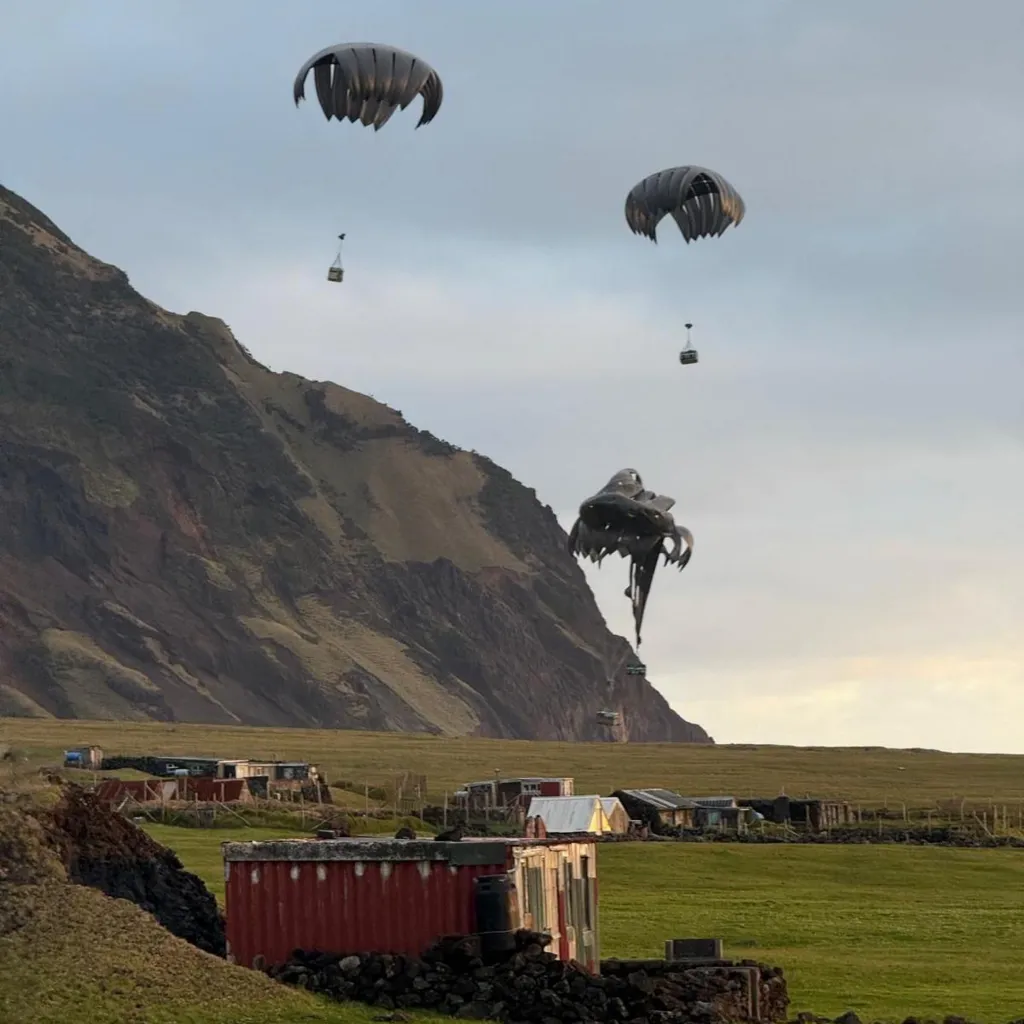
With the patient in isolation and oxygen stocks under pressure, the UK military turned to an option rarely seen in a civilian medical emergency: parachuting in trained personnel and critical supplies.
Why the UK military was sent to Tristan da Cunha
A team of six paratroopers and two military clinicians from 16 Air Assault Brigade was deployed by air to support the island’s limited healthcare system. The group included intensive care specialists, who were sent to help local staff manage the suspected case and strengthen the island’s emergency response capacity.
The operation was not a standard medical evacuation. Tristan da Cunha cannot receive aircraft because it has no airstrip, and rough seas can make boat access slow or unreliable. That left an airdrop as the fastest practical route for getting help to the island.
Medical oxygen, hospital equipment and other supplies were dropped from an RAF A400M aircraft. Officials said around 3.3 tonnes of medical aid reached the island, including equipment intended to help support the patient and protect the wider community.
The aircraft travelled from RAF Brize Norton in Oxfordshire before routing through Ascension Island and continuing south toward Tristan da Cunha. A supporting RAF Voyager was used for mid-air refuelling, underlining the distance and complexity of the mission.
The paratroopers landed on the island’s golf course, one of the few open areas suitable for such an operation. Local residents were asked to help prepare for the arrival at short notice, while island authorities coordinated with UK officials and health agencies.
The Ministry of Defence described the mission as the first time UK military medical personnel had been parachuted into a humanitarian support operation. That detail alone shows how unusual the circumstances were.
Tristan da Cunha is often described as the world’s most remote inhabited island. It lies in the South Atlantic, far from major ports, and is usually reached only by sea. Its nearest inhabited neighbour, St Helena, is more than 2,400 kilometres away, and the boat journey can take several days.
How the MV Hondius outbreak reached a remote island
The suspected case on Tristan da Cunha is connected to the wider hantavirus outbreak linked to the MV Hondius, a Dutch expedition cruise ship that had been travelling through remote Atlantic and polar regions.
The British national reportedly left the ship at Tristan da Cunha in mid-April. He later developed diarrhoea on April 28 and fever two days after that, symptoms considered compatible with hantavirus infection. Officials have said he is stable and remains in isolation.
The outbreak linked to the cruise ship has already led to several confirmed cases and deaths. Six cases have been confirmed, while two others are suspected, including the British man on Tristan da Cunha. Three people have died during the outbreak, including two whose infections were confirmed as hantavirus.
Two other British nationals with confirmed infections are being treated outside the ship, one in the Netherlands and another in South Africa. UK health officials have also been monitoring British passengers who were connected to the voyage but had not reported symptoms.
The MV Hondius later reached Tenerife, where more than 100 passengers were due to disembark under medical supervision before being repatriated. British passengers were expected to return by charter flight and enter isolation at Arrowe Park Hospital in Merseyside for 45 days, with monitoring by the UK Health Security Agency.
Two Britons who had left the vessel earlier at St Helena before the first confirmed hantavirus case are also voluntarily self-isolating at home in the UK.
Hantaviruses are usually linked to rodents and can spread to people through contact with contaminated droppings, urine or saliva. Most types do not spread easily between humans. However, the Andes strain has drawn concern because it is one of the rare hantaviruses known to spread from person to person in some circumstances.
Read More
- Visit Swikblog Homepage
- M5 Crash: Somerset Taunton Motorway Closed, Person Airlifted to Hospital
- Bush Toileting Fines in Australia National Parks
- Woolworths Worker’s Unfair Dismissal Claim: Fair Work Says He Was Never Fired
- KeyBank Increases Meta Platforms Holdings as AI Spending Stays in Focus
- PS Store Has No Active Sale Until May 13 Return
The World Health Organization has been tracking the outbreak and has reported details on confirmed and suspected cases linked to the ship. Public health authorities continue to carry out contact tracing, testing and monitoring across several countries.
Symptoms can begin with fever, stomach illness, muscle pain and fatigue before becoming more serious in some patients. Severe cases may involve breathing problems and require intensive medical support, which is why oxygen supplies became such an urgent concern on Tristan da Cunha.
Although the military response was dramatic, officials have continued to say that the risk to the wider public remains very low. The main focus is on passengers, crew members and close contacts connected to the MV Hondius journey.
The incident also raises wider questions about expedition travel in remote regions. Ships that visit isolated islands and polar routes often operate far from large hospitals, airports and emergency infrastructure. When an infectious disease concern appears in that setting, even a single case can become a major logistical challenge.
For Tristan da Cunha, the emergency has brought sudden global attention to a community that normally lives far from the centre of international news. The arrival of paratroopers, intensive care clinicians and military supplies was intended not only to support one patient, but also to reassure residents that help could reach them despite the island’s isolation.
Foreign Secretary Yvette Cooper said the mission showed the UK’s commitment to British nationals and overseas territories, while defence officials praised the personnel involved for carrying out the operation in difficult weather and terrain.
For more background on the wider cruise ship health emergency, read Swikblog’s earlier report on the MV Hondius hantavirus investigation.
The Tristan da Cunha airdrop now stands as one of the most unusual public health responses linked to the outbreak. It combined military aviation, infectious disease control and emergency medicine in a place where geography leaves almost no margin for delay.

Make Swikblog your go-to source on Google for reliable updates, smart insights, and daily trends.