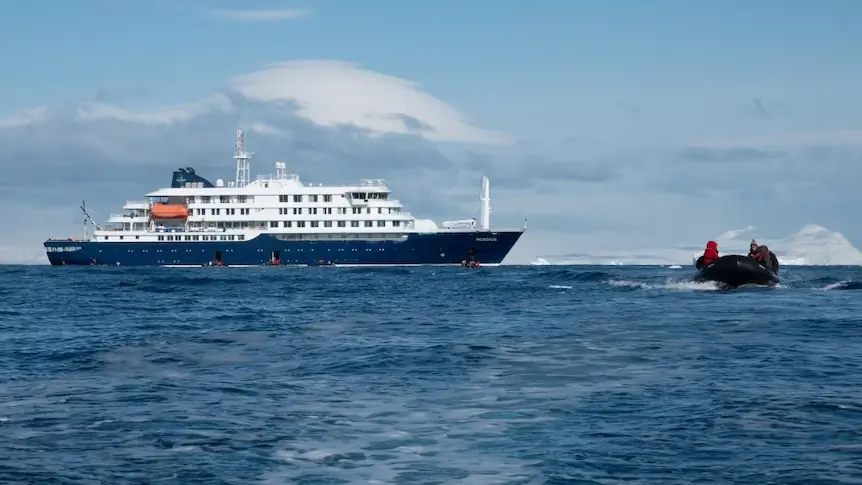

A deadly health emergency aboard the Dutch-operated expedition ship MV Hondius has brought renewed attention to hantavirus, a rare rodent-linked infection that can turn severe without early treatment. Three people have died after a suspected outbreak during an Atlantic voyage, while the World Health Organization (WHO) is working with multiple countries to understand how the virus spread in such an unusual setting.
The ship had departed from Ushuaia, Argentina and was heading toward Cape Verde, passing through remote regions including South Georgia and Saint Helena. Unlike large cruise liners, expedition ships like the MV Hondius operate in isolated environments, where access to immediate medical care is limited and evacuation depends on international coordination.
The first reported case involved a 70-year-old passenger who fell ill onboard. He later died, with reports placing his body on Saint Helena. His 69-year-old wife also developed symptoms during the journey and was airlifted to South Africa, where she died in hospital. A third fatality was later reported, while several others required urgent treatment, including at least one person admitted to intensive care.
The WHO has confirmed at least one case of hantavirus and said further laboratory testing and genetic sequencing are ongoing. Two additional symptomatic individuals were still onboard at one stage, awaiting evacuation as authorities assessed containment measures near Praia, Cape Verde.
Oceanwide Expeditions, the operator of the vessel, said it was prioritising medical care and working closely with health authorities. Governments across South Africa, the Netherlands and the UK were also involved in monitoring the situation and assisting affected passengers.
Understanding hantavirus and its risks
Hantavirus infections are rare and typically linked to exposure to rodents such as rats or mice. The virus spreads through contact with contaminated urine, droppings or saliva, or by inhaling dust particles carrying the virus. It is not commonly associated with cruise travel, making this incident particularly unusual.
According to the US Centers for Disease Control and Prevention, symptoms often begin with fever, fatigue, headaches and muscle aches before potentially progressing to serious respiratory illness or kidney complications. Severe cases can lead to life-threatening conditions affecting the lungs.
There is no specific antiviral treatment for hantavirus. Early medical intervention, including oxygen therapy and intensive care support, significantly improves outcomes. This is why rapid evacuation and hospitalisation became critical in the MV Hondius case.
While hantavirus is generally not easily transmitted between humans, rare instances of person-to-person spread have been documented. Health officials have therefore taken precautionary steps, including isolating symptomatic individuals and conducting contact tracing among passengers and crew.
For readers tracking global outbreak developments and similar health alerts, platforms like Swikblog regularly cover emerging risks across travel and public health sectors.
Read More
- Visit Swikblog Homepage
- Etihad A380 Toronto Flight Diverts to Munich After Medical Emergency
- Delta Cancels 400 Flights and Delays 1,000 Amid Staffing Issues
- Foxconn Satellite Launches on SpaceX Falcon 9
- Pokémon x Target Collection With 100 Items Set for June 6 Release
- Pittsburgh Marathon 2026 Results: Will Loevner and Jane Bareikis Win
How investigators are approaching the outbreak
The central question remains how exposure occurred. Investigators are expected to examine whether the virus originated from onboard contamination or from activities during shore landings in remote regions. Expedition cruises often involve close interaction with natural environments, which can increase exposure risks compared to conventional travel.
Authorities are likely reviewing passenger movements, storage areas, food handling systems and any signs of rodent activity onboard. They may also analyse whether contaminated materials were brought onto the ship or encountered during stops along the route.
The WHO’s outbreak response framework emphasises testing, surveillance and cross-border coordination, all of which are now in motion. With passengers from different countries and medical responses spanning continents, the investigation requires careful international cooperation.
Despite the severity of the incident, experts have urged calm. Hantavirus outbreaks are typically localized and linked to specific exposure events, rather than spreading widely like airborne viruses. The risk to the general public remains low, but the situation highlights the importance of early detection and response in remote travel environments.
For travellers, the advice remains practical: report unusual symptoms immediately, especially fever or breathing difficulty after visiting remote areas. Avoid contact with rodent-contaminated spaces, and follow hygiene protocols during travel.
The MV Hondius case continues to evolve as more test results emerge. For now, it stands as a rare but serious reminder that even in controlled environments like cruise ships, unexpected health risks can surface—particularly when journeys extend into isolated parts of the world.
For continued updates on global health incidents and travel safety, you can explore more reports in our health section and travel updates.

Make Swikblog your go-to source on Google for reliable updates, smart insights, and daily trends.