
Audi is preparing to enter the top tier of the luxury SUV market with the 2027 Audi Q9, and the first interior details suggest this is not simply a bigger version of the Q7. The upcoming flagship SUV is being shaped as a full-size, three-row luxury model with more cabin space, smarter convenience features and a more premium feel than anything Audi currently sells in its SUV range.
The Q9 is expected to make its full debut in Europe in July 2026 before reaching showrooms in key markets through 2027. Once launched, it will sit above the Q7 and challenge established luxury SUVs such as the BMW X7 and Mercedes-Benz GLS.
What makes the Q9 important is timing. Large luxury SUVs remain highly profitable, especially in the United States, China and the Middle East. Audi has competed strongly in the midsize premium SUV space for years, but it has not had a true full-size flagship SUV to match the scale and presence of its German rivals. The Q9 is designed to close that gap.
Why the Audi Q9 cabin matters
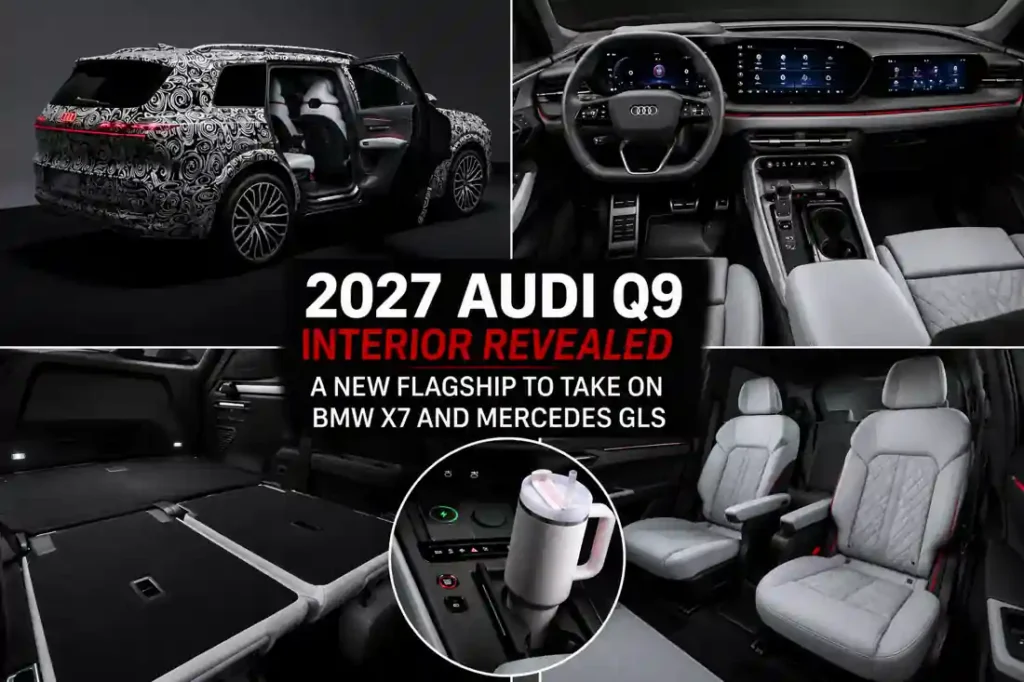
The interior preview shows Audi taking a more comfort-led approach. Instead of focusing only on screen size and digital graphics, the Q9 appears to be built around passenger space, seating flexibility and the feeling of a flagship cabin.
Audi says the Q9 will offer the largest passenger area it has ever provided in an SUV. That matters because the BMW X7 and Mercedes GLS are not bought only for design or performance. Buyers in this segment expect genuine three-row usability, long-distance comfort and enough luxury features for every passenger, not just the driver.
The Q9 will be offered with both seven-seat and six-seat layouts. The seven-seat version uses a three-person second-row bench, making it more practical for families. The six-seat version replaces that bench with two electrically adjustable captain’s chairs, giving the second row a more executive-style setup. Audi has also added power-adjustable backrests for the third row, a detail that should help the Q9 feel more premium than many three-row SUVs where rear passengers are often treated as an afterthought.
The front of the cabin follows Audi’s newest design direction, with a wide digital layout across the dashboard. The setup includes a digital driver display, a central infotainment screen and a separate display for the front passenger. Audi has not confirmed the final screen sizes for all markets, but the arrangement is clearly intended to match the high-tech feel expected in this price class.
Audi has not fully abandoned physical controls. The flat-bottom three-spoke steering wheel still uses real buttons, and the centre console also includes physical controls. Climate settings are handled through a fixed touchscreen strip at the bottom of the main display, which gives the dashboard a cleaner look while keeping key functions within reach.
One of the Q9’s most distinctive features is its automatic door system, a first for Audi. The doors can open and close electrically, while sensors help detect nearby obstacles to reduce the risk of hitting walls, cars or other objects. This feature gives the Q9 a more expensive, chauffeur-friendly character and brings it closer to the kind of convenience buyers associate with ultra-luxury vehicles.
The cabin also uses a full-width ambient lighting package, with an LED strip running around the interior. Audi says the lighting helps create a floating effect around the central display. The system can also work with the Bang & Olufsen 4D sound system, giving the cabin a more immersive feel.
The audio system is another sign that Audi wants the Q9 to feel like a true flagship. The Bang & Olufsen setup includes 4D sound and headrest speakers, which can also be used during phone calls. Wireless phone chargers and two USB-C ports are placed in the centre console, adding the kind of everyday convenience expected in a large family luxury SUV.
A panoramic roof measuring around 1.5 square metres will be standard on the Q9. Audi says the roof uses UV-resistant glass and can open, helping the large cabin feel brighter for passengers in all three rows. Roof rails and included roof racks add more practicality, while the boot area gets aluminium side rails and adjustable anchors to secure luggage.
Material choices are another area where Audi appears to be correcting some common complaints about modern premium cabins. The company says it has reduced glossy surfaces that easily show fingerprints and has instead used more matte and textured finishes. Available cabin materials include leatherette, genuine Nappa leather, microfibre and alpaca wool. Trim choices are expected to include natural ash, silk beige and carbon-fibre weave finishes.
New colour options such as tamarind brown and stone beige should also help the Q9 feel warmer and more expensive than some of Audi’s darker, sportier interiors. This is important because buyers moving up from a Q7, Range Rover Sport, BMW X5 or Mercedes GLE will expect the Q9 to feel like a clear step above.
Under the skin, the Q9 is expected to use Volkswagen Group’s Premium Platform Combustion architecture, also known as PPC. This platform is already used by newer Audi models such as the A5, Q5 and A6. It is an evolution of the older MLB platform and is better suited to plug-in hybrid technology, which makes electrified Q9 variants highly likely.
Read More
Audi has not yet announced the Q9’s engine lineup. However, the platform’s support for longer-range plug-in hybrids suggests the SUV could offer a mix of combustion and electrified powertrains. That would make sense for a flagship SUV aimed at markets where buyers still want long-distance flexibility but also expect lower-emission options.
The Q9 is also expected to be closely related to Porsche’s upcoming flagship SUV project, known internally as K1. That connection matters because it shows Volkswagen Group is investing in a new generation of large premium SUVs rather than leaving this space entirely to fully electric models.
Audi’s broader strategy is also changing. The brand is moving away from some smaller models and focusing more attention on premium, higher-margin vehicles. Swikblog recently reported on this shift in Audi discontinues A1 and Q2 after 2.26M units, showing how Audi is reshaping its lineup for future growth.
According to Autoweek, the Q9 is scheduled for an official debut on July 28 and will target rivals including the BMW X7, Mercedes-Benz GLS and Cadillac Escalade. That makes the Q9 one of Audi’s most important launches in years, especially as the company looks to strengthen its position in the United States and China.
The full exterior design, final dimensions, pricing and powertrain details are still waiting for confirmation. But the interior preview already makes Audi’s direction clear. The 2027 Audi Q9 is being developed as a proper flagship SUV with more space, more comfort and more luxury-focused technology than the Q7.
For buyers, the key question will be whether Audi can deliver the same road presence and premium feel that have made the BMW X7 and Mercedes GLS so successful. If the final production model matches the promise of this cabin reveal, the Q9 could finally give Audi the full-size luxury SUV it has been missing.

Make Swikblog your go-to source on Google for reliable updates, smart insights, and daily trends.