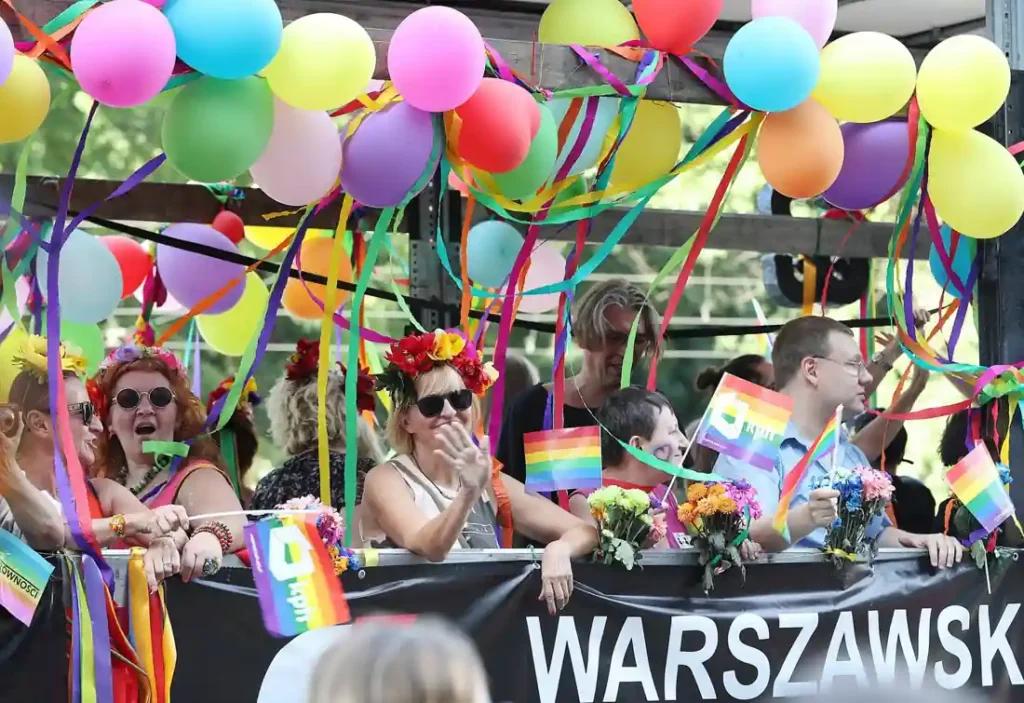

Poland has registered its first same-sex marriage, marking a historic legal moment for LGBTQ+ rights in one of the European Union’s most socially conservative member states.
The registration took place in Warsaw on Thursday after court rulings required Polish authorities to recognize same-sex marriages legally entered into in other EU countries. The case does not legalize same-sex marriage inside Poland, but it changes how Polish civil offices must treat couples who married elsewhere in the bloc.
Warsaw Mayor Rafał Trzaskowski confirmed that the capital had issued its first transcription of a marriage certificate for a same-sex couple. The move followed rulings linked to the marriage of two Polish men who had legally married in Germany and later sought recognition of that marriage in Poland.
The decision follows a ruling by the Court of Justice of the European Union, which said Poland must recognize same-sex marriages performed in other EU member states when such recognition is needed to protect EU citizens’ rights to free movement and family life.
Warsaw acts after court rulings
Polish law does not currently allow same-sex marriage or civil partnerships. That remains unchanged. The significance of Warsaw’s move lies in the recognition of a marriage already performed abroad, not in the creation of a new right to marry inside Poland.
In March, Poland’s Supreme Administrative Court cited the EU court ruling while ordering authorities to recognize the German marriage of two Polish men. The decision required the transcription of their foreign marriage certificate into the Polish civil register.
That transcription is legally important because it allows the marriage to appear in Poland’s official records. For couples, recognition can affect everyday legal matters tied to status, documentation and dealings with public offices.
Trzaskowski said Warsaw would go further by recognizing other Polish same-sex marriages registered elsewhere in the EU without forcing each couple to win a separate court ruling. That position could make Warsaw a leading city in applying the rulings while national law remains unchanged.
The growing legal debate around LGBTQ+ recognition comes as Poland continues balancing domestic politics with broader European legal standards, similar to how several countries across Europe have faced pressure to align national laws with EU court decisions.
Legal recognition, not full legalization
The ruling does not require Poland to introduce same-sex marriage domestically. It also does not force the Polish parliament to create civil partnerships. Instead, it requires the state to respect certain marriages that were lawfully concluded in another EU country.
That distinction matters because Poland’s constitution defines marriage as a union between a man and a woman. Conservative politicians have long used that provision to argue against same-sex marriage recognition. Courts have now drawn a narrower line: Poland may keep its domestic marriage law, but it cannot ignore every legal effect of a marriage validly entered into elsewhere in the EU.
For LGBTQ+ advocates, the Warsaw registration is still a major symbolic and practical shift. It shows that EU law can affect the way national authorities handle family-status documents even when domestic politics remain divided.
Prime Minister Donald Tusk said his government would look for ways to implement the rulings quickly. He also apologized to same-sex couples who had felt rejected and humiliated for years, and urged officials to respect the dignity of LGBTQ+ people regardless of personal beliefs.
Tusk’s government came to power promising to introduce civil unions for same-sex couples. That pledge has not yet become law. Resistance from conservative figures inside the governing coalition, as well as opposition from President Karol Nawrocki, has slowed the process.
The debate has also drawn wider international attention because Poland has frequently been at the center of European discussions over judicial independence, social rights and constitutional reforms in recent years.
Poland’s LGBTQ+ rights debate enters a new phase
Poland has seen years of political conflict over LGBTQ+ rights. Same-sex couples do not have access to marriage or civil partnerships under national law, and campaigners have repeatedly argued that this leaves families without basic legal protections available elsewhere in Europe.
As public discussion around civil rights and legal recognition grows, interest in Poland’s evolving political and cultural identity has also increased internationally, especially during major national events and debates surrounding democracy and social policy.
The Warsaw registration does not settle that debate. It is narrower than full marriage equality and depends on a marriage first being performed in another EU country. But it creates a path for some Polish same-sex couples to have their marriages recognized at home after marrying abroad.
It also places pressure on other Polish cities and civil registry offices. If Warsaw begins processing similar cases without separate court orders, couples in other parts of the country may expect comparable treatment from local authorities.
The decision could also sharpen the political debate around civil unions. Tusk’s government may point to the court rulings as proof that Poland must bring its family-recognition system closer to European standards. Opponents are likely to argue that courts are moving faster than parliament or public consensus.
Readers interested in the country’s political history and national identity can also explore Poland Independence Day 2025 – Freedom, Unity & National Pride.
For now, the immediate legal change is limited but clear. Poland has recorded its first same-sex marriage in the capital’s civil register because the marriage was legally performed in another EU country. Same-sex couples still cannot marry inside Poland, and national legislation remains unresolved.
The registration is therefore both a narrow administrative act and a milestone. It gives one couple formal recognition in Poland, signals how Warsaw intends to apply EU law, and pushes one of the country’s most contested rights debates back into the national spotlight.
Read More
- Visit Swikblog Homepage
- Lloyds Customer’s 94-Mile Trip Over £900 HMRC Cheque
- Queensland Bus Rollover on Bruce Highway Leaves 29 Injured
- Princess Astrid Hospitalised After Norway Royal Event
- King’s College London and Cranfield University Merger Planned for 2027

Make Swikblog your go-to source on Google for reliable updates, smart insights, and daily trends.