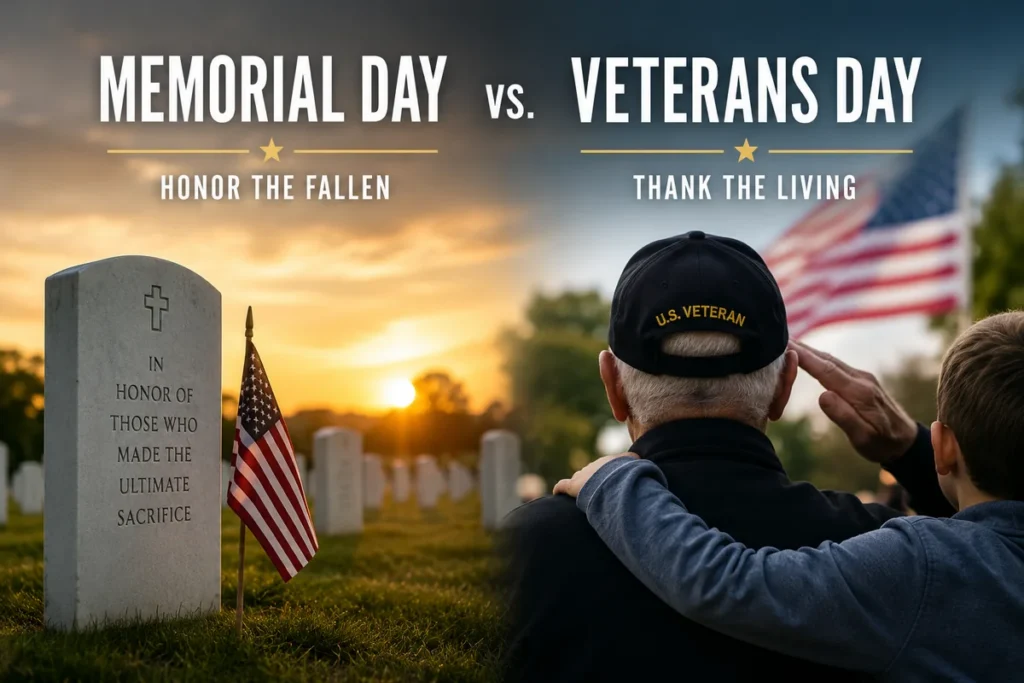

Memorial Day and Veterans Day are often spoken about together, but they do not carry the same meaning. A widely shared U.S. Army reminder has brought that distinction back into focus, noting that Memorial Day is a time to honor those who lost their lives in service, while Veterans Day is set aside to thank those who served and came home.
Memorial Day and Veterans Day hold two very different meanings. 🇺🇸
— U.S. Army (@USArmy) May 24, 2026
Tomorrow, we honor those who lost their lives in service to our nation. In November, we thank the living veterans who served.
Share this to help remind Americans of the difference. pic.twitter.com/cjLKBMlY5w
The difference matters because each holiday asks something different of the public. Memorial Day is not simply a patriotic long weekend, a retail holiday, or the informal start of summer. It is a national day of remembrance for U.S. military personnel who died while serving the country. Veterans Day, marked later in the year, is broader in tone and purpose: it honors all U.S. military veterans, especially living veterans, for their service.
The U.S. Department of Veterans Affairs explains the distinction clearly: Memorial Day is for remembering those who died in service, particularly those who died in battle or from wounds sustained in battle, while Veterans Day is intended to thank and honor all who served honorably in the military.
The simplest difference: Memorial Day honors the fallen. Veterans Day thanks those who served.
Memorial Day is a day of remembrance for the fallen
Memorial Day is observed on the last Monday in May. Its meaning is rooted in loss, sacrifice and national memory. The day is dedicated to service members who did not return home from military duty, including those who died in combat and others who lost their lives while serving.
That is why the tone of Memorial Day is different from many other public holidays. It is a day for visiting cemeteries, placing flags at graves, attending remembrance ceremonies and pausing for reflection. Across the United States, families of the fallen often experience the day not as a celebration, but as a deeply personal reminder of absence.
The holiday was once known as Decoration Day, a tradition that grew after the Civil War, when Americans placed flowers on the graves of soldiers. Over time, the observance expanded to honor U.S. military personnel who died in all wars. Its modern placement on the last Monday of May has made it part of a long weekend, but its original purpose remains solemn.
That is also why phrases such as “Happy Memorial Day” can feel uncomfortable to some Gold Star families and veterans. Many Americans still gather with family, travel or enjoy the start of summer, but the heart of the day is remembrance rather than celebration.
Veterans Day is a day to thank those who served
Veterans Day is observed on November 11 each year. Unlike Memorial Day, it is not limited to those who died in service. It honors all U.S. military veterans — living and deceased — who served in the armed forces during wartime or peacetime.
The public tone of Veterans Day is therefore more openly appreciative. It is a day to thank veterans, recognize their contributions, hear their stories and acknowledge the sacrifices made by military families. Schools, communities, businesses and public institutions often mark the day with ceremonies, discounts, parades and messages of gratitude.
The date carries historical significance. November 11 was originally associated with Armistice Day, marking the end of major hostilities in World War I. In the United States, the holiday later became Veterans Day, widening its purpose beyond World War I veterans to include all who served in the military.
That distinction is why a living veteran may appreciate a “thank you for your service” on Veterans Day, while Memorial Day is more properly directed toward remembering those who cannot be thanked in person.
Why the difference is often misunderstood
Memorial Day and Veterans Day are easily confused because both are connected to military service, national sacrifice and public ceremonies. Both may include flags, uniforms, wreaths and patriotic language. Both also appear on the federal holiday calendar, which can make them seem interchangeable to people who do not follow military traditions closely.
But the emotional center of each day is different. Memorial Day looks toward graves, names, families and the cost of service. Veterans Day looks toward those who wore the uniform and returned to civilian life, carrying their experiences with them.
The U.S. Army’s reminder resonated because it reduced the difference to a simple human truth: in May, the country honors those who lost their lives; in November, it thanks those still here to receive that gratitude.
Understanding the distinction does not reduce the respect owed to either group. Instead, it gives each holiday its proper meaning. The fallen are remembered with solemnity. Veterans are thanked with gratitude. Military service members currently in uniform are also honored separately on Armed Forces Day, which recognizes those actively serving.
For many Americans, the most respectful approach is simple. On Memorial Day, pause before the cookouts, sales and travel plans to remember the people who died in service. Visit a memorial, read the name of a fallen service member, fly the flag properly, or observe the National Moment of Remembrance at 3 p.m. local time. On Veterans Day, reach out to veterans, listen to their stories and thank them directly for their service.
The difference is not just a calendar detail. It is a matter of respect. Memorial Day belongs to those who gave their lives. Veterans Day belongs to all who served. Remembering that difference helps ensure both days are observed with the dignity they deserve.

Make Swikblog your go-to source on Google for reliable updates, smart insights, and daily trends.