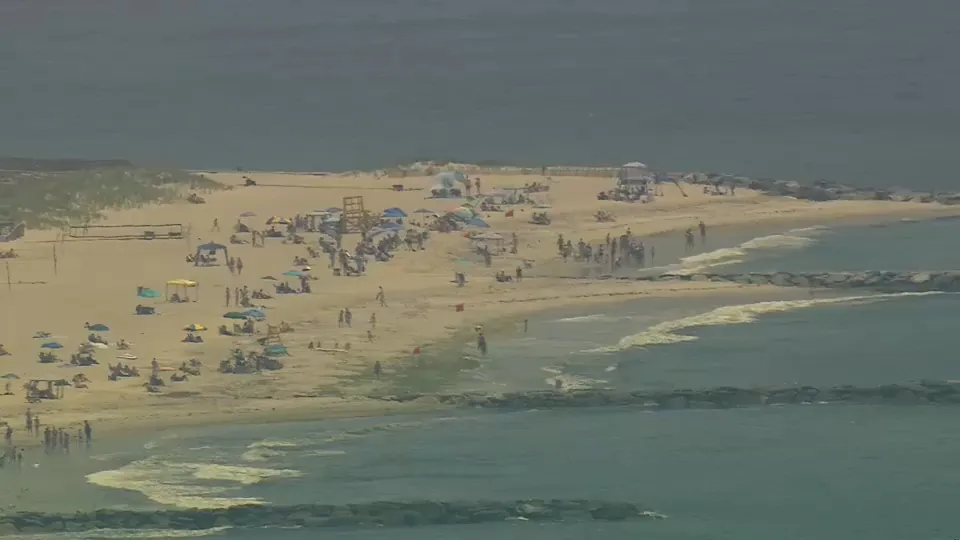

A shark sighting off Point Lookout turned a busy Long Island beach day into a water-safety alert Thursday, as lifeguards ordered swimmers out of the ocean after spotting a shark estimated at about 9 feet long. The response led to red flags at Point Lookout and nearby Hempstead-area beaches while officials checked whether the shark remained close to shore.
The beach itself was not shut down to visitors, but swimming was temporarily stopped as a precaution. For families, surfers and summer visitors, the message from officials was clear: stay on the sand, follow lifeguard directions and wait for the all-clear before returning to the water.
What happened at Point Lookout
The shark was first seen at about 10 a.m. Thursday by a Town of Hempstead lifeguard stationed at the main chair at Point Lookout Beach. That spot overlooks one of the most crowded parts of the shoreline, making the sighting especially urgent for beach safety teams.
Other lifeguards and beach patrons also confirmed seeing the shark in the water. Once the report was verified, officials moved quickly to clear swimmers from the surf and raise red flags at Point Lookout and adjacent Hempstead beaches.
The restriction applied to swimming, not general beach access. Visitors could remain on the sand, but entering the ocean was prohibited while patrol crews inspected the area.
Shark Patrol sent drones and jet skis into the water
After the sighting, Hempstead’s Shark Patrol was deployed to monitor the ocean. Crews used drones from above and jet skis on the water to search for the shark and check nearby swimming areas.
This kind of response has become a key part of summer beach management on Long Island. Drones allow officials to scan a wider stretch of coastline, while jet ski teams can move quickly if a shark, baitfish school or other hazard is spotted near swimmers.
Town officials also planned a noon news conference to share more information about the sighting and any changes to swimming restrictions.
Why officials closed swimming so quickly
A shark sighting does not automatically mean an attack is likely. In many cases, sharks are simply following fish or moving through coastal waters. But when a large shark is seen near a crowded swimming area, officials have little room to wait.
Temporary swimming bans give lifeguards time to confirm the shark’s location, track whether it has moved offshore and decide when the water can safely reopen. That fast response is especially important during peak beach hours, when even a short delay can leave many swimmers exposed.
Rockaway Beach also saw shark-related closures
The Point Lookout alert came during a broader day of shark activity in the New York region. Rockaway Beach in Queens also had intermittent swimming closures after multiple shark sightings were reported.
The separate incidents show why coastal officials have increased monitoring during the summer season. Warmer water, baitfish movement and crowded beaches can all raise the chance that sharks are seen closer to shore.
Shark-related closures are not limited to New York. In another recent coastal safety case, Sydney beaches were closed after shark-related incidents, showing how beach authorities in different regions often use temporary swimming bans when marine wildlife is spotted near swimmers.
Read More
What beachgoers should do during a shark alert
Beach visitors should treat red flags as a clear warning that swimming is not allowed. Even strong swimmers should stay out of the ocean until lifeguards reopen the water.
Anyone who sees a shark or unusual marine activity should alert a lifeguard immediately rather than trying to record or approach it. Officials also advise swimmers to avoid areas where large schools of fish are visible, since sharks may be feeding nearby.
The latest local beach updates can be checked through the Town of Hempstead, which provides official information on beach operations and public safety notices.
Why this matters now
Long Island beach communities are entering one of the busiest stretches of the summer, when large crowds gather along the coast and lifeguard teams must respond quickly to changing ocean conditions. Thursday’s Point Lookout sighting highlights how fast a normal beach day can change when marine wildlife is spotted near swimmers.
It also shows the difference between panic and precaution. No injuries were reported, and officials used a measured response: remove swimmers, monitor the water, update the public and reopen only when conditions are considered safe.
For beachgoers, the practical takeaway is simple. Shark sightings can happen during summer, but lifeguard warnings, red flags, drones and patrol teams are designed to reduce risk before a close encounter occurs.

Make Swikblog your go-to source on Google for reliable updates, smart insights, and daily trends.