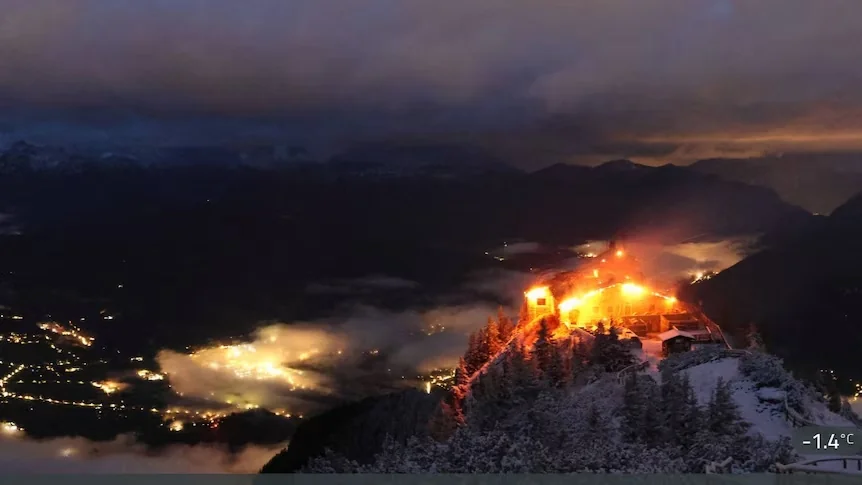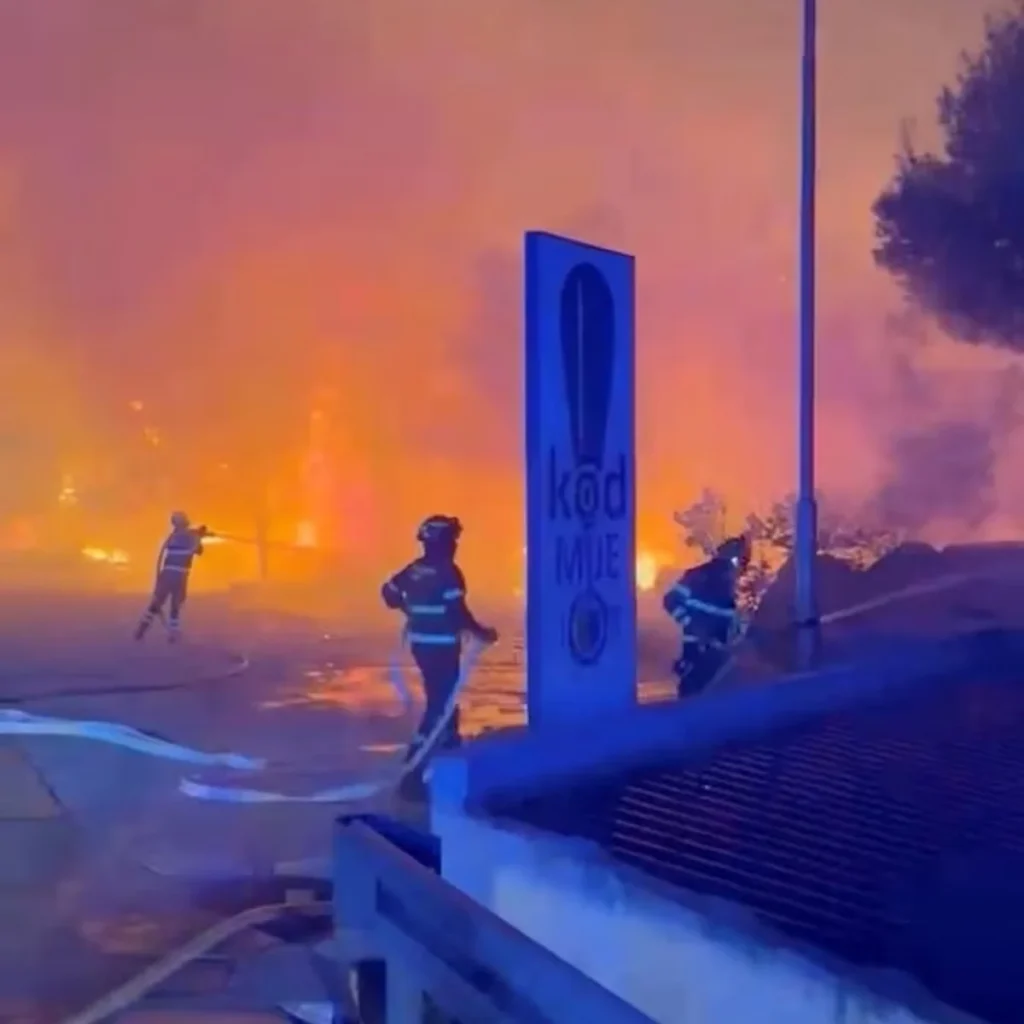

A wind-driven wildfire has swept into the Croatian tourist town of Omiš during the peak summer holiday season, injuring 36 people and forcing around 1,000 residents and visitors to evacuate as flames reached homes and settlements along the Dalmatian coast.
The fire spread overnight from the Lokva Rogoznica area towards Omiš, about 25 kilometres south of Split. Strong winds pushed flames through dry vegetation and populated areas, with roughly 1,000 hectares affected.
Health officials said 36 people were treated by ambulance services in Split. Fourteen were hospitalised and seven were reported to have life-threatening injuries. No deaths had been reported in the information available Friday morning.
Fire spread rapidly towards Omiš
The blaze moved through forest and vegetation surrounding communities between Lokva Rogoznica and Omiš. The area’s combination of steep hills, dry vegetation, homes and holiday accommodation created difficult conditions for emergency crews.
Fire officials described extensive material damage as flames swept through settlements. Emergency shelters opened along the stretch from Omiš to Split accommodated around 1,000 people overnight, while a section of a major coastal highway was closed.
The disruption is particularly significant because Omiš is a popular Adriatic holiday destination and August is one of Croatia’s busiest tourism periods. Travellers in affected communities should follow local evacuation instructions and check road conditions before moving through the area.
286 firefighters and four aircraft deployed
Croatia mounted a large emergency response, deploying 286 firefighters, around 90 fire vehicles and four aircraft to battle the wildfire through the night.
By Friday morning, conditions had improved. Chief Fire Commander Slavko Tucakovic said there were no open flames at that stage. Fire crews still have to watch burned areas for hotspots and possible renewed activity, particularly if strong winds return.
Part of the firefighting force and four aircraft were subsequently redirected to another wildfire farther south on the Pelješac peninsula, a forested area also known for vineyards and tourism.
Croatian state broadcaster HRT reported on the government’s response in Omiš as officials began assessing the consequences of the fire.
Impact on residents, property and tourists
The full extent of property damage had not yet been established. Fire officials said there was major material damage, but authorities will need time to determine how many homes and other structures were destroyed or damaged.
The approximately 1,000 hectares affected should not be interpreted as 1,000 hectares of buildings or residential property. Much of the fire zone includes forest and other vegetation.
Recovery can also be complicated by damaged infrastructure and restricted access after the immediate fire danger eases. Similar challenges were seen when the Summerland wildfire forced evacuations in British Columbia, highlighting how a major fire can continue affecting communities after residents leave the immediate danger zone.
Visitors should also avoid assuming that the Omiš emergency affects all of Croatia. Wildfires can be highly localised. People staying near Omiš should rely on Croatian emergency authorities, their accommodation provider and local road information rather than social media posts when making travel decisions.
British Columbia Wildfire Update: Bald Range Fire
Bug Fire Grows to 6,529 Acres as Cold Springs Evacuations Continue
Wildfires force evacuations across Europe
The Croatian fire is part of a wider outbreak of wildfire emergencies across Europe following repeated heatwaves and dry conditions.
In western Germany, around 1,800 people were ordered to evacuate after a wildfire moved towards Gey near the Belgian border. In southwestern France, 525 villagers fled a fire in the Landes region, where about 500 firefighters and six aircraft were tackling flames that had burned around 1,100 hectares.
Tourists and residents also fled villages in northern Greece’s Halkidiki region after strong winds drove another wildfire towards coastal communities during the holiday season.
Evacuations are sometimes necessary because of hazards beyond direct contact with flames. The Port Adelaide fire and toxic smoke evacuation similarly demonstrated how smoke and rapidly changing conditions can expand the area considered unsafe during a major fire emergency.
Heat, drought and strong winds intensify fire risk
The cause of the Omiš wildfire had not been established in the information available, and the ignition source should not be assumed without an official investigation.
However, hot weather, drought and strong winds can create conditions in which fires spread rapidly. Extended heat dries grasses, shrubs and forests, while wind can accelerate flames and carry burning material into new areas.
Europe has experienced several heatwaves this summer, particularly across France, Spain, Greece and the Balkans. Scientists have linked increasingly severe extreme heat to human-driven climate change, which can increase conditions favourable to dangerous wildfires.
The condition of the seven people with life-threatening injuries remains a key concern. Authorities are also monitoring hotspots, assessing property damage and determining when evacuated residents and visitors can safely return.
Prime Minister Andrej Plenkovic was travelling to Omiš with government ministers as the response began shifting towards assessing the scale of the damage.
For anyone currently near the affected area, evacuation orders, road closures and instructions from Croatian emergency services should take priority over normal travel plans. Although the main flames had calmed by Friday morning, firefighting operations and recovery efforts remain important for communities along the Omiš coast.

Make Swikblog your go-to source on Google for reliable updates, smart insights, and daily trends.