
Today’s NYT Connections puzzle #1182 for September 5, 2026 features a tricky mix of unsteady movements, bird sounds, familiar “head” phrases and desserts missing their final letter.
NYT Connections hints for September 5
- Yellow: Think about ways someone or something might move without being completely steady.
- Green: Listen for sounds commonly associated with different kinds of birds.
- Blue: Each word can appear directly before the same body-part word.
- Purple: Think of familiar desserts with their final letter removed.
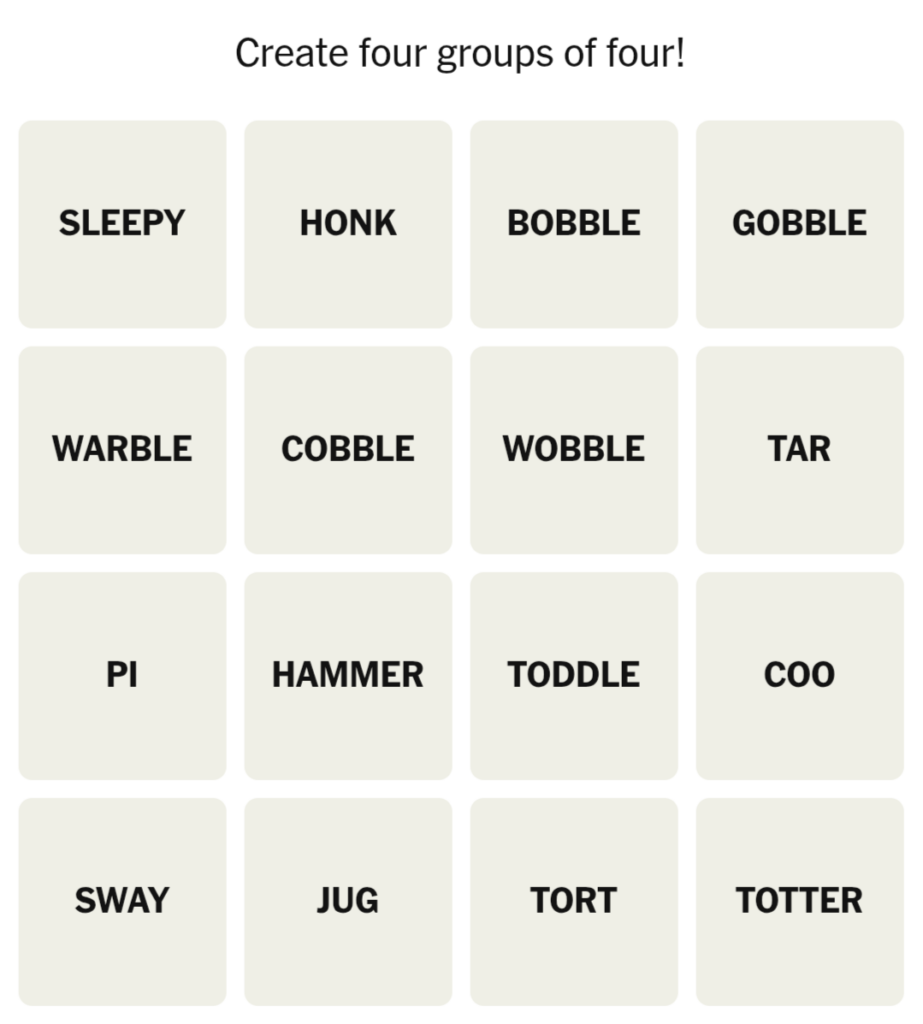
Main trap: Several words such as GOBBLE, WOBBLE and BOBBLE look and sound similar, which can make it tempting to group them together. Their meanings, however, point to completely different categories.
Blue clue: Try placing the same word after BOBBLE, HAMMER, JUG and SLEEPY.
Purple clue: Add one letter to the end of each answer and you should recognize a dessert.
Today’s NYT Connections answers
Reveal the Yellow Group
Category: Move unsteadily
Answers: SWAY, TODDLE, TOTTER, WOBBLE
Each word describes movement that is not completely steady. To sway is to move from side to side, while toddle and totter suggest uncertain steps. Wobble describes an unstable back-and-forth movement.
Reveal the Green Group
Category: Bird onomatopoeia
Answers: COO, GOBBLE, HONK, WARBLE
These words imitate or describe recognizable bird sounds. Pigeons and doves coo, turkeys gobble, geese honk and many songbirds produce a warbling call.
Reveal the Blue Group
Category: ____ head
Answers: BOBBLE, HAMMER, JUG, SLEEPY
Each answer forms a familiar word or phrase when followed by “head”: bobblehead, hammerhead, jughead and sleepyhead.
Reveal the Purple Group
Category: Desserts minus last letter
Answers: COBBLE, PI, TAR, TORT
Each answer becomes the name of a dessert when one final letter is restored: COBBLE becomes COBBLER, PI becomes PIE, TAR becomes TART and TORT becomes TORTE.
Why today’s Connections was tricky: The puzzle uses several words with similar sounds and endings, particularly BOBBLE, GOBBLE and WOBBLE. That overlap can create convincing false groups before the actual categories become clear.
Today’s solving lesson: When several words look unusually similar, do not assume they belong together. Connections often uses spelling or sound similarities as deliberate misdirection. Testing compound words and adding or removing letters can reveal the intended categories.
Players can attempt the official daily puzzle and check their results on the New York Times Connections page.

Make Swikblog your go-to source on Google for reliable updates, smart insights, and daily trends.