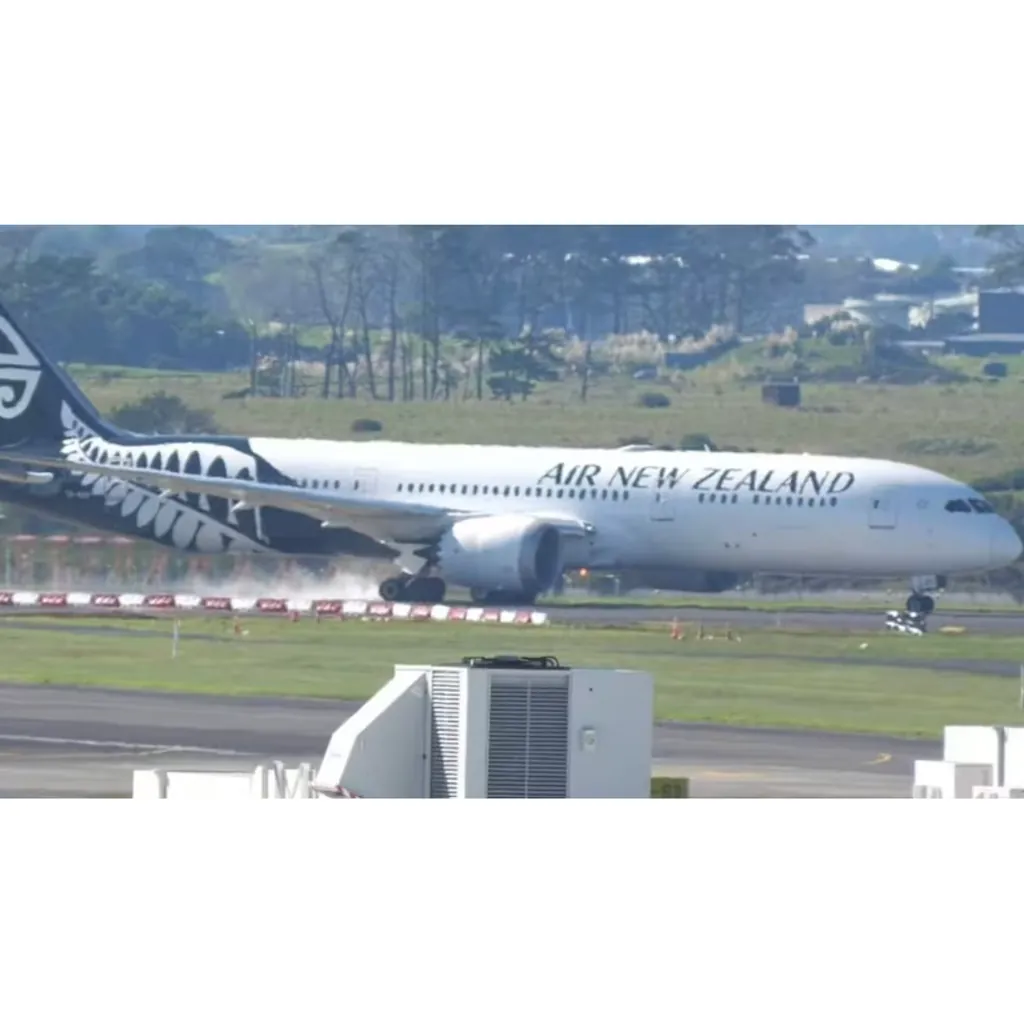

Air New Zealand passengers faced unexpected disruption at Auckland Airport on Saturday after Flight NZ81, scheduled to operate from Auckland to Hong Kong, was stopped on the runway because of a technical issue linked to the aircraft’s braking system.
The incident happened while the aircraft was positioning for takeoff at the end of the runway. Witnesses reported seeing smoke near the aircraft’s undercarriage as it taxied, prompting concern among travelers and airport observers. The flight did not take off, and the aircraft remained on the runway while safety checks were carried out.
Air New Zealand confirmed that the aircraft had suffered a braking system fault. Nathan McGraw, the airline’s chief risk and safety officer, said Flight NZ81 experienced the technical problem while preparing for departure and that engineers would inspect the aircraft before any further operation.
Passengers on board were later set to disembark after the aircraft was towed from the runway. Air New Zealand said customers affected by the disruption would be reaccommodated on another aircraft, while apologising for the inconvenience caused.
Auckland Airport flights delayed after runway disruption
The runway issue caused an immediate knock-on effect at Auckland Airport, with several arriving international flights temporarily diverted into holding patterns while the aircraft was cleared. Some flights were delayed by more than 30 minutes, while other passengers reported longer waits as airport operations recovered.
One Air New Zealand passenger flying from Christchurch to Auckland reportedly faced a delay of around 40 minutes. Christchurch Airport was also described as busy at the bag drop area, with many travellers appearing to connect to international services.
Although operations later began returning to normal, the incident showed how quickly a single aircraft fault can affect a wider flight schedule. At a major international gateway such as Auckland, runway availability is central to both domestic connections and long-haul arrivals.
Travellers flying through Auckland were advised to check updated departure and arrival information before heading to the airport. Air New Zealand provides live updates through its official flight status page, which remains the most reliable source for schedule changes.
Why a braking fault is taken seriously
An aircraft braking system is one of the most important safety systems on board. It is essential not only during landing, but also during taxiing and any rejected takeoff scenario. If a braking fault is detected before departure, airlines are expected to stop the aircraft and carry out engineering checks before allowing it to fly.
That appears to be what happened with NZ81. The aircraft was stopped before takeoff, passengers remained safe, and the plane was assessed by engineers. While smoke coming from an aircraft can look alarming, aviation safety procedures are designed to treat any such sign as a serious technical warning until specialists confirm the cause.
There were no reports of injuries from the incident. The main impact was operational, with delays, diversions and passenger rebooking creating disruption across parts of the airport schedule.
Flight NZ81 is an important long-haul service between New Zealand and Hong Kong, meaning delays can affect not only passengers travelling to Hong Kong but also those with onward international connections. For airlines, replacing or reassigning a long-haul aircraft can take time because aircraft availability, crew schedules and passenger connections all need to be managed together.
The incident also comes at a time when travellers are increasingly sensitive to airline disruptions, particularly during busy travel periods. Even when a safety issue is contained quickly, passengers can still face missed connections, changed departure times and longer airport waits.
For Air New Zealand, the priority now will be completing engineering checks, confirming the exact nature of the braking issue and ensuring affected passengers reach their destinations with minimal further delay. For Auckland Airport, the focus is on clearing any remaining backlog and restoring normal runway flow.
The NZ81 incident did not develop into a major aviation accident, but it became a significant airport disruption because the aircraft was already on the runway when the fault emerged. The response from the airline and airport authorities reflects standard aviation practice: stop the aircraft, protect passengers, inspect the fault and resume operations only when the runway is safe.
As schedules recover, passengers booked on Air New Zealand services through Auckland should continue monitoring official flight updates and allow extra time at the airport if delays remain in the system.
You may like: South Africa Marks Freedom Day 2026

Make Swikblog your go-to source on Google for reliable updates, smart insights, and daily trends.