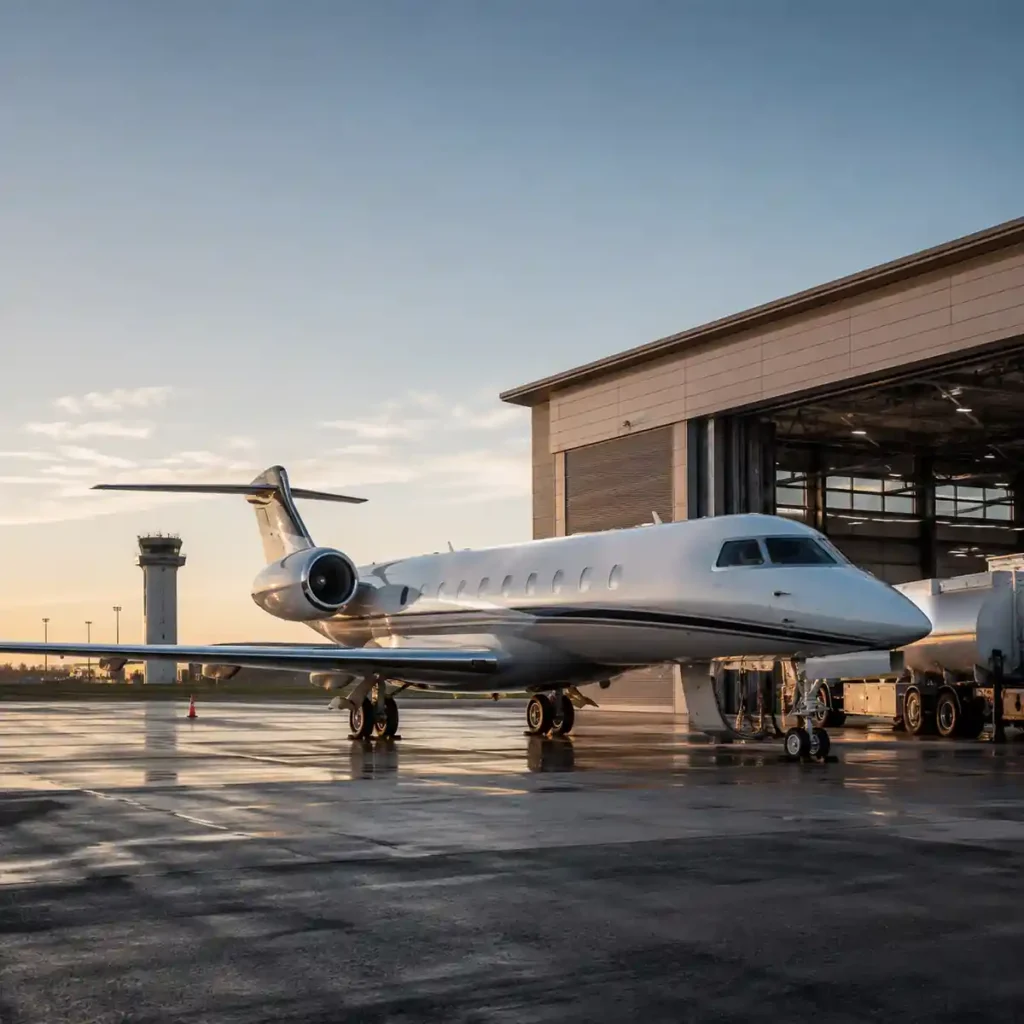

Apollo Global Management is making a major move into private aviation infrastructure, with Apollo-managed funds acquiring a significant interest in Atlantic Aviation in a transaction valuing the company at nearly $10 billion.
KKR, which acquired Atlantic Aviation in 2021, will remain a substantial shareholder. The deal effectively brings two major alternative asset managers together to back Atlantic’s next stage of expansion rather than representing a complete KKR exit.
For investors, the biggest unanswered questions are how much Apollo paid and exactly how much of Atlantic it now owns. Neither figure has been disclosed, meaning the nearly $10 billion valuation should not be interpreted as Apollo paying $10 billion for the entire company.
What does Atlantic Aviation do?
Atlantic Aviation is a major fixed-base operator, or FBO, serving corporate and general aviation customers. FBOs provide airport infrastructure and ground services used by private and business aircraft.
Atlantic’s services include aircraft fueling, deicing and maintenance, passenger concierge services, and leasing hangar and office space. It operates more than 100 FBO locations across the United States.
Atlantic also has long-term airport concession agreements and locations at high-activity airfields, characteristics that make the company an infrastructure investment rather than simply a bet on private-jet travel.
The official Apollo and KKR announcement says the investors plan to support Atlantic through targeted investment and strategic expansion into new markets.
Vanguard Buys Altruist in $4 Billion Deal: What It Means
Nvidia $500 Billion AI Deal: What It Could Mean for NVDA Stock
Why the nearly $10 billion valuation matters
KKR acquired Atlantic Aviation from Macquarie Infrastructure for about $4.5 billion in 2021. Comparing that purchase price with today’s nearly $10 billion valuation shows how substantially the value attached to the platform has increased over five years.
The difference is roughly $5.5 billion, with the latest headline valuation about 122% higher than the 2021 acquisition price. That does not mean KKR earned a 122% return: acquisitions, financing, additional investment and KKR’s retained ownership all affect its actual investment performance.
Atlantic has expanded through acquisitions and organic growth during KKR’s ownership, building its presence in the United States and selected international markets while investing in its facilities and operations.
Why Apollo is investing in private aviation
Apollo believes the private aviation market has structural growth drivers that can persist. David Cohen, a partner at Apollo, said Atlantic is well positioned to benefit from that growth, with the investors planning targeted investment and expansion.
The transaction also fits Apollo’s wider infrastructure strategy. The firm says it has originated more than $155 billion in infrastructure transactions and financings during the past five years across transportation, energy, digital and industrial sectors.
The deal comes amid wider multibillion-dollar investment activity involving major asset managers and U.S. businesses. Investors tracking large corporate transactions can also follow ExxonMobil’s reported interest in Shell’s U.S. chemicals business.
Why is KKR keeping its Atlantic Aviation stake?
KKR’s decision to remain invested is an important part of the transaction. Instead of selling Atlantic outright, KKR will participate in its future growth alongside Apollo.
KKR manages more than $120 billion in infrastructure assets and says it has invested more than $12 billion across aviation since 2015. Its continued ownership indicates that the firm still sees potential in Atlantic and the broader aviation market.
Another related aviation investment trend can be seen in Qantas’ investment in new premium A321XLR business-class cabins, as companies across different parts of aviation continue committing capital to premium travel and infrastructure.
Who owns Atlantic Aviation now?
Apollo-managed funds now hold a significant interest, while KKR-managed funds remain a substantial shareholder. Atlantic Aviation CEO Jeff Foland continues to lead the business.
No immediate service changes have been announced for Atlantic customers. The longer-term question is whether backing from both Apollo and KKR accelerates new FBO locations, acquisitions or investment in existing airport facilities.
What does the deal mean for APO and KKR investors?
Apollo trades on the New York Stock Exchange under APO, while KKR trades under KKR. Atlantic Aviation remains privately held and does not have its own publicly traded stock.
Because Apollo’s purchase price and exact ownership percentage have not been disclosed, investors cannot yet calculate the transaction’s precise financial contribution. What is clear is that a business acquired by KKR for about $4.5 billion in 2021 is now being valued at nearly $10 billion, with both KKR and Apollo backing its next growth phase.
Deal advisers
Paul, Weiss, Rifkind, Wharton & Garrison served as legal counsel to the Apollo funds. Evercore and Morgan Stanley served as financial advisers to KKR, while Kirkland & Ellis acted as KKR’s legal adviser.

Make Swikblog your go-to source on Google for reliable updates, smart insights, and daily trends.