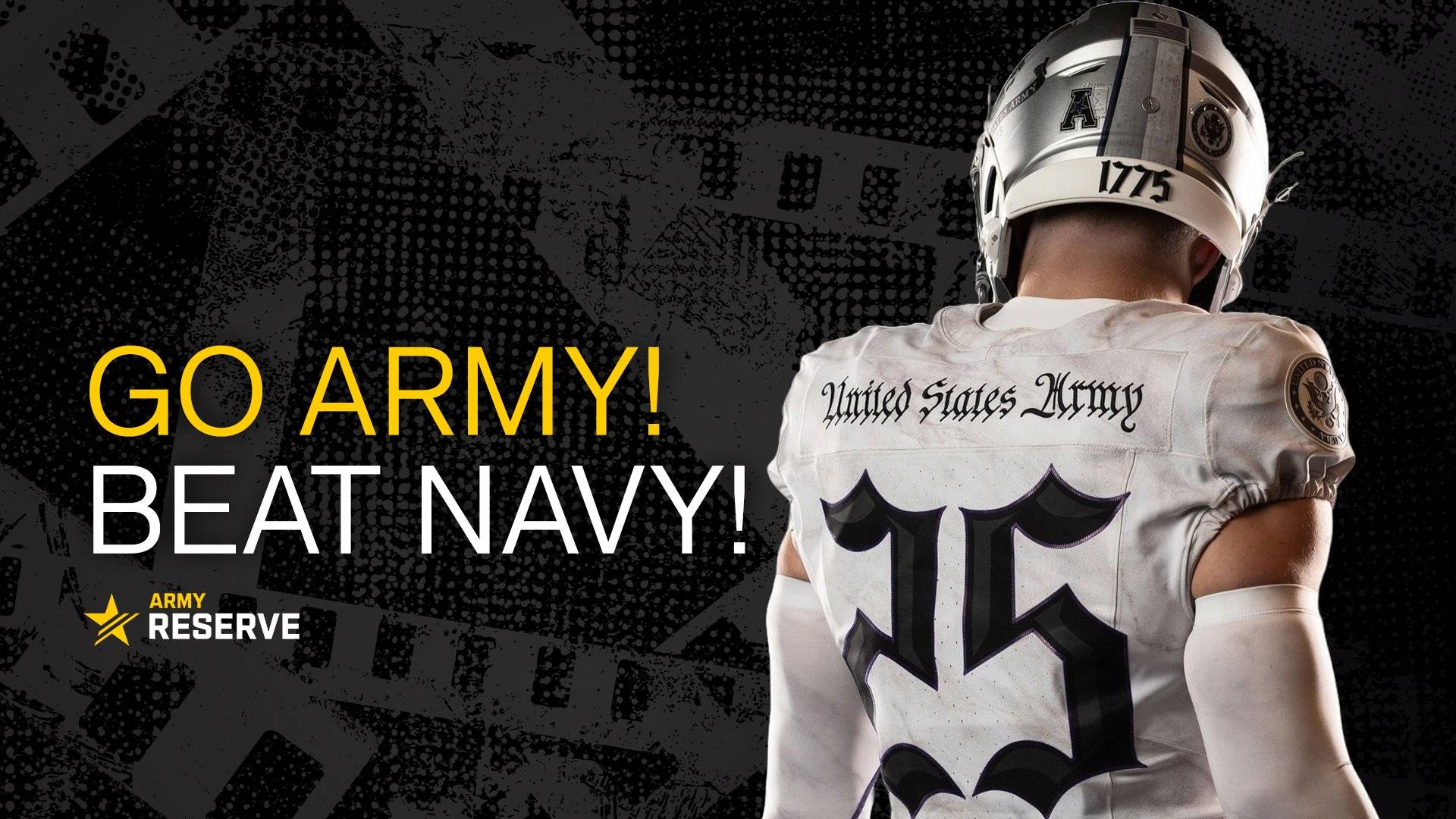
When the final whistle blows on Saturday afternoon in Baltimore, the noise inside M&T Bank Stadium will fade. Helmets will come off. Shoulder pads will be set aside. For Navy quarterback Blake Horvath and Army signal-caller Cale Hellums, the 3 p.m. Eastern Time kickoff marks more than a rivalry game — it may signal the end of their football lives, not because they failed, but because something larger is waiting.
College football usually ends with anticipation. Bowl destinations. Draft projections. Transfer portals. The Army–Navy Game ends with certainty. These players already know what comes next. Win or lose, they will trade playbooks for orders, locker rooms for units, and rival colours for the same flag.
That reality gives this game a gravity no other rivalry can replicate. This is competition with an expiration date — played at full intensity, yet framed by the knowledge that today’s opponent may soon become tomorrow’s colleague.
Navy enters the 126th meeting with a 9–2 record and momentum built behind Horvath’s leadership. Army arrives at 6–5, uneven but resolute, with Hellums guiding an offense designed less for spectacle than for control. The Commander-in-Chief’s Trophy will be decided, and with it the pride of an entire service academy. But those stakes only skim the surface of why this afternoon matters.
Unlike most college athletes, these players are not chasing contracts or endorsements. Horvath is not auditioning for Sundays. Hellums is not calculating draft stock. Their futures are already written. Some will fly aircraft. Others will command units. Many will shoulder responsibilities that have nothing to do with scoreboards.
That context reshapes the meaning of every tradition surrounding this game. The march-on of cadets and midshipmen is not pageantry designed for television. It is a visual reminder that these teams represent institutions first. When the alma maters are sung after the game, with the losing side singing first, the ritual is not symbolic — it is instructional.
Mainstream previews often focus on schemes, records, or rivalry statistics. Yet the Army–Navy Game resists those frames. It exists apart from the modern churn of college football, untouched by transfer speculation or NIL debates. It remains one of the few Saturdays where what happens next is not the point.
Even the timing reinforces that separation. Played in December, after most of the regular season has concluded, the game stands alone on the calendar. There are no competing fixtures demanding attention. For a few hours, college football pauses long enough to remember what collective purpose can look like.
When Navy receiver Eli Heidenreich breaks free downfield, or when Army’s offense methodically drains the clock, the crowd responds as it always has. But beneath the noise is a shared understanding: this is not a stepping stone. It is a closing chapter.
Afterward, handshakes linger. Conversations soften. Rivalry language fades. Soon, these young men will wear different uniforms — ones without names on the back, without cheers in the stands. The competition ends here. The commitment does not.
That is why the Army–Navy Game continues to resonate far beyond the standings. It reminds us that some moments matter not because of what they promise, but because of what they conclude.
In a sport obsessed with futures, this game asks something quieter and more demanding: what does it mean to finish well?
You May Also Like

Make Swikblog your go-to source on Google for reliable updates, smart insights, and daily trends.