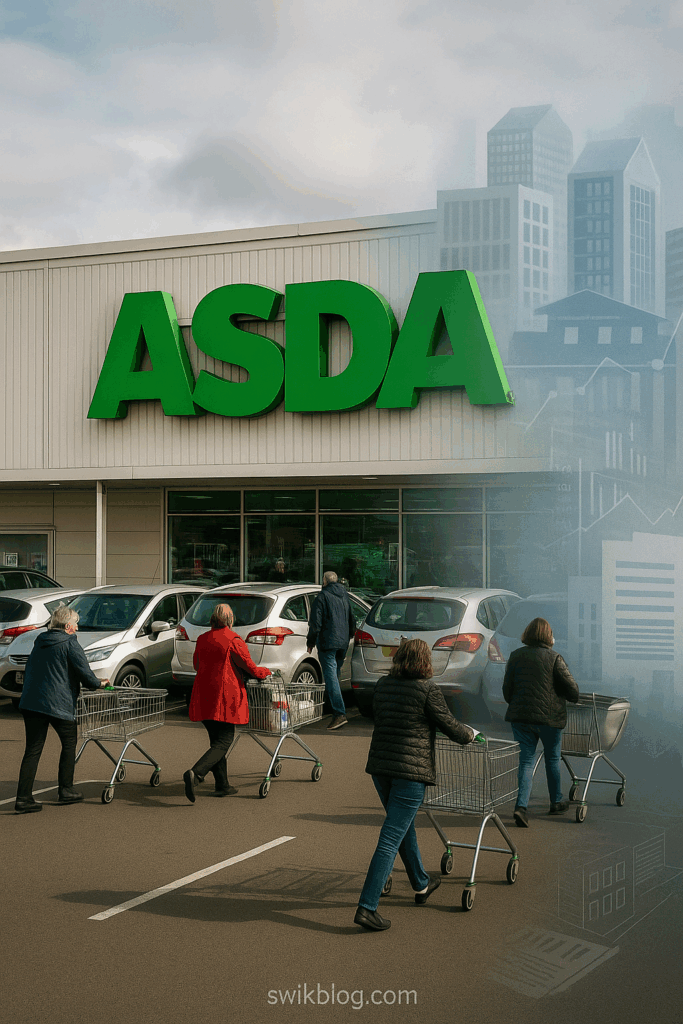

The ASDA Blue Owl deal has become one of the most talked-about supermarket stories in the UK. ASDA has raised hundreds of millions of pounds by selling dozens of its store properties to investors, including Blue Owl Capital, while continuing to run the shops as normal. If you’ve seen the headlines and wondered what the deal really means, here’s a simple breakdown for readers in the UK, as well as the United States, Canada, Australia and New Zealand who follow British retail news.
What is the ASDA Blue Owl deal?
The ASDA Blue Owl deal is part of a larger collection of sale-and-leaseback transactions where ASDA is selling the buildings of its supermarkets while continuing to operate the stores. In total, the retailer is raising roughly £568 million by selling 24 stores and a major depot to several investment groups, one of the most notable being Blue Owl Capital.
According to reports from Reuters and The Guardian, ASDA’s goal is to bring in cash quickly, reduce debt and stabilise operations during a highly competitive period for the UK grocery market.
What is a sale-and-leaseback deal?
A sale-and-leaseback is a simple concept:
- The company sells the property it owns.
- A new landlord (in this case Blue Owl and others) takes over the building.
- The company immediately rents the store back on a long lease.
So the ASDA Blue Owl deal does not involve store closures — it’s a financial move that gives ASDA a large cash boost, while the stores continue to operate normally.
Will ASDA stores close because of the Blue Owl deal?
This is the biggest concern among UK shoppers searching for information about the ASDA Blue Owl deal. The answer is: No.
The supermarkets that were sold will remain open, since ASDA has signed long-term leases — often 20 to 25 years — to continue running all the locations. Customers will not notice anything different at the entrance, tills, bakery, fuel station or during their weekly shop.
What does change is ASDA’s financial structure. Instead of owning the stores, the retailer will now have regular rent payments. This can be a good move if the extra cash helps ASDA modernise and compete on prices.
Why did ASDA agree to the Blue Owl deal now?
The UK supermarket industry has been extremely competitive over the past few years. Higher operational costs, aggressive pricing from competitors, and pressure on household budgets have pushed many retailers to rethink their financial strategies.
The Blue Owl deal allows the supermarket to:
- Reduce debt and interest payments.
- Invest in lower prices and promotions.
- Upgrade stores and online delivery systems.
- Free up capital for future expansion and technology.
For readers in the United States, Canada, Australia and New Zealand, this type of deal is similar to what major global retailers have done when they need to release cash quickly while keeping stores running as usual.
Does the ASDA- the Blue Owl deal affect prices or staff?
In the short term, nothing major is expected to change for shoppers or employees. Staff will remain ASDA employees, and store operations will stay the same.
Longer term, the real impact depends on how ASDA uses the cash raised from the deal. If the money goes into improving ranges, refurbishing stores and keeping prices competitive, customers may see benefits. The challenge, however, is that ASDA will now face higher rent commitments.
Why global investors care about ASDA Blue Owl deal
Analysts in London, New York and other financial hubs are watching the Blue Owl deal closely because it reflects a trend across the retail industry: turning real estate into liquidity. The deal also signals how UK supermarkets are adapting to rising costs and consumer shifts.
The deal’s size — more than half a billion pounds — makes it one of the most significant UK retail real-estate transactions of 2025.
Simple explanation you can give anyone
Here is the easiest way to explain the ASDA Blue Owl deal to friends or family:
- ASDA sold the buildings of several of its stores.
- Blue Owl and other investors bought them.
- ASDA still runs all the stores exactly as before.
- The supermarket now pays rent instead of owning the sites.
In short, the deal gives ASDA a large cash injection without changing the day-to-day shopping experience.
Final thoughts
The ASDA Blue Owl deal will continue making headlines because it touches on money, retail strategy and the future of one of the UK’s largest supermarkets. For shoppers, the message right now is simple: your local ASDA store is staying open, and your weekly shop won’t be affected. The bigger story is happening in the background as the company strengthens its finances and prepares for tougher competition.

Make Swikblog your go-to source on Google for reliable updates, smart insights, and daily trends.