
The Australian share market suffered its sharpest sell-off in nearly three months on Thursday, with the S&P/ASX 200 sliding almost 2% as global risk appetite cracked under the weight of falling commodity prices, a renewed tech sell-off in the United States, and fresh uncertainty around interest rates.
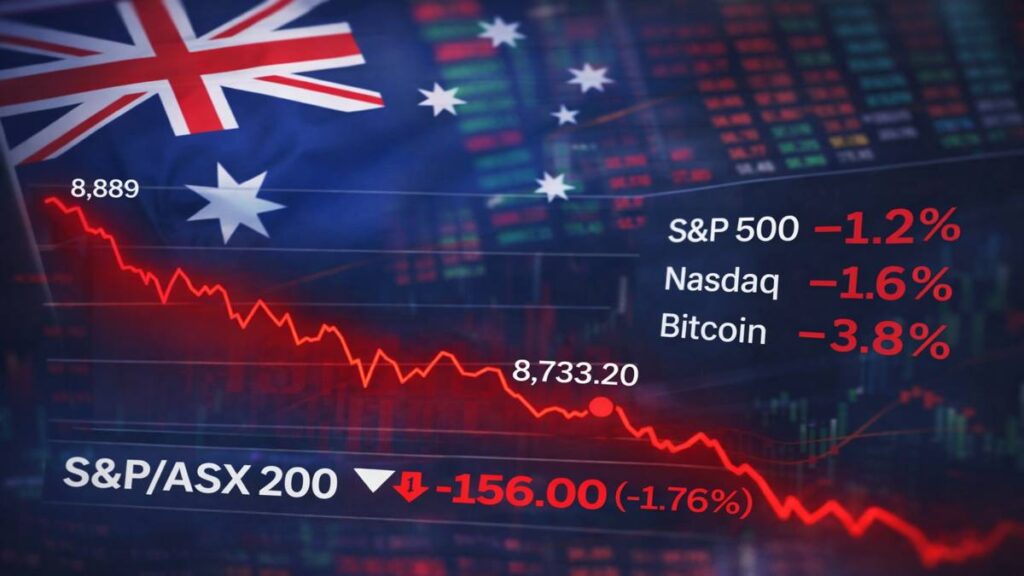
By early afternoon, the benchmark index was down 1.7% to around 8,733 points, having opened sharply lower and failed to mount a sustained recovery. The move wiped out more than 150 points in a single session and dragged the market toward a one-month low.
The selling was broad-based. Every major sector finished in the red, with technology stocks, industrials, and miners leading the losses as investors pulled back from risk assets across global markets.
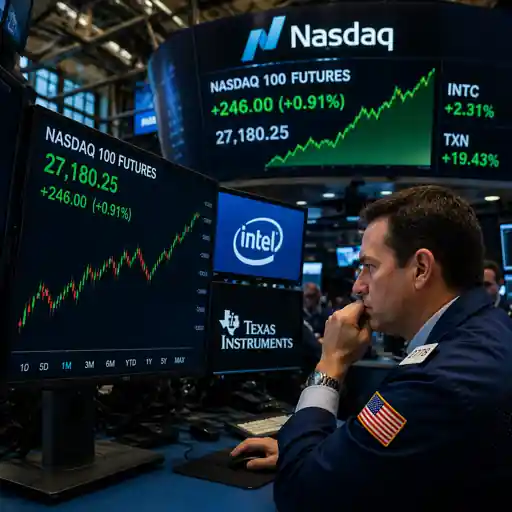
The day began on a weak footing after losses on Wall Street overnight, where US equities extended their worst multi-day decline since late 2025. Heavy selling in US technology shares and renewed volatility in digital assets set the tone before the Australian market even opened.
That pressure intensified as the session wore on. The ASX 200 traded in a wide intraday range between roughly 8,714 and 8,889 points, highlighting how fragile sentiment has become as traders react to shifting expectations on interest rates, inflation, and global growth.
Technology stocks were among the hardest hit, mirroring the weakness seen in the Nasdaq overnight. Investors continued to reassess high-growth valuations as bond yields remained volatile and concerns mounted about whether earnings can justify aggressive capital spending across the tech sector.
Miners also weighed heavily on the index. Iron ore prices slid nearly 2% to just above US$100 a tonne, undercutting sentiment toward heavyweight materials stocks. The pullback in bulk commodities added to the sense that global demand expectations are being revised lower.
Adding to the unease, cryptocurrency markets swung sharply. Bitcoin briefly plunged below US$60,000 earlier in the global session before rebounding, reinforcing fears that speculative assets remain vulnerable in an environment of tighter financial conditions.
Domestically, attention remained firmly on interest rates. Reserve Bank governor Michele Bullock appeared before a parliamentary economics committee following this week’s rate hike, reiterating that inflation pressures remain tied to capacity constraints across the economy.
Her comments came as major banks began passing on higher borrowing costs. Commonwealth Bank confirmed a 0.25 percentage point increase to its variable mortgage rates, effective later this month, underscoring that financial conditions are still tightening for households.
That backdrop has heightened concerns about consumer spending and corporate earnings as 2026 progresses. Investors are increasingly sensitive to any signs that higher rates could tip parts of the economy into slower growth just as global momentum cools.
Despite the sharp fall, some defensive pockets of the market proved relatively resilient. Healthcare and consumer staples outperformed on a relative basis, reflecting a familiar rotation toward more stable earnings during periods of market stress.
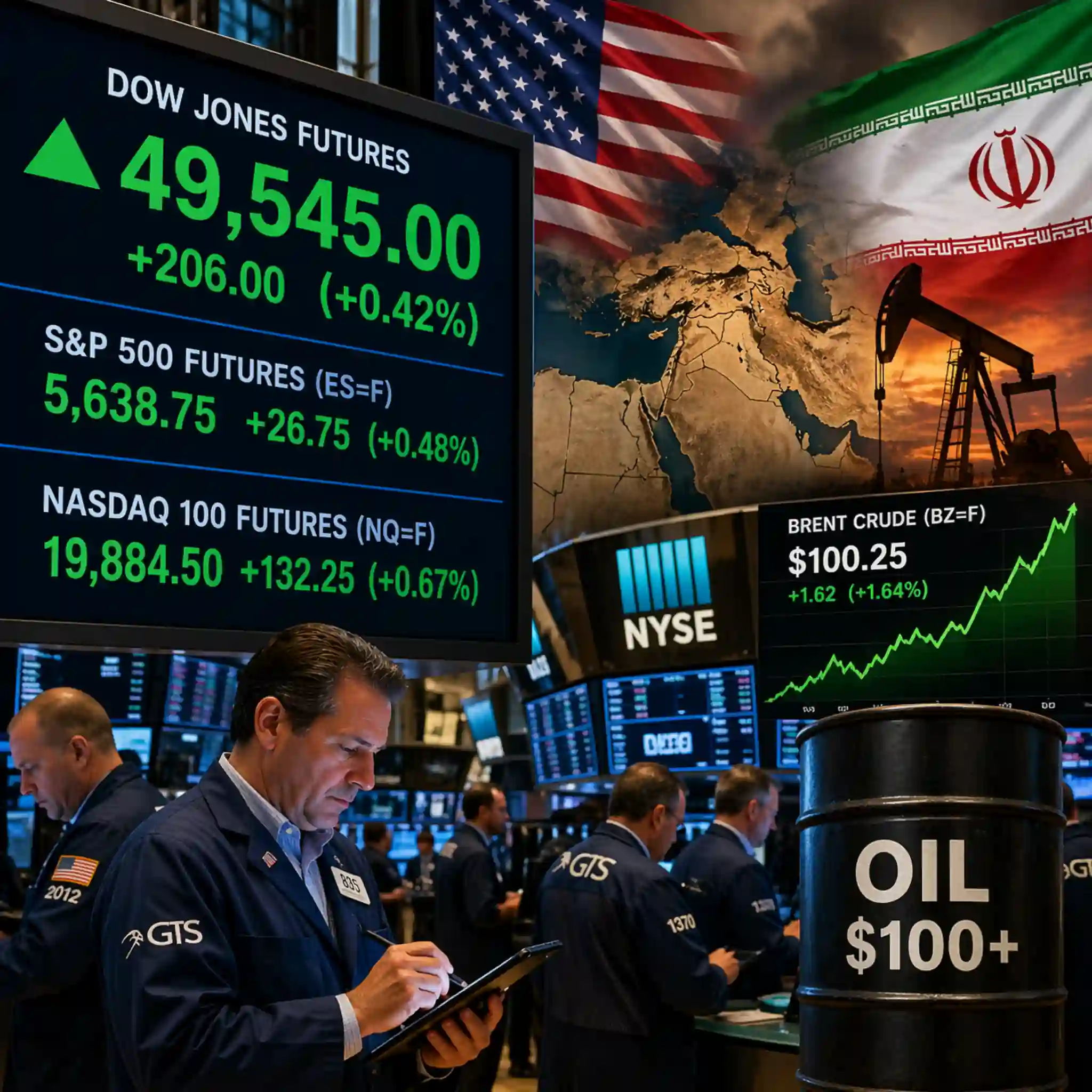
By comparison, overseas markets offered little comfort. European shares tracked lower, while US futures pointed to further volatility ahead of the next Wall Street session, keeping pressure on Asia-Pacific equities.
Gold prices were broadly flat near record highs, suggesting investors continue to seek protection even as equities retreat. Meanwhile, the Australian dollar edged slightly higher against the US dollar, trading near 69 US cents.
For now, traders are watching whether the ASX 200 can stabilise above the 8,700 level into the close. A decisive break lower would raise the risk of deeper technical selling, while any late bounce may reflect short-covering rather than renewed confidence.
Much will depend on how global markets digest the next round of US economic data and whether volatility in technology shares and cryptocurrencies eases. Until then, the Australian market appears set to remain at the mercy of global risk sentiment.
For live market updates and official coverage of today’s trading session, see reporting from ABC News.
You may like
Dow Jones Slides as Nasdaq Extends Worst 3-Day Sell-Off Since 2025 — What the US risk-off move could mean for global markets.

Make Swikblog your go-to source on Google for reliable updates, smart insights, and daily trends.