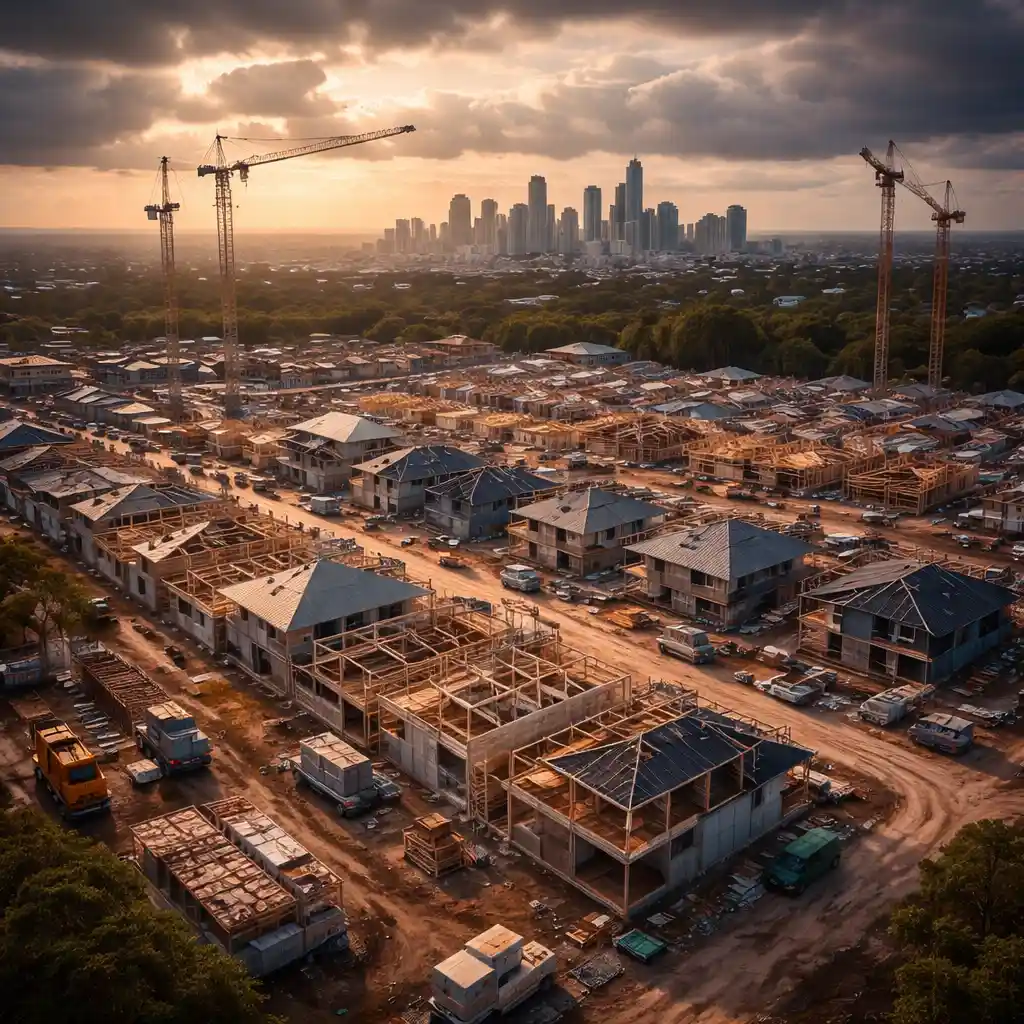

Australia’s housing crisis is spiralling in 2026, and the latest shock could be the most dangerous yet. Building costs have surged as much as 30%, fuel prices are skyrocketing, and thousands of housing projects are now at risk of delays or cancellation. What was already a fragile construction sector is now facing a new wave of pressure that could reshape the country’s real estate market.
The trigger behind this sudden disruption is the global fuel crisis linked to geopolitical tensions, which has sent diesel and petrol prices sharply higher. For an industry heavily dependent on transport, machinery, and energy-intensive materials, the impact has been immediate and severe.
Fuel Crisis Sends Construction Costs Soaring
At the center of this crisis is a dramatic spike in fuel prices. Diesel has surged by as much as 36% in just two weeks, while petrol prices are up around 30%. These increases are flowing directly into construction costs, affecting everything from transporting raw materials to running heavy machinery on job sites.
Construction materials are now seeing massive price hikes. PVC pipes and fittings have jumped up to 28.5%, while stormwater drainage materials are up as much as 31%. High-density polyethylene (HDPE) products used in infrastructure have surged by as much as 36%. Cement costs have also increased, with imported cement rising 15% and local production costs climbing 10%.
Transport costs are adding further pressure, with trucking expenses rising between 12% and 15%. For many suppliers, fuel surcharges alone are increasing delivery costs by anywhere between 3% and 30%.
‘Never Seen Anything Like It’: Industry Under Stress
Industry leaders say the current situation is unprecedented. Suppliers and builders across Australia are invoking “force majeure” clauses to exit contracts, a rare move typically reserved for extreme events like war or natural disasters.
Many companies are now losing money on projects as they struggle to absorb rising costs. Smaller suppliers are particularly vulnerable, with some reporting losses of hundreds of thousands of dollars each month. At the same time, intense competition is forcing businesses to undercut each other just to keep operations running.
The pressure is already leading to projects being paused or delayed. Developers are reassessing feasibility, while some projects approved months ago are no longer financially viable under current cost conditions.
$125,000 Price Jump Hits New Apartments
The cost surge is now directly impacting property prices. Developers report that construction cost increases of just 3–5% are adding up to $125,000 to the price of a new luxury apartment.
For example, a $2.5 million apartment is now being priced closer to $2.625 million. While developers are trying to absorb some of the increases, many projects simply cannot proceed unless prices rise.
At the same time, builders face a difficult choice: pass on higher costs and risk losing buyers, or absorb them and see margins collapse. Some major builders are choosing to temporarily absorb costs to keep supply chains functioning, but this strategy may not be sustainable if the crisis continues.
Housing Supply at Risk Nationwide
The biggest concern is the impact on housing supply. Australia already faces a significant housing shortage, and the federal government has set a target of building 1.2 million homes over five years. However, rising costs are now threatening that goal.
There are currently tens of thousands of homes under construction across Australia, along with major infrastructure and road projects. Many of these are now exposed to rising costs, particularly those still early in the construction cycle.
Projects that have been approved but not yet contracted are especially at risk. As costs rise, developers may delay or cancel these builds altogether, reducing future supply and putting further pressure on housing prices.
Construction Sector Faces Insolvency Wave
The crisis is also increasing the risk of business failures across the construction industry. The sector already has one of the highest insolvency rates in Australia, with a failure rate of around 5.8%, above the national average.
Fuel-intensive industries like road freight are also under pressure, with over 7% of businesses in the sector closing in the past year. These industries are closely linked to construction, meaning disruptions can quickly spread across the economy.
Experts warn that rising oil prices have historically been linked to global recessions. If oil prices continue climbing toward $125–$150 per barrel, Australia could enter a high-risk economic zone.
Why This Crisis Is Different from COVID
While comparisons to the COVID-era construction crisis are being made, experts say this situation is fundamentally different. During the pandemic, construction was disrupted by shutdowns and labour shortages. In contrast, the current crisis is driven by cost inflation.
This means projects are still running, but at significantly higher costs. Instead of stopping work entirely, the industry is being squeezed financially, which can be just as damaging over time.
What Happens Next for the Housing Market
If cost pressures continue, Australia could see a sharp slowdown in housing construction over the coming months. Fewer projects would mean reduced supply, which could push both property prices and rents even higher.
There is also growing pressure on the government to intervene. Measures such as fuel tax relief and faster payments for construction projects are being discussed as potential ways to support the industry.
For buyers, investors, and developers, the key takeaway is clear: housing prices are no longer driven by demand alone. The cost of building homes is becoming one of the biggest factors shaping the market.
As long as fuel prices remain elevated and supply chains remain under pressure, Australia’s housing crisis is likely to deepen. Thousands of homes are now at risk, and the gap between housing demand and supply could widen further in 2026.
External sources: ABS Building Approvals | RBA Inflation Data

Make Swikblog your go-to source on Google for reliable updates, smart insights, and daily trends.