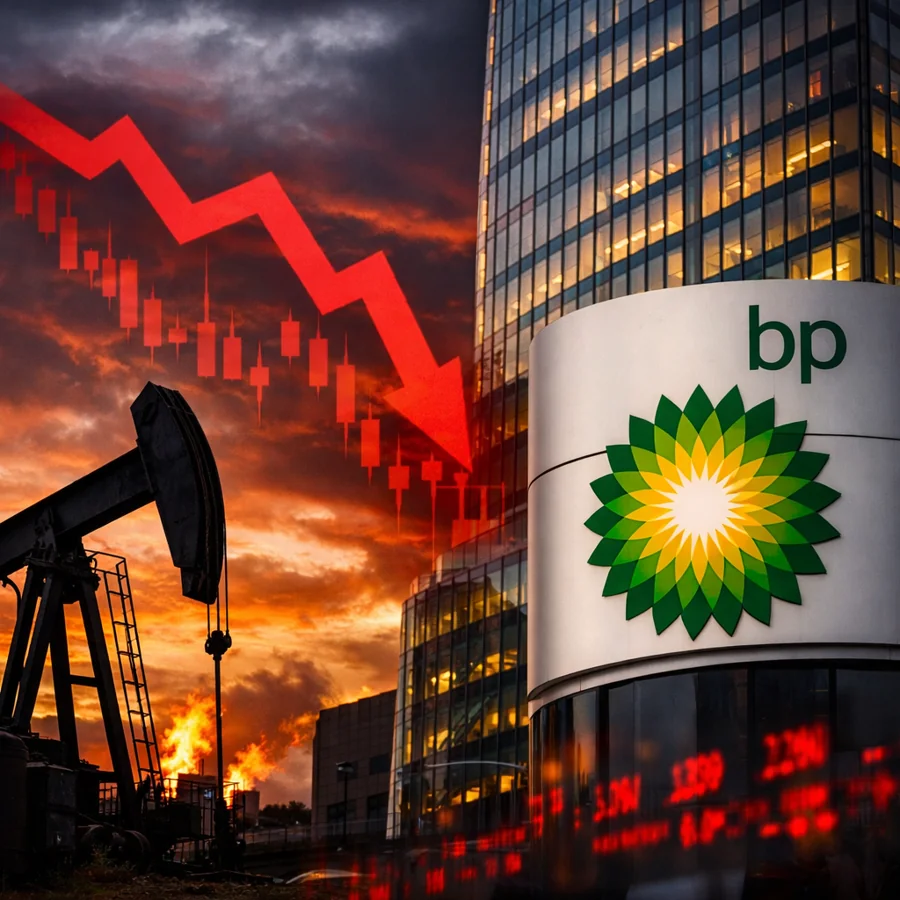

BP (LSE: BP) shares plunged 7.36% to 541p after oil prices slumped 9.41%, triggering a broad sell-off across energy stocks. The sharp move highlights how closely the oil major remains tied to crude price volatility, even as investors increasingly focus on balance sheet strength, cash returns, and long-term strategy.
The drop comes at a sensitive time for BP. After a period of relative outperformance against peers like Shell, the latest fall has raised fresh questions about whether the recent rally had run ahead of fundamentals — and whether the company can sustain investor confidence without stronger support from oil markets.
Despite the market reaction, BP’s underlying financial position remains solid. The company recently reported around £8.55bn in free cash flow, supported by strong upstream production and resilient refining margins. That level of cash generation continues to underpin the investment case, particularly for income-focused investors.
However, one of the biggest concerns remains the balance sheet. BP is currently carrying net debt of approximately £53.92bn, significantly above its long-term target range of £14bn to £18bn. Management has made it clear that reducing this debt is a priority, and that has had direct implications for shareholder returns.
Most notably, BP has paused its share buyback programme — a key pillar of its equity story in recent years. Buybacks had previously helped support the share price and enhance total returns, but their suspension has removed an important source of demand for the stock. Investors are now watching closely for signs of when the programme might resume, as its return could act as a catalyst for recovery.
The company’s dividend remains a core attraction. BP currently offers a yield of around 4.3%, supported by a long track record of distributions stretching back decades. While the dividend has been cut and rebuilt in the past, it still provides a level of stability that appeals to income investors, particularly in volatile market conditions.
The latest share price decline was driven primarily by weakness in oil markets. A 9.41% drop in crude prices reflects a combination of macroeconomic uncertainty, shifting demand expectations, and ongoing geopolitical developments. For BP, lower oil prices directly impact revenue, margins, and ultimately cash flow — making the stock highly sensitive to these moves.
Geopolitics continues to play a major role. Tensions in the Middle East, particularly around the Strait of Hormuz, have created a complex backdrop for energy markets. On one hand, supply disruptions could push oil prices higher, boosting BP’s earnings in the short term. On the other hand, prolonged instability risks weakening global demand and increasing economic uncertainty, which could weigh on both oil prices and equity markets.
This dual dynamic is creating a challenging environment for investors. Short-term spikes in oil prices may support BP’s financial performance, but they can also trigger broader market volatility. Conversely, falling oil prices may pressure earnings in the near term but could ultimately support global economic stability — and therefore longer-term demand.
Investor sentiment around BP is therefore mixed. Some see the recent decline as a buying opportunity, particularly given the company’s strong cash flow and attractive dividend yield. Others remain cautious, pointing to the high debt levels, paused buybacks, and continued exposure to volatile commodity markets.
There is also a broader strategic question. The recent volatility has reinforced how dependent BP still is on oil and gas, even as the company navigates the energy transition. While global demand for hydrocarbons remains strong, the longer-term outlook is increasingly shaped by policy shifts, technological change, and efforts to reduce reliance on fossil fuels.
At the same time, recent geopolitical tensions may accelerate investment in alternative energy sources. Countries that rely heavily on imported oil are being reminded of the risks associated with supply disruptions. Over time, this could reduce demand growth for traditional energy companies, adding another layer of uncertainty to BP’s long-term outlook.
Looking ahead, much will depend on the trajectory of oil prices and the company’s ability to execute its financial strategy. A stabilisation in crude markets would provide a more predictable environment for cash generation and could support a gradual recovery in the share price. Progress on debt reduction will also be critical, as reaching the £14bn–£18bn target range would likely open the door to resumed buybacks.
For now, BP remains a stock that offers both opportunity and risk. The combination of strong cash flow, a solid dividend, and potential upside from buybacks makes it attractive on paper. But the reliance on oil prices, coupled with geopolitical uncertainty and balance sheet pressures, means volatility is likely to remain a defining feature.
The recent drop to 541p may look dramatic, but it is also a reminder of the cyclical nature of the energy sector. Investors considering BP in 2026 will need to balance short-term market swings against the company’s longer-term fundamentals — and decide whether the current weakness represents a temporary setback or a sign of deeper challenges ahead.
External link: BP Investor Results & Updates
You may also like Queen Margrethe Corrects Queen Mary at Royal Event.

Make Swikblog your go-to source on Google for reliable updates, smart insights, and daily trends.