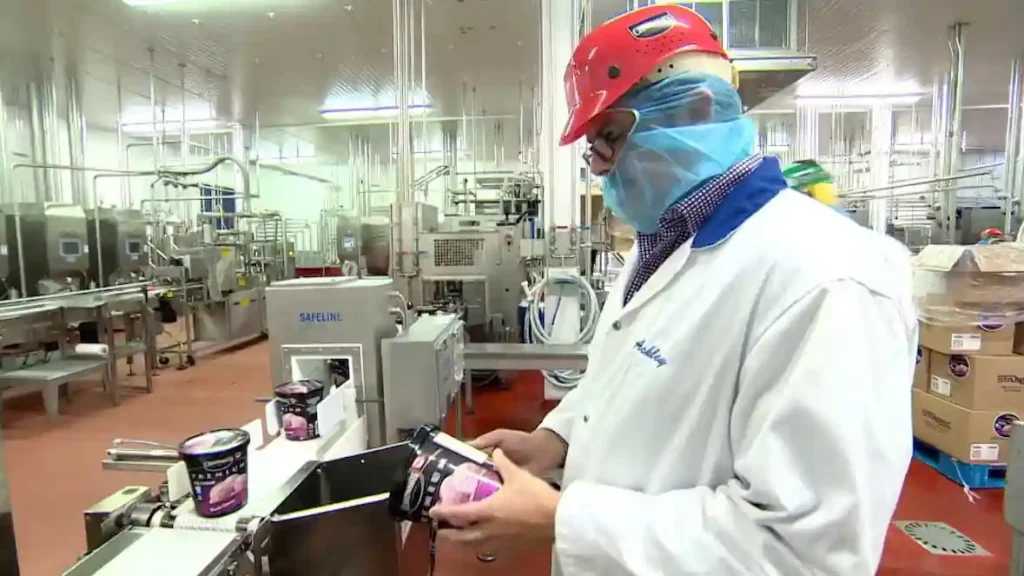

Chapman’s Ice Cream says it will not raise its prices until March 2028 as the Ontario manufacturer reduces its dependence on U.S. suppliers. The company expects to replace more than 70% of its American-sourced ingredients and components with Canadian or other international alternatives by mid-2027, a major supply-chain shift during the continuing Canada-U.S. trade dispute.
Chapman’s began searching for alternatives in March 2025 after the first round of U.S. tariffs prompted it to reconsider where ingredients and components came from. The changes now include Canadian-made cones and wafers, Australian almonds and cherries sourced from Chile.
Will Chapman’s ice cream prices increase?
For customers, the biggest announcement is the price commitment. Chapman’s says it will not introduce a company price increase through March 2028 while it works to control costs through alternative sourcing and greater production efficiency.
That does not guarantee identical prices at every supermarket. Retailers determine their own shelf prices, promotions and markups, so the pledge concerns prices controlled by Chapman’s rather than the final amount charged by individual stores.
More than 70% of U.S. sourcing will change
Chapman’s expects to replace more than 70% of its American ingredients and components by mid-2027. Canadian suppliers are being prioritized where practical, while other countries are being used when suitable domestic alternatives are unavailable.
The company has not said it will eliminate every U.S. ingredient by that date. Some affected American suppliers have worked with Chapman’s for 10, 20 or even 30 years, making the transition a significant restructuring of long-established business relationships.
Almonds move to Australia, cherries to Chile
One surprising result involves almonds. Chapman’s says an Australian supplier can provide them at a lower overall cost than its previous U.S. source, even after freight expenses.
Cherries are being sourced from Chile. The changes show that Chapman’s is pursuing a mix of Canadian production and international diversification rather than simply replacing every American supplier with a Canadian one.
Chapman’s is bringing sugar cone production to Ontario
Sugar cones represent one of the biggest domestic manufacturing changes. Canada did not have an industrial producer capable of supplying the cones Chapman’s needed, so the company partnered with Ontario-based Original Foods to establish production.
Specialized equipment has been purchased from Germany, and the companies have signed an agreement that includes a five-year commitment for Canadian-made cones. The project has faced delays involving Canadian electrical registration requirements and other regulatory processes.
Chapman’s is also moving production of the wafers used in its ice cream sandwiches to Canada, further reducing its reliance on U.S.-made components.
Burger King New Chicken Nuggets 2026: What’s New and When They Launch
Why the U.S.-Canada trade dispute matters
The sourcing overhaul began after tariff tensions emerged in 2025 and has continued as trade relations between the two countries deteriorated. Recent changes to Canada-U.S. counter-tariffs illustrate how companies remain exposed to shifting trade policies and import costs.
Chapman’s says its remaining American ingredients are not directly affected by the latest Canadian retaliatory tariffs. Diversifying suppliers, however, could reduce its exposure if future measures cover additional products.
The trade dispute has also affected financial markets, with the Canadian dollar falling as U.S.-Canada trade tensions intensified, adding another layer of uncertainty for businesses purchasing goods internationally.
Chapman’s has limited U.S. exports
The company exports only a relatively small amount of product to the United States through private-label arrangements. Ashley Chapman has said Canadian retaliatory tariffs were therefore not a major consideration for that side of the business.
The larger challenge has been reducing dependence on ingredients and components purchased from American suppliers while maintaining quality and controlling costs.
100% Canadian dairy is staying
One important part of the supply chain will not change. Chapman’s says it will continue using 100% Canadian dairy in its products, a commitment detailed in the company’s official Canadian dairy information.
The family-owned company began in 1973 with six employees and has grown to roughly 900 employees. Based in Markdale, Ontario, it now produces more than 280 frozen products sold across Canada.
For customers, two dates are worth watching: mid-2027, when Chapman’s expects more than 70% of its American sourcing to have been converted, and March 2028, when the current no-price-increase commitment is scheduled to end.

Make Swikblog your go-to source on Google for reliable updates, smart insights, and daily trends.