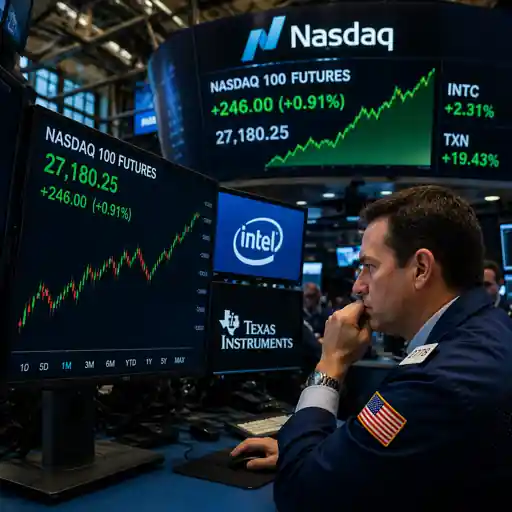
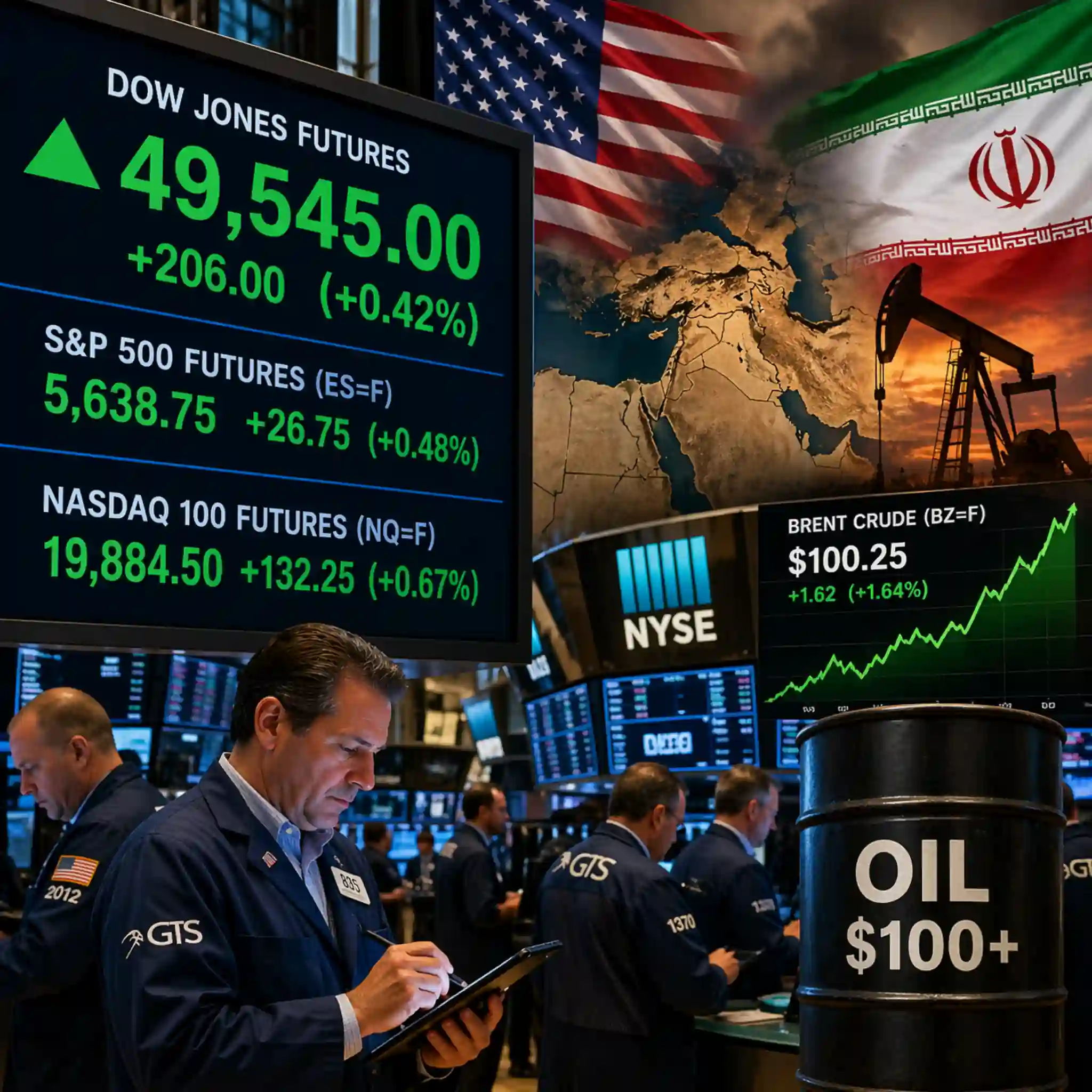
US stocks began February with a cautious, risk-off tone on Tuesday, with all three major indexes trading lower as investors digest a heavy wave of earnings, higher bond yields and renewed anxiety about where interest rates are headed next. The Dow Jones Industrial Average is trading near the 49,000 zone, down roughly 400 points intraday, underscoring how quickly confidence can slip when inflation, rates and tech valuations collide.
The retreat has been broad enough to feel uncomfortable even for traders used to choppy markets. At one stage, about $1.2 trillion in market value was wiped out intraday, a sharp reminder that strong earnings can still be overshadowed by the cost of capital. Investors have leaned defensive as yields rise and Federal Reserve warnings keep the conversation anchored on “higher for longer” risk.
The Dow has held up better than the rest of Wall Street for much of the session, and the reason matters. Its diversified mix of industrials, healthcare and consumer staples has helped absorb the impact of the tech-heavy sell-off elsewhere. While the benchmark remains under pressure, it has avoided the kind of deeper slide seen in growth-focused corners of the market.
A key cushion has come from classic defensive leadership. Merck and PepsiCo are both up more than 3% in intraday trading, providing ballast as investors trim exposure to riskier themes. The action highlights a familiar lesson when yields climb: index composition can matter as much as the headlines driving the tape.
That contrast is most visible in the tech-heavy Nasdaq, which has sunk close to 2% as selling intensified through the afternoon. The S&P 500 is down about 1.3%, pulled lower by weakness in megacap technology and software. In plain terms, Tuesday’s action reflects a market choosing caution over momentum, rotating away from long-duration growth as rate pressures build.
Investors have spent much of the session parsing earnings updates and guidance, particularly in technology and software, where valuations are most sensitive to yields. Some companies delivered strong quarterly numbers, but the broader response suggests markets now demand more than solid results — they want certainty on margins, spending discipline and forward demand.
High-profile tech names were mixed early before selling accelerated. Nvidia has slid amid renewed debate about the durability of the AI trade, while Microsoft and Amazon have also lost ground as investors continue to unwind positions across software and growth stocks.
There have been flashes of optimism. Palantir jumped after results signaled the AI theme may still have room to run in select pockets of the market. Those gains, however, have not been enough to lift the broader group, reinforcing how selective investors have become.
Adding to the tension, attention is turning to what comes next in the earnings calendar. AMD is in focus ahead of its after-hours update, viewed as a key read-through on AI demand and enterprise spending. With more major reports due later this week, guidance is increasingly driving price action.
Rates remain the second major driver. Rising bond yields are pressuring growth stocks and helping explain why selling has been concentrated in technology and software. Higher yields increase discount rates on future earnings, compressing valuations — particularly for companies where profits lie further out.
Outside equities, volatility has surged in precious metals. Gold has jumped more than 6% intraday, eyeing its biggest daily gain since 2008 after a dramatic recent sell-off, while silver has rebounded by more than 10% as dip-buyers return.
Oil has also moved higher during the session as geopolitical tensions briefly resurfaced, restoring some risk premium to prices that had faded in recent days. Even so, the dominant forces shaping markets remain earnings uncertainty, rising yields and the tech unwind.
A partial US government shutdown continues to linger in the background, with lawmakers edging closer to steps that could reopen parts of the government. Markets have treated the political backdrop as secondary, with price action driven primarily by bonds and sector rotation.
The Dow’s behaviour around the 49,000 zone is being closely watched by traders assessing whether the index can stabilise as volatility picks up. The broader picture remains split: defensive sectors are offering shelter, while tech-heavy benchmarks carry the weight of rate fears and earnings uncertainty.
As the session continues, investors are watching whether yields ease, whether earnings reward discipline, and whether confidence in the AI-driven growth story can stabilise — or whether rotation toward defensive positioning deepens.
For broader index context and official market definitions, readers can refer to the S&P Dow Jones Indices overview of the Dow Jones Industrial Average.

Make Swikblog your go-to source on Google for reliable updates, smart insights, and daily trends.