
A proposed Gail’s Bakery in Brixton has turned into a wider debate over London’s changing high streets, after more than 1,000 people signed a petition opposing the chain’s plan to open beside Brixton Tube station.
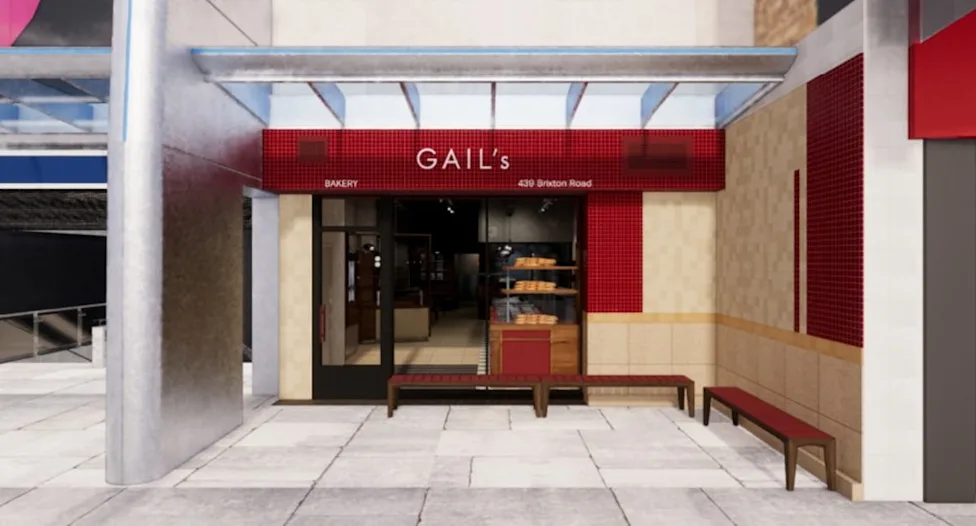
The bakery and coffee shop chain wants to occupy 439 Brixton Road, a vacant unit previously used by Chopstix. Gail’s has asked Lambeth Council for permission to replace the shopfront and install new signage, but the application has drawn strong resistance from residents who say Brixton’s independent business culture is already under serious pressure.
Why the Brixton Gail’s Plan Has Sparked Opposition
The petition was launched by Ruby Bukhari, who recently stood as a candidate for the Shake It Up party during the May local elections. It argues that opening another large bakery chain in Brixton could threaten small cafés, local bakers and traders that rely heavily on community loyalty.
Campaigners say they are not against bakeries, empty shops being reused or new investment in the area. Their objection is that a national chain with strong brand recognition and larger financial backing could change the balance of trade in a neighbourhood known for independent food businesses, markets and community-led retail.
The petition says Brixton’s smaller businesses offer personal service and unique experiences that major chains cannot easily copy. For many opponents, the question is not whether Gail’s can operate successfully, but whether its arrival would make it harder for long-standing local businesses to survive.
Planning Application Received 30 Objections
Gail’s submitted its proposal to Lambeth Council’s Planning Portal in May, with residents and local businesses given until June 19 to comment.
By the end of the consultation, the application had received 30 objections and just one supporting comment. Objectors raised concerns about affordability, gentrification, cultural identity and the continuing pressure on independent businesses in Brixton.
One objector argued that Gail’s does not fit with the local culture of the area and said the chain’s pricing would be unaffordable for many residents. Gail’s is known for premium bakery items, including cinnamon buns costing around £4 and sourdough loaves starting from about £4.90.
The only published comment in support of the plan said the former storefront had become an “eyesore” and argued that a new business would improve the area for residents and commuters walking through Brixton station.
Why the Location Matters
The proposed site is in a highly visible position near Brixton Underground station, one of the busiest gateways into the area. That makes the unit more than an ordinary empty shopfront: it is a prominent space at the entrance to a neighbourhood with a strong local identity.
Supporters of the proposal may see the new branch as a way to bring activity, jobs and a cleaner-looking storefront to a vacant site. Opponents see it as part of a broader pattern in which national chains increasingly take prime locations that smaller operators struggle to afford.
This is why the Gail’s application has attracted wider attention. It has become a symbol of the tension between regeneration and displacement, especially in areas where independent businesses are central to the local economy and culture.
Gail’s Expansion Adds to the Debate
The Brixton proposal comes after Gail’s announced plans in late 2025 to open around 40 more outlets, following a year in which sales reportedly rose by about a fifth.
That expansion has strengthened Gail’s position as one of the UK’s best-known premium bakery chains. At the same time, it has made the brand a frequent focus in debates about gentrification and the changing look of London’s high streets.
For Gail’s supporters, new branches can fill empty units, increase footfall and create jobs. For critics, the issue is whether too many similar chains make once-distinct neighbourhoods feel less affordable, less local and less representative of the people who live there.
Independent Traders Say Pressure Is Already Visible
The Brixton petition has gained traction partly because local traders have already faced difficult rent and lease pressures around London transport locations.
Earlier this year, Brixton News closed after 36 years of trading. Its owner, Pritesh Patel, said he had been priced out after being told he would need to pay £85,000 a year to remain at his site, more than double the previous rate.
A similar case is unfolding at Oval Tube station, where Old Roots Café, a family-run business that has operated for about 20 years, says it could be forced to close if its lease is not renewed.
Metin Balci from Old Roots Café has warned that small businesses in stations are struggling to compete as chains such as Gail’s, Pret and Greggs take more prominent spaces.
Read More
Who Has Been Consulted?
Planning records show that several organisations and public bodies were consulted on the Brixton proposal, including Transport Lambeth, the Brixton Society, TfL Road Network Development, Conservation and Urban Design, and Helen Hayes, Labour MP for Dulwich and West Norwood.
According to the planning documents, three of the five consultees responded, although their comments had not been published at the time of reporting.
With the consultation period now complete, Lambeth Council planning officers will review the application alongside public submissions, consultee feedback and local planning policies before making a recommendation.
The proposal could either be determined by planning officers under delegated powers or be referred to the Lambeth Council Planning Applications Committee for a formal decision.
Whatever the outcome, the Brixton application has become more than a debate about a single bakery. It reflects wider questions facing many London neighbourhoods about how investment, regeneration and independent businesses can coexist as high streets continue to evolve.
Residents looking to follow the planning process can find official updates on the Lambeth Council website.
The discussion around protecting long-established local businesses comes as communities across the UK continue to face similar challenges. You can also read our report on how Lytham Festival 2026 is expected to support local businesses while welcoming thousands of visitors.

Make Swikblog your go-to source on Google for reliable updates, smart insights, and daily trends.