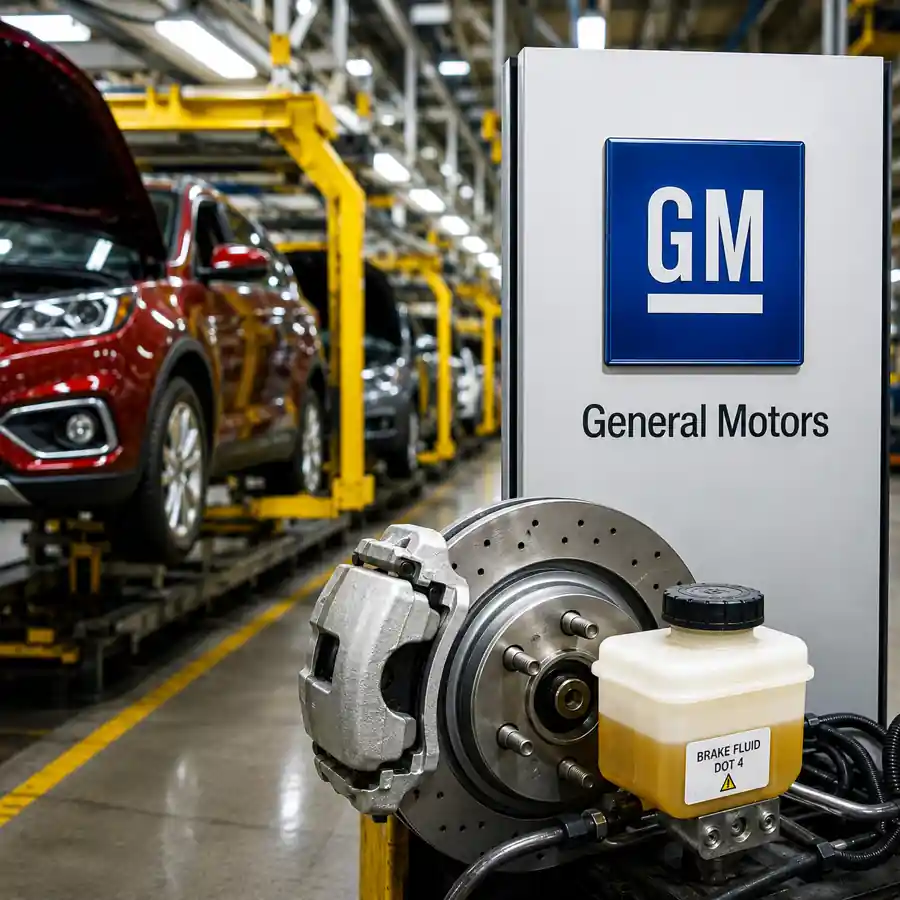

General Motors is facing fresh safety scrutiny in the United States after federal regulators announced a new recall involving 40,440 vehicles over a brake fluid contamination issue that could increase crash risks.
The recall was disclosed by the U.S. National Highway Traffic Safety Administration (NHTSA), which said sediment had been discovered inside the brake fluid system of affected vehicles. Regulators warned that contaminated brake fluid may interfere with braking performance, creating a potentially dangerous situation for drivers.
Although GM has not yet publicly identified the specific models included in the recall, the issue has already attracted attention because braking systems are among the most critical safety components in any vehicle. Even small problems involving hydraulic pressure or brake responsiveness can quickly become major safety concerns.
The latest development also arrives just weeks after GM launched another major recall involving more than 270,000 Chevrolet Malibu sedans across the U.S. That earlier recall affected 2023 through 2025 Malibu models and centered on a rearview camera defect capable of displaying distorted or blank images.
For the automaker, the back-to-back recalls highlight the growing pressure manufacturers face as modern vehicles rely on increasingly complex electronic systems, software integrations, sensors, and advanced manufacturing processes.
Why contaminated brake fluid is a serious issue
Brake fluid is essential to the operation of a vehicle’s braking system. When drivers press the brake pedal, hydraulic fluid transfers pressure through the brake lines to help slow or stop the vehicle. If sediment or contamination develops inside the fluid, braking performance can become inconsistent.
According to safety experts, contamination inside brake fluid may reduce hydraulic efficiency, create internal wear, or affect stopping response under certain driving conditions. While the NHTSA did not specify whether the defect could lead to complete brake failure, regulators stated the issue increases the risk of a crash.
Modern vehicles are especially dependent on properly functioning brake systems because electronic safety technologies such as anti-lock braking systems, stability control, and emergency braking assistance all rely on accurate hydraulic pressure.
GM has not reported any known injuries or crashes linked directly to the brake fluid defect. However, automakers frequently issue recalls before widespread incidents occur once a potential safety risk has been identified through testing, supplier reports, or regulatory reviews.
Vehicle owners affected by the recall are expected to receive official notifications from General Motors. Dealers will likely inspect and repair the affected systems free of charge under federal safety recall guidelines.
Drivers concerned about open recalls can check their Vehicle Identification Number (VIN) through the official NHTSA database or contact Chevrolet customer service for additional assistance.
Recent Chevrolet Malibu recall adds pressure on GM
The brake fluid issue follows another high-profile GM recall announced only a month earlier. In that case, more than 270,000 Chevrolet Malibu vehicles were recalled due to defects involving the rearview camera system.
Federal safety investigators said the camera housing used in certain Malibu vehicles contained a flaw tied to the bonding process during manufacturing. Combined with the design of the mounting system, the issue could allow moisture to enter the camera unit over time.
Read More
Once moisture entered the assembly, the rearview image could become distorted or disappear entirely. Regulators warned that losing visibility while reversing significantly increases collision risks, particularly in parking lots and crowded residential areas.
GM said it was unaware of any crashes or injuries linked to the rearview camera defect, but dealerships were instructed to replace the affected camera systems free of charge.
The two recalls involve completely different components, but together they reflect the wider challenges automakers now face across both mechanical systems and electronic technologies.
As vehicles become more software-driven and technologically advanced, manufacturers are being forced to manage larger supplier networks and more complicated production systems. Industry analysts say even minor component flaws can now trigger nationwide recalls involving tens of thousands of vehicles.
The situation also comes as GM continues investing heavily in electric vehicles and future mobility technology. While innovation remains a major focus for the company, consumer trust still depends heavily on reliability, safety, and manufacturing quality.
Despite the recall announcement, GM shares traded higher following the news, suggesting investors currently view the issue as financially manageable. Large automakers often maintain recall reserves specifically designed to absorb repair and warranty-related costs.
Still, repeated recalls can impact brand reputation over time, particularly when safety systems are involved. Consumer confidence has become increasingly important as traditional automakers compete aggressively against EV manufacturers and new automotive technology companies.
Drivers who own GM vehicles should monitor future recall notices closely and avoid delaying dealership inspections if their vehicle is included in the campaign. Safety experts say responding quickly to recalls is one of the easiest ways consumers can reduce avoidable vehicle risks.
For readers following the latest developments in the automotive industry, electric vehicles, and safety recalls, explore more updates on Swikblog’s automobile news section, where ongoing coverage tracks major recalls, EV launches, and market trends shaping the global auto sector.

Make Swikblog your go-to source on Google for reliable updates, smart insights, and daily trends.