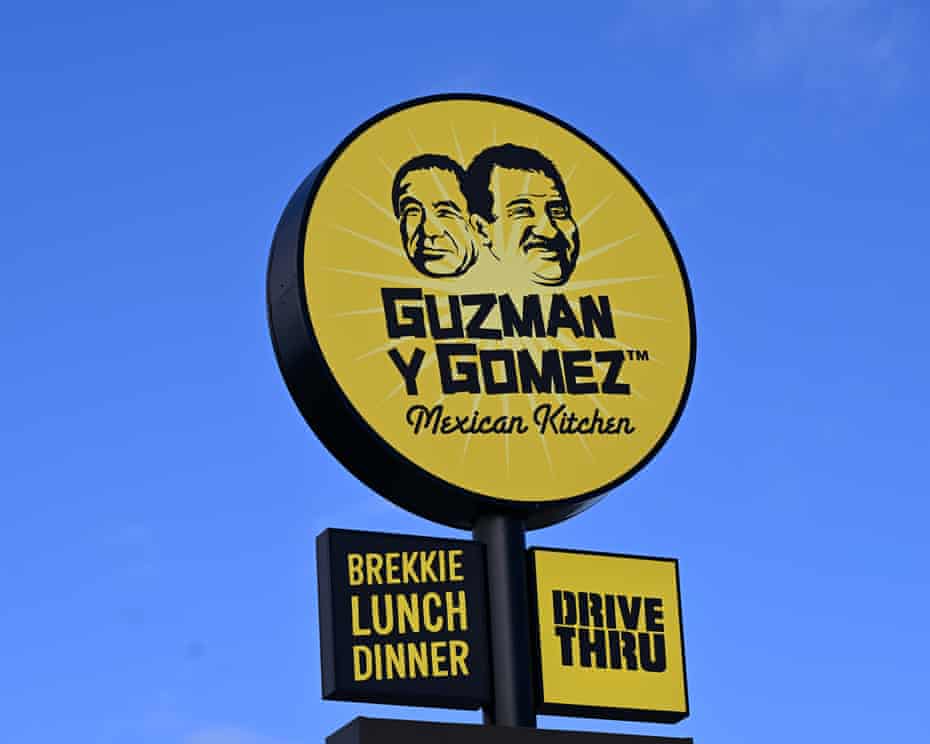

Guzman y Gomez’s failed US expansion has moved from a business setback to a legal fight, after former employees accused the Australian fast-food chain of closing its American restaurants without giving workers the notice or pay they say they were owed.
The proposed class action, filed in a federal court in Illinois, follows the company’s sudden decision to shut all of its US restaurants in the Chicago area and withdraw from the American market. The lawsuit claims employees were told through an internal workplace message on May 21 that the company had decided to exit the US and close its restaurants immediately.
According to The Guardian, the message allegedly told staff that “after careful consideration” Guzman y Gomez had made the difficult decision to leave the US market, meaning all restaurants would close from that day.
The workers argue that the company should have provided 60 days’ advance written notice before carrying out a mass layoff. The claim cites federal and Illinois employment laws and seeks up to 60 days of wages and benefits for affected staff.
Chicago-based Haseeb Legal, which filed the case, estimates that more than 500 employees may have been impacted by the shutdown. The complaint also seeks a jury trial.
Two former employees are named as plaintiffs in the case. Both were baristas who had later been promoted to shift leader roles. One was earning $21 an hour and the other $23 an hour, according to the legal claim. They allege they did not receive the required notice or equivalent compensation before their jobs ended.
The lawsuit names Guzman y Gomez’s US entity as the defendant, but it also argues that the American business and the Australian-listed parent operated as a “single integrated enterprise.” That point could become important if the case moves forward, because it may affect how responsibility is assessed between the US operation and the wider group.
Guzman y Gomez has not publicly responded to the allegations.
The case comes only days after the company confirmed the end of its US business. Its American website now states that all GYG USA restaurants are permanently closed and that trading ceased from May 22. The company had eight US stores, all located in the wider Chicago area.
The closure marks a sharp reversal from the company’s earlier American ambitions. When Guzman y Gomez launched in the US, its leadership spoke about the potential to open hundreds, or even thousands, of restaurants. Instead, the company has left the market after six years, unable to build meaningful scale in a category already crowded with strong US competitors such as Chipotle.
For investors, the US retreat highlights the risk of international expansion even for a brand that is still growing strongly in its home market. Guzman y Gomez remains one of Australia’s fastest-growing fast-food chains and ranks among the country’s larger restaurant networks by store count, but success in Australia did not translate easily into the US.
The American fast-food market is difficult for overseas restaurant brands because operators face high labor costs, expensive leases, intense local competition and customers who already have familiar alternatives. Analysts have described the US as a “graveyard” for Australian fast-food chains, with Crust Pizza and Oporto also struggling to build lasting businesses there.
The lawsuit also adds another layer of scrutiny to Guzman y Gomez’s cost base and expansion strategy. Swikblog previously reported that Guzman y Gomez shares dropped after H1 FY2026 earnings showed margin pressure and rising operating costs, even as revenue continued to grow.
Read More
That background matters because the US closure is not just a story about eight restaurants shutting down. It raises questions about how much capital was spent chasing American growth, how quickly management moved to cut losses, and whether workers were treated properly when the company decided to exit.
For former employees, the legal question is straightforward: were they entitled to 60 days’ notice or 60 days of pay and benefits when the restaurants closed? For Guzman y Gomez, the challenge is now broader. The company has already walked away from the US market, but the financial and reputational consequences of that exit may continue in court.
The allegations remain unproven, and the case will need to move through the legal process. Still, the class action turns Guzman y Gomez’s US withdrawal into a more serious issue for the company, its investors and workers who say they were left with little warning when the doors closed.

Make Swikblog your go-to source on Google for reliable updates, smart insights, and daily trends.