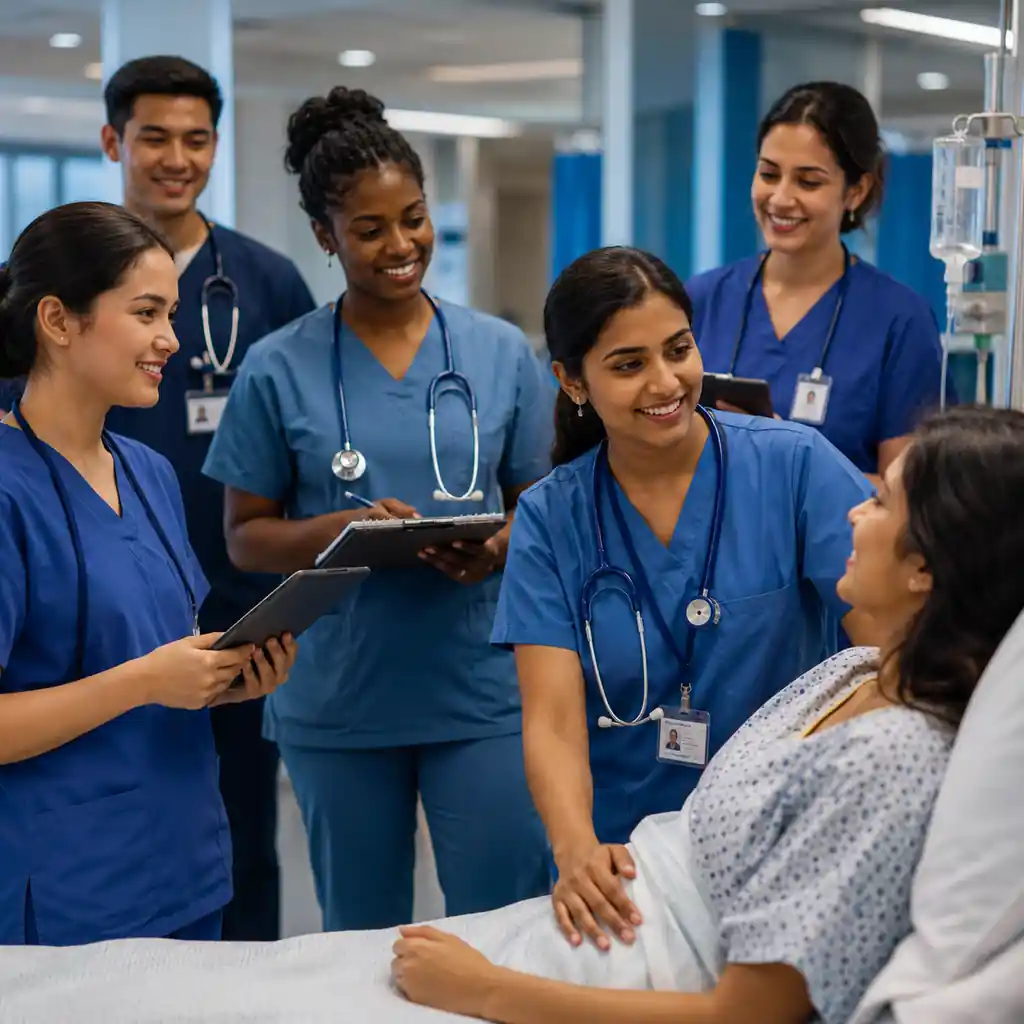

International Nurses Day 2026 will be marked on 12 May 2026, with the official theme “Our Nurses. Our Future. Empowered Nurses Save Lives.” The theme puts a sharp focus on a reality that healthcare systems can no longer ignore: nurses do not simply support care, they make care possible.
Announced by the International Council of Nurses, the 2026 theme arrives at a time when health systems are under pressure from rising patient loads, staff shortages, ageing populations, conflict, climate-related emergencies and growing demand for primary healthcare. In this environment, the role of nurses has become even more critical.
International Nurses Day is observed every year on 12 May, the birth anniversary of Florence Nightingale, who is widely recognised as the founder of modern nursing. The day honours nurses across hospitals, clinics, emergency departments, community health centres, maternity units, schools and public health programmes.
But the 2026 campaign goes beyond appreciation. It asks governments, hospitals and healthcare leaders to act on one clear message: nurses save more lives when they are respected, protected, trained, fairly paid and included in decision-making.
Why the 2026 Theme Is Important
The phrase “Empowered Nurses Save Lives” is not just a slogan. It reflects what happens inside healthcare settings every day. Nurses monitor patients closely, notice early warning signs, prevent infections, give medicines, assist in emergencies, guide families and help patients recover with dignity.
When nurses have safe working conditions, enough staff on duty, proper equipment and the authority to use their skills fully, patient care improves. When they are overworked, ignored or left without support, the risk to patients and health systems increases.
According to the International Council of Nurses, the 2026 theme highlights the need to remove barriers that stop nurses from using their full knowledge, leadership and clinical expertise. That message is especially important as countries try to strengthen healthcare access and prepare for future emergencies.
The campaign also builds on recent global conversations about the economic and social value of nursing. Nurses are central to patient safety, disease prevention, maternal care, emergency response, elderly care and public health education. Their work supports both individual recovery and wider community health.
What Nurse Empowerment Really Means
Empowering nurses means giving them more than praise. It means creating workplaces where nurses can do their jobs safely and professionally.
This includes fair pay, safe duty hours, adequate staffing, mental health support, protection from workplace violence, access to continuing education, career growth and leadership opportunities. It also means listening to nurses when healthcare policies, hospital systems and patient safety rules are being planned.
Nurses work closest to patients. Their experience gives them practical insight into what is working, what is failing and where care can improve. A health system that excludes nurses from leadership is ignoring one of its most valuable sources of knowledge.
The 2026 theme also highlights the importance of full nursing practice. In many places, nurses have the training and ability to take on wider responsibilities, especially in primary healthcare. Expanding nursing roles can improve access to care, particularly in rural areas, underserved communities and regions facing doctor shortages.
Advanced practice nursing is already well established in countries such as the United States and Canada, while other regions are still developing the training, regulation and workforce planning needed to expand these roles sustainably.
Nurses and the Future of Healthcare
The future of healthcare will depend heavily on nursing. Hospitals, digital health systems, insurance schemes and public health programmes cannot succeed without trained professionals who deliver care directly to people.
Nurses are essential in vaccination drives, chronic disease management, health screening, maternal and newborn care, infection control, emergency response and patient education. They help translate medical advice into action that patients and families can understand.
In primary healthcare, nurses often become the first trusted point of contact. They guide patients on medicines, lifestyle changes, warning signs, follow-up visits and preventive care. This makes them important not only in treating illness, but also in preventing disease.
The Pan American Health Organization has highlighted that the Region of the Americas has about 7.4 million nursing professionals, making nurses the largest professional group within health systems there. However, distribution remains uneven, with some countries having far fewer nurses per population than others.
This uneven distribution reflects a wider global challenge. Many health systems need more nurses, better workforce planning and stronger investment in nursing education. Without that, countries may struggle to meet rising healthcare demand in the coming years.
Why Nurses’ Own Health Also Matters
International Nurses Day 2026 also brings attention to the health and well-being of nurses themselves. Nursing is physically and emotionally demanding. Long shifts, night duty, workplace stress, exposure to infections and constant patient care can affect nurses’ health over time.
Supporting nurses means supporting their preventive healthcare too. Regular health checkups, adequate rest, mental health support and safe work environments are not optional benefits. They are part of building a sustainable healthcare workforce.
Routine health monitoring can help nurses identify early signs of fatigue-related problems, anaemia, diabetes risk, thyroid imbalance, vitamin deficiencies, blood pressure issues and stress-related health concerns. A healthier nursing workforce directly supports better patient care.
Patients and families also have a role to play. Respectful communication, patience during busy hours, accurate sharing of medical history and cooperation with care instructions can make hospital environments safer and more supportive for everyone.
How International Nurses Day 2026 Can Be Observed
International Nurses Day can be marked through appreciation messages, hospital events, community campaigns, seminars, health awareness programmes and social media posts. But the most meaningful celebration is action.
Healthcare institutions can use the day to review staffing levels, improve safety policies, support nurse education, recognise outstanding service and create platforms where nurses can share their concerns and ideas.
Governments can strengthen nursing by investing in training, improving employment opportunities, supporting rural deployment, expanding leadership roles and ensuring ethical workforce planning. Nursing shortages cannot be solved through symbolic gestures. They need long-term policy attention.
For the public, the day is a reminder that nurses are present at some of life’s most difficult moments — birth, illness, injury, recovery, ageing and loss. Their care is technical, emotional and deeply human.
International Nurses Day 2026 carries a message that is both simple and urgent. The future of healthcare depends on nurses, and nurses need systems that allow them to work with safety, dignity and authority.
As the world prepares to observe International Nurses Day on 12 May 2026, the theme “Our Nurses. Our Future. Empowered Nurses Save Lives” should be seen as more than a campaign line. It is a call to strengthen the people who hold healthcare together every day.
You may like: Logan Crime Scene: Woman and Child Found Dead After Man Is Hit by Car Near Supermarket

Make Swikblog your go-to source on Google for reliable updates, smart insights, and daily trends.