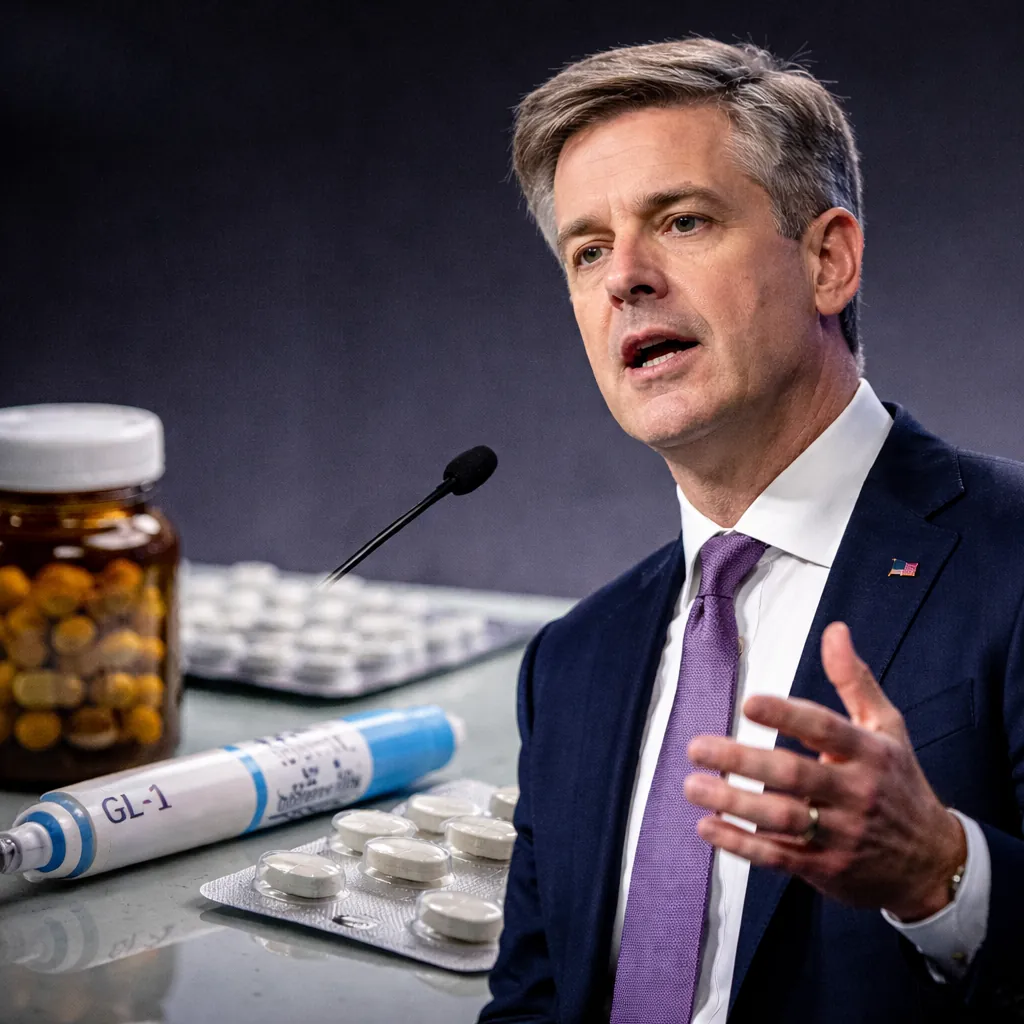

Eli Lilly’s chief executive has cautioned that the booming market for weight-loss drugs may ultimately reach only about half of the patients who could benefit, despite surging global demand and projections of a $100 billion industry. Speaking at a conference in Washington on Friday, CEO David Ricks said structural limits in healthcare systems and affordability challenges will likely cap long-term adoption.
The comments come at a time when GLP-1 drugs — used to treat obesity and diabetes — are rapidly gaining traction worldwide. Yet, according to Ricks, only around 1 in 10 overweight or obese individuals are currently using these treatments, highlighting a vast gap between demand and actual access.
“It’s never going to be a hundred,” Ricks said, pointing to systemic barriers that go beyond supply alone. He compared the situation to cholesterol-lowering statins, one of the most widely prescribed drug classes, where only 40% to 50% of eligible patients ultimately receive treatment. That range, he suggested, may serve as a realistic ceiling for obesity drugs as well.
Cost and access remain major hurdles
Affordability continues to be a defining issue. The monthly cost of GLP-1 treatments — including both pills and injectable options — ranges from roughly $149 to $349 for self-paying patients, placing them out of reach for many. Ricks acknowledged that historically, such therapies have been more accessible to higher-income groups, adding that expanding access is both a moral and economic priority.
The issue is particularly significant given the strong link between obesity and lower-income populations. While these medicines are widely seen as transformative in reducing long-term health risks, limited insurance coverage and high out-of-pocket costs continue to restrict widespread adoption. A broader analysis of insurance trends shows ongoing challenges in coverage for these therapies, as outlined in recent health policy research.
Supply expansion faces long road
Even if demand accelerates, scaling production to meet it remains a major challenge. Ricks estimated that a 50% adoption rate could translate to roughly 500 million patients globally. Currently, only about 21 to 22 million people are being treated with these drugs, meaning manufacturers would need to increase output nearly 20-fold to meet potential demand.
That level of expansion, he said, will take years. Unlike digital industries, pharmaceutical manufacturing cannot scale quickly, with new facilities requiring significant capital investment and long development timelines. “There is no real efficiency gain left,” Ricks noted, adding that increasing capacity will be “expensive and slow.”
The supply challenge is unfolding alongside intensifying competition between Eli Lilly and Novo Nordisk, the two dominant players in the obesity drug market. Both companies are racing to expand their portfolios and manufacturing capabilities as they seek to capture growing demand.
Lilly recently launched its oral weight-loss drug, Foundayo, offering a needle-free alternative to injectable treatments such as Zepbound. Early prescription data showed 1,390 prescriptions in its first week in the United States. By comparison, Novo Nordisk’s oral Wegovy recorded 3,071 prescriptions in its first four days following its January launch.
The emergence of pill-based options is expected to broaden patient interest, particularly among those reluctant to use injections. However, specialists say convenience alone may not overcome the larger barriers of cost and access that continue to define the market.
For now, the outlook for weight-loss drugs remains one of strong demand constrained by real-world limitations. While pharmaceutical companies continue to invest heavily in expanding production and developing new formulations, the pace of adoption will likely depend less on innovation alone and more on whether healthcare systems can make these treatments widely accessible and affordable over time.

Make Swikblog your go-to source on Google for reliable updates, smart insights, and daily trends.