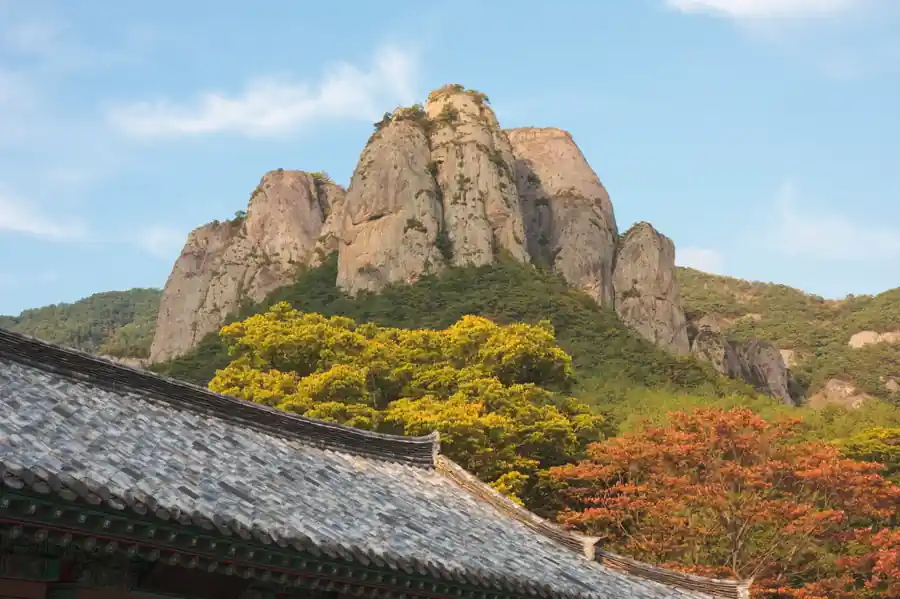

A family visit to one of South Korea’s best-known mountain parks ended in tragedy after an 11-year-old boy was found dead near the upper section of Juwangsan mountain, three days after he disappeared during a hike with his parents.
The child, a sixth-grade student from Daegu, had travelled with his family to Juwangsan National Park in North Gyeongsang province on 10 May. The family had gone to Daejeonsa, a Buddhist temple inside the park, before the boy reportedly decided to continue farther up the trail toward the mountain summit.
Police said the boy was not carrying a mobile phone when he separated from his parents. He had told them he would only climb a little higher before returning, but he never came back. His parents later contacted local authorities after waiting for him and failing to locate him.
The search ended on Tuesday when rescue teams discovered the boy’s body near the peak area of Juwangsan, around 100 metres below the summit. Authorities believe he likely lost his footing and fell while moving through the steep mountain terrain.
More than 350 people were involved in the three-day search operation, which covered forested slopes, rocky paths and difficult sections close to the mountain’s upper trails. Officials are now investigating the exact circumstances of the accident.
What happened at Juwangsan National Park?
The boy had joined his parents on a trip from Daegu to Daejeonsa Temple, a popular cultural and religious site located within Juwangsan National Park. The temple is also close to hiking routes that lead toward the higher areas of the mountain.
According to reports, the child left his parents at around midday after saying he wanted to go a little farther up the route. He then continued alone in the direction of the summit. The trail from Daejeonsa to the top of Juwangsan is around 2km to 3km long and can take an adult about 80 minutes each way.
Although the distance is not unusually long for regular hikers, mountain routes can become dangerous quickly when a child is alone. Steep surfaces, loose stones, narrow sections and fatigue can increase the risk, especially near peak areas where the terrain is more exposed.
The boy’s parents later told local media that the family had visited the same mountain about a year earlier. On that occasion, their son had become tired before reaching the summit and came back down. This time, they said, he told them he would only go up briefly before returning.
He was reportedly wearing a Samsung Lions baseball uniform when he went missing. That detail was later shared widely in South Korean media as authorities and rescuers searched for him across the mountain area.
The boy’s disappearance prompted a major emergency response. Search teams worked through the park over several days before locating his body near the top of the mountain. Police have said the early evidence points to a fall, though the final cause and sequence of events remain under investigation.
South Korean outlet The Korea Herald reported further local details about the case and the response from authorities following the discovery.
Read More
Why the case has raised hiking safety concerns
Juwangsan National Park is known for scenic valleys, rocky cliffs and mountain trails that attract visitors throughout the year. For many families, the park is a peaceful weekend destination. But the death of the 11-year-old has again highlighted how quickly a short hike can become dangerous when someone separates from a group.
Children are especially vulnerable on mountain trails because they may not fully judge distance, slope, tiredness or danger. A route that appears manageable at the beginning can become much harder near the summit. Without a phone, an injured or lost child may also be unable to call for help.
The case is not being treated as suspicious based on the information released so far. Authorities suspect the boy slipped and fell while climbing near the upper section of the mountain. However, investigators are still working to confirm the exact timeline and location of the accident.
The tragedy also follows other fatal hiking incidents in South Korea. Last year, a hiker in his 60s went missing near Gongryong Ridge on Mount Seorak in Gangwon province and was found dead two days later. Such cases show how challenging mountain searches can be, even when rescuers know the general area where a person disappeared.
Search operations in national parks are often difficult because rescuers must move through uneven trails, dense forest, steep drops and rocky ground. Weather, visibility and limited mobile reception can make the work even harder. In this case, the deployment of more than 350 personnel shows the scale of the effort needed to search the mountain.
For families, the incident is a painful reminder to stay together on hiking routes, especially when children are involved. Young hikers should not continue alone, even on familiar or popular trails. Carrying a charged phone, wearing proper footwear, staying on marked paths and setting clear boundaries before the hike can reduce risk.
Parents and guardians are also advised to turn back when a child becomes tired, rather than allowing them to push ahead alone. Mountain fatigue can affect balance and decision-making, and a small slip near a steep section can have fatal consequences.
For readers following similar outdoor rescue cases, Swikblog has also reported on another fatal missing-hiker case in a national park. Read more here: Missing Hiker Found Dead in Glacier National Park After Suspected Bear Attack.
The death of the 11-year-old has left a family grieving and has drawn public attention across South Korea. What began as a short family outing to a temple and mountain trail ended with a large rescue operation and a tragic discovery near the summit.
Authorities are expected to continue examining how the boy reached the peak area alone, where the suspected fall occurred, and whether any additional safety measures may be needed around the trail. For now, the case stands as a heartbreaking warning about the risks of hiking alone in mountainous terrain, no matter how short the route may seem.

Make Swikblog your go-to source on Google for reliable updates, smart insights, and daily trends.