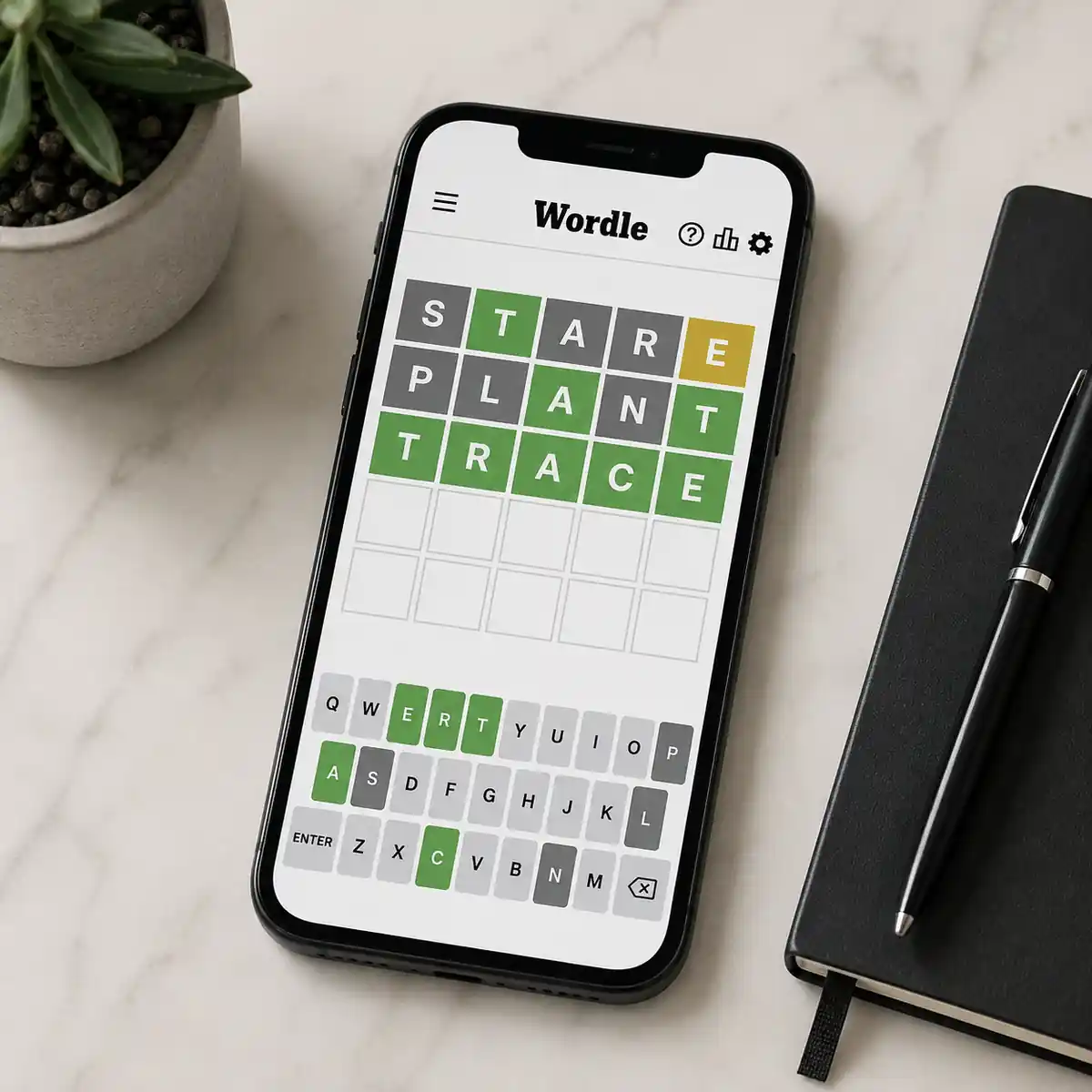
Today’s Wordle #1783 for May 7 presents a surprisingly challenging puzzle, even though the final answer is a fairly common everyday word. The difficulty mainly comes from the unusual consonant combination hidden inside the word, which many players may not think to test early in the game.
Unlike some recent Wordles that relied on repeated letters or obscure vocabulary, today’s challenge depends more on letter positioning, uncommon consonant pairings, and narrowing possibilities carefully. Many standard starter words reveal only partial clues, which can easily send players toward completely different word families.
Today’s Wordle Hints
• Today’s Wordle answer contains no repeated letters, meaning each successful guess provides entirely new information
• The word includes two vowels, which are separated by multiple consonants
• Today’s answer starts with the letter B, a fairly common opening consonant in English words
• The word ends with the letter E, which becomes a major clue once identified
• The puzzle includes three strong consonants grouped closely together, creating the main difficulty of today’s game
• The middle consonant pattern is likely where most players lose attempts today
• Today’s puzzle rewards players who carefully eliminate unused letters instead of guessing random common endings
Practice Wordle
Try solving this mini practice version inspired by today’s puzzle style and consonant-heavy structure.
Today’s Wordle Answer for May 7, #1783 is: BUDGE
The word “budge” means to move slightly, shift position, or finally give way after resistance.
It is commonly used in both physical and conversational contexts. For example, someone may refuse to “budge” during an argument, negotiation, or disagreement, meaning they refuse to change their opinion or position.
The word can also describe literal movement, such as trying unsuccessfully to move a heavy object that will not budge.
Although “budge” is a familiar word for most players, today’s challenge comes from the relatively uncommon “DG” consonant pairing, which many players may not naturally test in their early guesses.
Many Wordle players likely solved the puzzle more comfortably after identifying the opening “BU” or discovering the final “E,” since the remaining structure becomes easier to narrow down afterward.
Today’s puzzle is a strong example of how Wordle difficulty does not always depend on rare vocabulary. Sometimes a simple everyday word can still become challenging because of less predictable consonant combinations and tricky internal letter placement.
Today’s Wordle may frustrate players early, but careful elimination and patience are usually enough to solve it before the final attempts. Players who balanced smart consonant testing with controlled vowel usage likely had the best chance of protecting their daily streak today.
You can continue your streak on the official New York Times Wordle page.

Make Swikblog your go-to source on Google for reliable updates, smart insights, and daily trends.