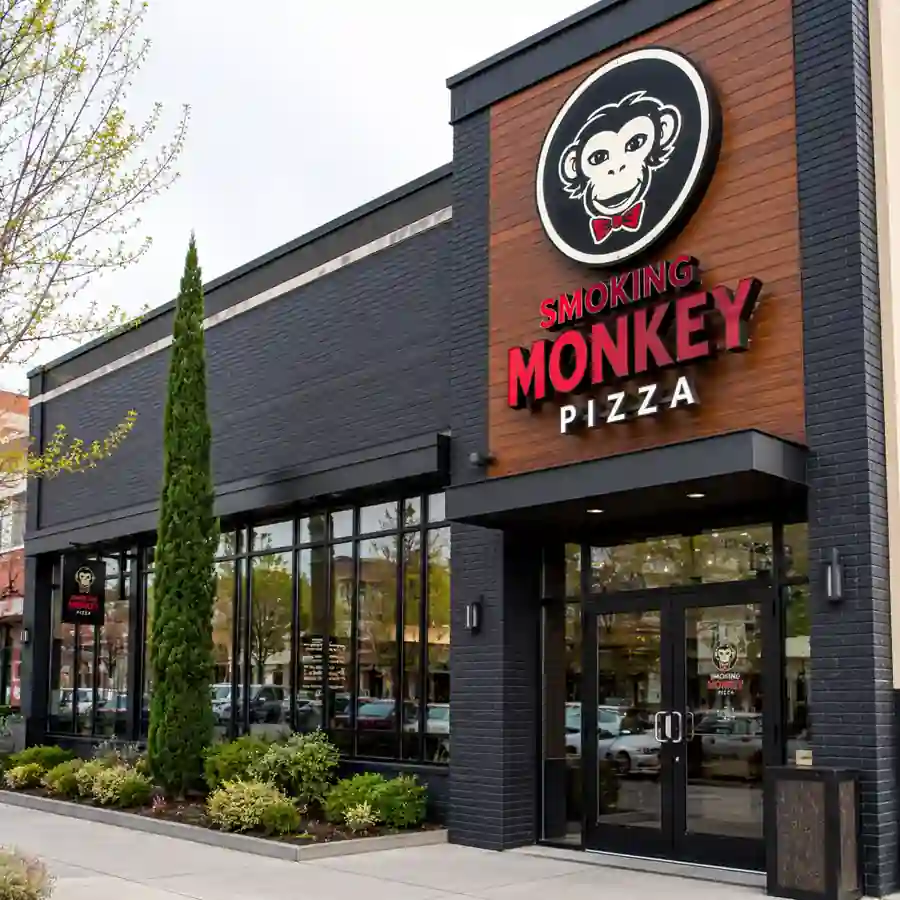

Smoking Monkey Pizza, a Washington wood-fired pizza chain with a loyal local following, has filed for Chapter 11 bankruptcy protection after closing one of its three restaurants and reporting mounting debts to suppliers, tax authorities, payment processors and utility providers.
The filing was made by parent company TB Enterprises LLC in the U.S. Bankruptcy Court for the Western District of Washington in Seattle on May 12, 2026. The company listed assets of up to $50,000 and liabilities between $100,000 and $500,000, according to bankruptcy-related court details cited in industry reports.
The case puts another regional restaurant operator under the spotlight at a time when pizza chains, franchise groups and casual dining brands are dealing with higher food bills, rent pressure, payroll costs and softer consumer spending. For Smoking Monkey Pizza, the Chapter 11 filing appears to be a restructuring move rather than an immediate full shutdown.
Smoking Monkey Pizza bankruptcy follows Spokane closure
Smoking Monkey Pizza had operated restaurants in Renton, Seattle and Spokane, Washington. The Spokane location at 816 W. Sprague Ave. closed roughly two months before the bankruptcy filing, leaving two restaurants still open: the Renton location at 613 South 3rd Street and the Seattle location at 3111 W. McGraw Street, Unit 103.
The company has not publicly announced a complete shutdown of the brand. That distinction matters because Chapter 11 bankruptcy is generally used by businesses that want time to reorganize debts, renegotiate obligations and continue operating while they work through a court-supervised restructuring process.
Smoking Monkey Pizza had built its reputation around wood-fired pies and a broad menu that went beyond a typical neighborhood pizza shop. Its menu included 35 pizza varieties, make-your-own pizza options, 11 pasta dishes, eight sandwiches, five calzones, three strombolis, nine salads and five desserts.
The chain also carried a strong local reputation. In 2025, Quality Business Awards gave Smoking Monkey Pizza a quality rating above 95% and named it Best Pizza in Renton, Washington. That recognition makes the bankruptcy filing more notable because it shows that strong reviews and customer loyalty do not always protect a restaurant from balance-sheet pressure.
Court papers reportedly listed several major unsecured creditors. The Washington Department of Revenue was owed more than $52,000, while food distributor Sysco was owed over $42,000. Other debts included more than $39,000 to Chase Card Services, over $37,000 to Gravity Payments, more than $35,000 to Greco and over $34,000 to Puget Sound Energy.
Those creditor names give a clearer picture of the pressure facing the business. The debts are not tied to one single issue. They involve taxes, food supply, card services, payment processing and utilities — everyday operating costs that can quickly strain a restaurant when traffic slows or margins shrink.
Why the filing matters for the pizza industry
Smoking Monkey Pizza’s bankruptcy arrives as restaurant operators across the U.S. continue to face a difficult mix of rising costs and cautious customers. The National Restaurant Association’s 2026 State of the Restaurant Industry report projects restaurant and foodservice sales of $1.55 trillion this year, but it also points to continued cost pressure and modest inflation-adjusted growth.
For pizza operators, the pressure can be especially difficult. Pizza restaurants are heavily exposed to ingredient costs such as cheese, wheat, meat, vegetables and cooking oils. They also rely on labor-heavy kitchen operations, delivery systems and leases in high-traffic areas. When these expenses rise together, even busy restaurants can find it harder to protect profits.
Delivery apps have added another challenge. Online ordering can help restaurants reach more customers, but third-party delivery commissions can reduce margins. Smaller chains often cannot negotiate the same rates or build the same in-house delivery technology as national competitors, which puts regional brands at a disadvantage.
The pressure is not limited to Smoking Monkey Pizza. Papa John’s has announced plans to close hundreds of underperforming restaurants, while Pizza Hut’s parent company Yum! Brands has also moved to shut lower-performing locations under its restructuring strategy. Domino’s Pizza Enterprises, a major Domino’s franchise operator, has also targeted low-performing stores for closure.
Bankruptcy filings have also touched smaller pizza operators. A Domino’s franchisee in Oceanside, California, filed for Chapter 11 bankruptcy in 2025. Another wood-fired pizza chain, Fiorella in San Francisco, filed for Chapter 11 protection in March 2026 after several related Project Pizza entities filed separate cases in 2025.
These cases do not all have the same cause, but they point to the same industry reality: restaurants with thin margins have less room for error when rent, payroll, food costs and debt payments rise at the same time.
For customers, the immediate impact depends on how the restructuring unfolds. The Renton and Seattle Smoking Monkey Pizza locations remain open for now, while the Spokane restaurant has already closed. Gift cards, loyalty programs and future reopening plans may depend on how the company manages its Chapter 11 process and what the bankruptcy court allows.
Read More
- Visit Swikblog Homepage
- Australia’s Best Private Primary Schools 2026 Rankings
- Google Nest Outage: Cameras and Thermostats Offline in US
- School Bus Driver Wins $5 Million Maryland Lottery Scratch-Off
- Spaghetti House Closes All London Restaurants After 70 Years
- Maldives Diving Horror: Five Italians Die in Underwater Caves
For employees, Chapter 11 creates uncertainty but does not automatically mean every job disappears. If the company can stabilize its finances, remaining locations may continue operating. If restructuring efforts fail or costs remain too high, more closures could follow.
The larger lesson for regional restaurant chains is clear. Awards, strong reviews and a loyal base can help build a brand, but survival now depends heavily on cost control, lease flexibility, direct customer relationships and disciplined expansion. Restaurants that grew before the current cost environment may need to rethink store counts, menus, delivery strategy and supplier contracts.
Smoking Monkey Pizza’s bankruptcy is not just another small restaurant filing. It reflects the financial squeeze facing many local and regional operators in 2026: customers still want quality food, but businesses are paying more to deliver it.
Readers following restaurant bankruptcies and closures can also read Swikblog’s related coverage on Gina Maria’s Pizza filing for bankruptcy after 50 years and 801 Restaurant Group’s Chapter 11 filing and Minneapolis closure.

Make Swikblog your go-to source on Google for reliable updates, smart insights, and daily trends.