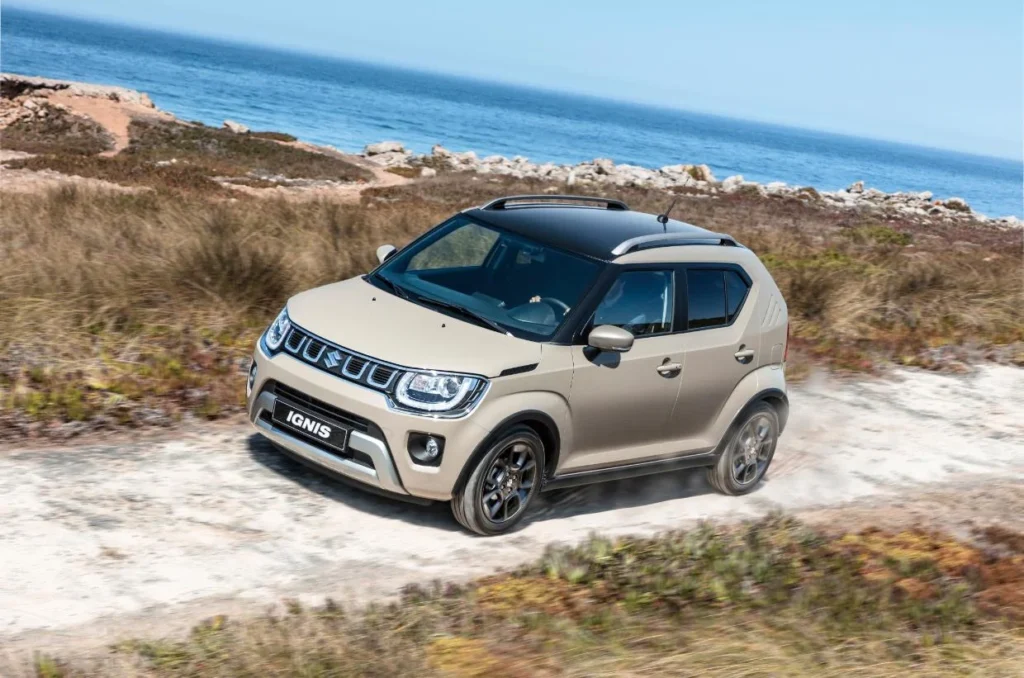

Suzuki’s long-running Ignis is entering its final chapter in New Zealand. The company has confirmed it is no longer importing fresh stock, meaning the compact crossover will disappear from local showrooms once existing inventory is sold. The decision brings an end to a model that has remained one of Suzuki New Zealand’s strongest performers despite increasing competition in the small SUV segment.
The confirmation came during the New Zealand launch of the fully electric Suzuki e Vitara, where Suzuki New Zealand managing director Gary Collins said remaining Ignis vehicles are expected to sell out before long. While buyers can still find the model at dealerships today, no additional shipments are planned.
The move reflects a broader regional strategy rather than a change unique to New Zealand. The Ignis has already been removed from Suzuki’s Australian range, and the company has not announced a direct successor for global markets.
A small SUV that built a loyal following
When the current-generation Ignis arrived in New Zealand in 2017, it offered something different from most compact SUVs. Its upright styling, small footprint and practical cabin made it well suited to urban driving while maintaining the higher driving position that many buyers preferred.
The strategy paid off. During 2025, Suzuki registered 464 Ignis models in New Zealand, making it the company’s fourth best-selling vehicle behind the Swift, Fronx and Jimny. It even outsold established models such as the Vitara and S-Cross, showing that customer demand remained steady despite the vehicle approaching the end of its lifecycle.
Unlike many discontinued vehicles that slowly disappear after years of declining sales, the Ignis is leaving while it still has a strong customer base. That makes its departure one of the more notable changes in Suzuki’s current lineup.
What could replace the Ignis?
Suzuki has not confirmed a direct replacement, but company executives have indicated that several compact concepts remain under evaluation. According to Gary Collins, Suzuki continues to study vehicles in the same size category, although there is no confirmed launch timetable.
One possibility is the updated Suzuki XBee, currently sold in Japan. The compact crossover uses a 1.2-litre mild-hybrid engine shared with the latest Swift and is available with both front-wheel drive and all-wheel drive. Its practical layout and SUV-inspired styling make it one of the closest alternatives to the outgoing Ignis.
Another future candidate is the Suzuki Vision e-Sky concept unveiled at the Japan Mobility Show. The concept previews a possible electric city vehicle and reflects Suzuki’s wider electrification strategy following the arrival of the e Vitara. Although production plans have not been confirmed, the concept highlights the direction Suzuki is taking as demand for smaller electric vehicles grows.
Read More:
- Costco opens two new stores in Utah and Florida
- Snoop Dogg’s SnoopSicle arrives at Costco
- Visit the Swikblog homepage for more latest news
Suzuki has also expanded manufacturing in India for several global models, including the Fronx and e Vitara. That production strategy has prompted speculation that a future Ignis successor could eventually be sourced from India instead of Japan, although Suzuki has not officially announced those plans. The company’s changing global strategy has become increasingly visible after Suzuki overtook Honda to become Japan’s second-largest automaker, reflecting its growing international presence.
Limited stock remains for buyers
For buyers considering an Ignis, the opportunity is now limited. Dealers can continue selling vehicles already in stock, but once those units are gone there will be no further imports into New Zealand. Some dealerships continue to advertise brand-new examples, though availability is expected to decline over the coming months.
Existing owners are not expected to experience any immediate changes. Suzuki’s dealer network will continue providing servicing, maintenance and genuine parts support under normal after-sales arrangements.
The departure leaves a noticeable gap in Suzuki’s lineup. The Ignis appealed to buyers looking for an affordable, compact crossover that combined hatchback practicality with SUV styling without moving into a larger or more expensive vehicle.
The wider automotive market is evolving quickly as manufacturers invest more heavily in electrification and alternative powertrains. That trend can also be seen in Australia’s growing EV market, where BYD’s latest expansion is reshaping competition among established brands.
Until Suzuki confirms its next compact crossover, the Ignis will remain available only while dealer inventory lasts. Whether its eventual successor arrives as a hybrid, a fully electric model or another compact crossover, Suzuki’s focus has clearly shifted toward the next generation of urban mobility. More information about the company’s global vehicle lineup and electrification plans is available on the official Suzuki global website.
You may also like: Salesforce CRM stock jumps today as Data 360 and AI revenue push draw investor focus.

Make Swikblog your go-to source on Google for reliable updates, smart insights, and daily trends.